
Post-Accutane syndrome (PAS)
- Post-Accutane syndrome (PAS) is a multisystem condition caused by isotretinoin, an acne medicine sold as Roaccutane in the UK and formerly as Accutane in the US. It can affect mental health, sexual function, cognition and the body.
- Not just lingering side effects. It can start after you quit the drug, and it can be permanent.
- Not recognised as a condition by regulators. No diagnosis code of its own, no test, no approved treatment.
Post-Accutane syndrome symptoms
PAS can affect mental health, sexual function, cognition and the body. If you have thoughts of suicide, call Samaritans on 116 123 (UK) or 988 (US), free, at any hour.
Sexual
5- Loss of sexual desire (libido)
- Erection problems
- Vaginal dryness
- Less feeling in the genitals (genital numbness)
- Difficulty reaching orgasm, or less feeling at orgasm
Mental health and cognition
4- Depression
- Anxiety and mood changes
- Cognitive impairment, including memory problems
- Suicidal thoughts
Body
4- Skin changes
- Joint changes
- Bowel changes
- Poorer night vision
Patient stories
Interviews recorded by the Moral Medicine channel. Each shows one person’s experience, not how often PAS happens.
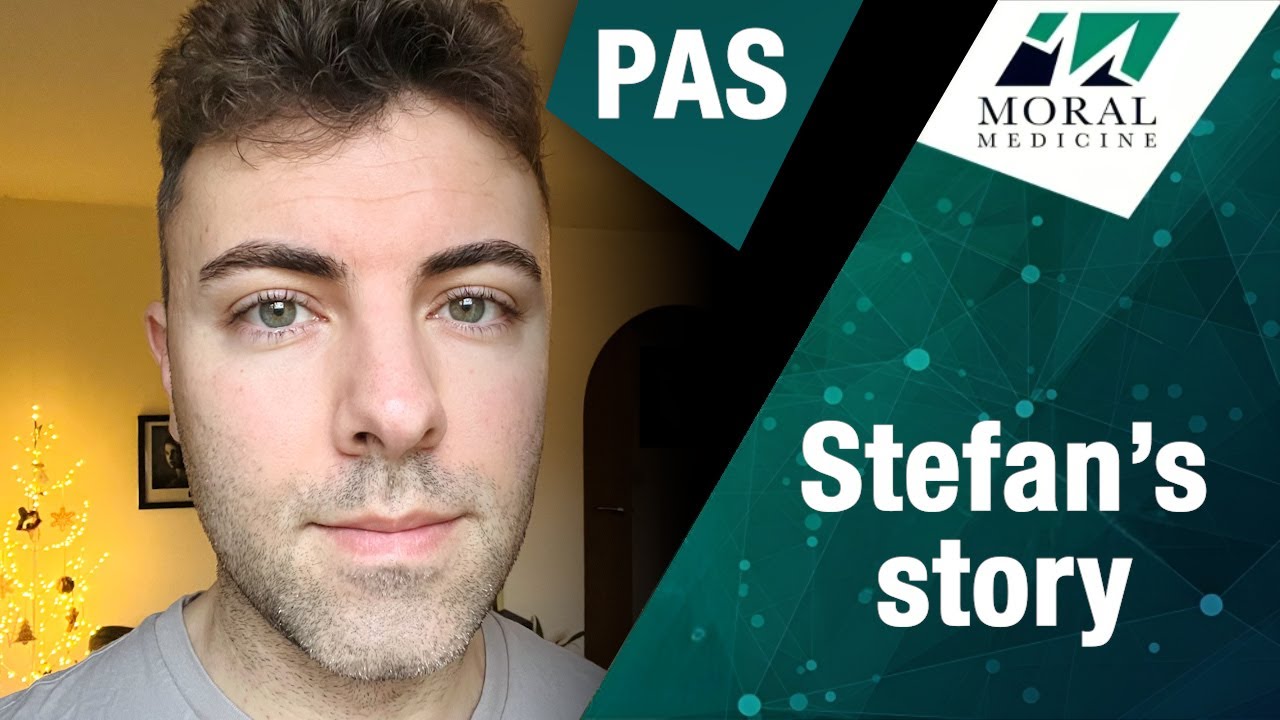
Stefan
Stefan took Accutane for a short time at 15. Moral Medicine says he has been living with PAS for almost 19 years.

Joseph
Joseph, from France, took isotretinoin for acne at 13. He says severe anxiety began months after the course ended.

Miriam
Miriam took two courses of isotretinoin for mild acne. She describes dry eyes, bone loss, hair loss and other symptoms.
Key facts about PAS
- 1
Diagnostic criteria from 2022 cover its sexual form only. The name PAS is also used for mental health and cognitive problems without sexual ones.
- 2
The UK label warns that sexual problems have continued after stopping, and that stopping may not ease mental health symptoms. In June 2026 the FDA told US makers to list lasting sexual problems.
- 3
There is no test. The MHRA accepts reports even years after stopping.
- 4
How often PAS happens is unknown. The UK label gives the frequency of sexual side effects as “not known”.
- 5
There is no approved treatment, and recovery has never been properly studied. Its sexual form “can remain for months, years or indefinitely”.
Questions people ask about PAS
What can happen after you stop Accutane?
In post-Accutane syndrome (PAS), symptoms continue after a course of isotretinoin, or start only after it. The UK label warns that sexual problems have continued after stopping, that stopping may not ease mental health symptoms, and that poorer night vision has in rare instances persisted. How often PAS happens is unknown.
Can Accutane cause brain fog?
Brain fog is an everyday name for cognitive impairment: trouble concentrating and remembering. The 2022 criteria paper lists cognitive impairment, including memory problems, among the changes reported after isotretinoin. These can come with or without sexual problems. The diagnostic criteria themselves cover only the sexual form of post-Accutane syndrome, not cognitive problems alone. How often PAS happens is unknown.
Will your body go back to normal after Accutane?
Some people with post-Accutane syndrome improve and some do not. The MHRA’s 2023 expert review covered 184 UK reports of sexual side effects. Where men gave the outcome, half said their erection problems did not stop when they stopped the medicine. How many people recover has never been properly investigated.
Can Accutane cause problems later in life?
Post-Accutane syndrome can last for years. The UK label warns that sexual problems have continued after stopping, and some UK reports describe erection problems lasting up to 24 years. Symptoms can also start only after the course. The MHRA, the UK regulator, accepts reports even years after stopping. Nobody has measured how often this happens.
Is post-Accutane syndrome real?
Some symptoms of post-Accutane syndrome are documented on isotretinoin’s own label. The UK label warns that sexual problems have continued after stopping, and in June 2026 the FDA told US makers to list sexual dysfunction that may continue after treatment. Diagnostic criteria for the sexual form of PAS were published in 2022. No regulator has recognised PAS as a condition.
Is post-Accutane syndrome permanent?
Post-Accutane syndrome can be permanent. Some people improve and some do not. Its sexual form “can remain for months, years or indefinitely”, the 2022 criteria say, and how many recover “has never been properly investigated”. Some reports describe problems lasting up to 24 years.
If you think you have PAS
Do not stop or change a medicine because of anything on this page. If you or your child take isotretinoin and notice changes in mood or sexual function, contact the prescriber straight away.
Talk to your doctor
Even if you stopped years ago. Ask for your symptoms and dates to be recorded in your notes.
Report it, even years later
Use the Yellow Card scheme (UK) or MedWatch (US). Name each symptom and say whether it began or continued after stopping. No proof needed. Other countries.
Join the registry
Joining the SIDEfxHUB Registry needs no diagnosis.
Find other people
Join one of our private WhatsApp support groups.
If you are struggling, call Samaritans on 116 123 in the UK (free, any hour) or 988 in the US. In an emergency, call 999 or 911.
The full guide to PAS
What it is, who gets it, what regulators have done, the research, diagnosis, treatment and recovery, with sources.
What is post-Accutane syndrome?
Post-Accutane syndrome (PAS) is a condition caused by isotretinoin, a medicine for severe acne. It can affect mental health, sexual function, cognition and the body. Symptoms can start during treatment or only after it, and can last for years. Its UK brand is Roaccutane; Accutane was its US brand.
PAS has no official definition. Only its sexual form has published diagnostic criteria.
PAS is one of three related conditions, with PFS (after finasteride) and PSSD (after SSRI and SNRI antidepressants). The 2022 criteria cover all three.
The 2022 diagnostic criteria
There is no blood test or scan for PAS. In 2022, 37 doctors and researchers from ten countries agreed diagnostic criteria for its sexual form, which they call post-retinoid sexual dysfunction (PRSD).
- Required: you took isotretinoin.
- Required: sexual problems continued after you stopped.
- Supporting: lasting loss of desire, erection problems or less vaginal lubrication, less feeling in the genitals and at orgasm, and problems that have lasted 3 months or more.
- Ruled out: the same problems before the medicine, or another illness, medicine or drug use that explains them. The criteria also ask for no earlier finasteride or SSRI-type antidepressant (see PFS and PSSD).
A current mental health diagnosis does not rule it out. The paper adds that the name PAS is also used for mental health and cognitive problems “without sexual difficulties”. The criteria do not cover those.
The criteria are an expert consensus, not official guidance. They were built from cases reported to RxISK.org, a drug safety website linked to three of the authors.
The medicine, its names and codes
- Medicine
- Isotretinoin, a retinoid (a medicine related to vitamin A), taken as capsules
- Brand names
- Roaccutane and Reticutan in the UK. Absorica, Amnesteem, Claravis, Zenatane and others in the US
- Licensed for
- Severe acne that has not responded to standard treatments, such as antibiotic tablets and creams (UK label)
- UK status
- A black triangle (▼) medicine, under additional monitoring
- Pregnancy
- It can seriously harm an unborn baby, so a Pregnancy Prevention Programme applies
- MedDRA term
- Not confirmed. We could not verify a term for PAS in MedDRA, the dictionary regulators use to record side effect reports
- Orphanet (rare disease database)
- No entry for PAS in our September 2026 search. Orphanet does list PFS and PSSD
- ICD code
- None of its own (ICD codes are what doctors use in medical records).
More about the symptoms
The criteria need a sexual problem for a diagnosis. The other groups can come with it, or on their own.
The sexual group comes from the 2022 criteria and the UK prescribing information. The criteria add the mental health, cognitive, skin, joint and bowel changes. The label adds anxiety and mood changes, and says poorer night vision has “in rare instances” persisted.
What the UK label says
The UK label reports “long-lasting sexual dysfunction” that continued after stopping. On mental health, it warns that stopping “may be insufficient to alleviate symptoms”.
Who gets PAS
- Who takes it
- Mostly young people. UK reports of mental health side effects peak at 15 to 25, when use is highest. It is not for acne before puberty, or recommended under 12
- Age
- UK reports of sexual side effects: ages 14 to 50, median 21. US reports of problems that continued after stopping: also median 21 (FDA)
- Sex
- 80% of UK reports of sexual side effects came from males and 19% from females. In girls and women these problems may be “less immediately obvious” (MHRA)
- Dose
- Not known: “no firm conclusions can be made” (MHRA)
- Length of course
- Not known. One case series includes a person who took it for less than 2 weeks
- When it starts
- During treatment or only after it. The MHRA has reports of erection problems that began after the course, and says the time of onset “is not known”.
- Risk factors
- Not known, including whether age matters (MHRA)
These numbers come from people who chose to report, and some gave their age years after treatment, the MHRA’s expert review notes.
How common is PAS?
Nobody has measured it; the criteria’s authors call the incidence “unknown”. In 2017, with about 30,000 UK patients a year, the MHRA said “the exact incidence of these adverse reactions is unknown”, though it judged reports rare.
Reports and their limits
- By May 2021 the MHRA had 184 Yellow Card reports of sexual side effects. It says the true number is “likely to be higher”, because the problem is “highly personal and a cause of embarrassment”.
- In 2024 Health Canada found 111 cases, 11 in Canada and 100 elsewhere. In just over half of the reported events, problems lasted “months to years” after stopping.
- Reports show that something happens, never how often. The FDA says its own database “cannot be used to calculate the incidence” of a side effect.
Why there is no rate
The original trials ran mainly in the early 1980s. Their recording of side effects was not “systematic or robust”, the MHRA’s experts found. Trials usually do not follow up sexual side effects after people stop, the criteria’s authors add.
A study following people from first dose to years after the last would answer the question. In 2023 the MHRA’s experts recommended a registry to record side effects “during and after treatment”.
What regulators have done
Regulators in the UK, the EU and the US have added warnings and tightened prescribing, but none has recognised PAS as a condition. The UK’s experts concluded in 2023 that for severe acne the benefits “continue to outweigh the risks”.
United Kingdom
Expert review begins
An expert group of the Commission on Human Medicines starts reviewing mental health and sexual side effects, including whether “in some cases, these continue” after stopping. A 2020-21 call for information draws 710 responses.
The review reports
It finds it “not possible to say that isotretinoin definitively caused” many reported effects. It still recommends a warning on lasting sexual problems, two prescribers for under-18s, regular checks and a registry.
New rules take effect
The UK label now warns that sexual problems have continued after stopping. Under-18s need two prescribers to agree. Every patient completes a risk form and has mental health and sexual function checked.
Sexual function checks at follow-up
Doctors should ask about sexual function at follow-up visits, as the time of onset “is not known and has been reported to persist after treatment has completed”.
Second prescriber no longer needed
For under-18s it is replaced by an updated risk form, a clinical audit by the British Association of Dermatologists and a video on the risks. All other measures stay.
European Union
Mental health warnings
Suicidal thoughts, worsening depression, anxiety, aggression and mood changes are added to the label across Europe, including the UK.
Sexual side effects added
“Sexual dysfunction including erectile dysfunction and decreased libido” joins the label. In 10 of the cases reviewed the problem did not improve after stopping; in 15 it did.
Retinoid review
A new Pregnancy Prevention Programme, and a mental health warning for retinoids taken by mouth, though the data “did not allow to clearly establish” cause.
Vaginal dryness added
Vulvovaginal dryness (dryness of the vulva and vagina) joins the list of side effects.
We have not found an EU-wide warning that sexual problems can continue after stopping. The Irish label we checked (February 2025) says only that some side effects “may persist”.
United States
A petition
A citizen petition asks for a boxed warning that sexual side effects “can sometimes persist indefinitely” after stopping.
Lasting sexual side effects on every label
The FDA tells makers of all isotretinoin products to list sexual dysfunction “that may continue after discontinuation of treatment” as a side effect. It turns down a formal warning, finding no “reasonable evidence of a causal association”. Until then, generic labels based on Accutane said nothing about sexual side effects.
In 2024 Health Canada concluded that a link, including to problems that continue after stopping, “could not be ruled out”.
If you are struggling, call Samaritans on 116 123 in the UK (free, any hour) or 988 in the US.
Research on PAS
Research on lasting effects is thin. The MHRA’s experts called the literature on sexual side effects “not extensive”, and the FDA found no “adequately designed placebo-controlled studies”.
Sexual side effects
Healy and colleagues, 2018
Of 300 reports of lasting sexual problems after a medicine, 54 followed isotretinoin. Eight people still had problems 10 or more years after stopping, 4 of them over 20 years.
Self-selected reports to RxISK.org, a website the authors set up, with no comparison group. It shows the problem exists, not how often.
MHRA expert review, 2023
184 UK reports of sexual side effects. Where men gave the outcome, half said their erection problems did not stop when they stopped the medicine. Some reported them for up to 24 years.
Voluntary reports, often missing dose, dates or other medicines. The review could not say isotretinoin “definitively caused” these effects.
FDA review, 2026
Most US reports came from young, healthy people with no other stated cause. The median age of those whose problems continued after stopping was 21.
The FDA said the published cases described “small numbers of reported cases with little detail”, so it listed the risk but did not add a warning.
Systematic review, 2024
A 2024 review of sexual problems after retinoid treatment found 11 studies, mostly case reports and small case series. It judged the evidence conflicting and low quality, and could not establish cause.
None of the studies used a validated scale to classify the problem.
Mental health
The US label says isotretinoin “may cause depression, psychosis and, rarely, suicidal ideation, suicide attempts, suicide, and aggressive and/or violent behaviors”. Whether it does is still disputed, and studies point in different directions.
Tan and colleagues, 2024
Pooled 25 studies of over 1.6 million people. At population level, users had no higher risk of psychiatric conditions, and a lower risk of suicide attempts 2 to 4 years after treatment.
Averages can hide individuals. The MHRA’s experts said some people may improve as their skin clears while others may be harmed.
Sundström and colleagues, 2010
Followed 5,756 people in Sweden for up to 15 years. Hospital admissions for suicide attempts were raised during treatment and up to 6 months after, and back to expected levels 3 years later.
The rise began before treatment, so the medicine could not be separated from the acne. The authors advised monitoring “for up to a year after treatment has ended”.
If you are struggling with your mental health, you are not alone. Samaritans are on 116 123 in the UK, free, at any hour. In the US, call or text 988.
How it might happen
Nobody knows. Isotretinoin has actions similar to both SSRIs and finasteride, but “it is not clear whether the problem stems from either”, the criteria’s authors say.
Lasting epigenetic changes (in how genes are switched on and off) have been proposed, but whether they happen “is unknown”, the MHRA’s experts note. Our interview with Doug Bremner looks at brain research on isotretinoin.
How PAS is diagnosed
There is no test for PAS. A doctor diagnoses it from your history, using the 2022 criteria for sexual symptoms. For other symptoms on their own the criteria do not apply, and diagnosis rests on ruling out other causes.
Your doctor may not have come across it. Most health professionals who answered the MHRA’s call for information “had not seen sexual side effects with isotretinoin”, though several “did not usually ask about it”. Since October 2023, UK prescribers have been told to ask.
What to bring to your doctor
- When you took isotretinoin, the dose if you know it, and when you stopped.
- When each symptom began: during the course, or after it.
- What things were like before you started.
- Every other medicine, before or since, including antidepressants and finasteride.
- In the UK, if you were treated after October 2023, your copy of the Acknowledgement of Risk Form.
- The criteria paper and the UK patient leaflet, both free to read.
Our letter for your doctor puts this on one page, with sources, ready to hand over.
Ruling out other causes
Sexual problems are common, and depression, anxiety and their treatments affect sex too, so a doctor will look for other causes. That is not dismissal: the criteria say a mental health diagnosis “does not prevent” diagnosis, and borderline hormone levels “may be a consequence of the conditions rather than a cause”.
PAS treatment and recovery
There is no approved treatment for PAS. In September 2026 we found no treatment trial for it on ClinicalTrials.gov. A 2025 paper notes that the cause “is unknown, nor is an effective treatment available”.
Is PAS permanent?
It can be. Some people improve and some do not. Its sexual form “can remain for months, years or indefinitely”, the criteria say, and how many recover “has never been properly investigated”.
- The MHRA’s 2023 expert review covered 184 UK reports of sexual side effects. Where men gave the outcome, half said their erection problems did not stop when they stopped the medicine. Some reported them for up to 24 years.
- Joseph says his symptoms have improved in a meaningful way with time, patience and support. He is clear that this is not a cure.
How to judge a treatment offer
You may come across treatments offered online or in private clinics. We do not recommend any. These questions help you and your doctor weigh an offer:
- Has it been tested in people with PAS, and where were the results published?
- Was there a comparison group? Without one, improvement may be time, not the treatment.
- What are its side effects, and what happens if it does not work?
- What does it cost, and does the person recommending it also sell it?
- Does your doctor know? Tell them before you start anything new.
What SIDEfxHUB does
SIDEfxHUB is the UK patient charity (registered charity 1203385) for people living with post-drug syndromes. Our focus is PFS, PSSD and PAS. We fund research, push for these conditions to be recognised, and support patients.
- The registry. Our registry follows people over months and years. The people in it chose to join, so it cannot say how common PAS is. It can show patterns: which symptoms, when they began and how they change.
- Research. We raise money for the Milano Project at the University of Milan, which studies finasteride and SSRIs, not isotretinoin. In our view the evidence gap is widest for PAS, which is why we want people with PAS in the registry.
Sources
Every source below was checked on 26 September 2026.
MHRA expert review
The UK review, with every update to January 2026.
Read on GOV.UK→Commission on Human Medicines report
The April 2023 expert report and Yellow Card data.
Read the PDF→UK prescribing information
Roaccutane, sections 4.4 and 4.8.
Read the label→UK patient leaflet
The Roaccutane leaflet for patients.
Read the leaflet→FDA petition response, June 2026
The FDA decision on lasting sexual side effects.
Read the response→US prescribing information
A current US isotretinoin label, on DailyMed.
Read the label→EU review, 2017
The EU decision adding sexual dysfunction.
Read the document→Health Canada review, 2024
Canada’s review of lasting sexual side effects.
Read the review→The 2022 diagnostic criteria
Healy and 36 co-authors, International Journal of Risk & Safety in Medicine.
Read the paper→Research on PubMed
Studies on isotretinoin and lasting sexual problems.
Search PubMed→Read next about PAS
This information does not replace medical advice. Talk to your doctor before you make any decision about your treatment.
Lasting side effects after isotretinoin?
You are not alone.
Free. Sign up takes 2 minutes.