What does post-Accutane syndrome feel like?
People with post-Accutane syndrome (PAS) describe a numb body, no sex drive, flat emotions and foggy cognition that continued after stopping isotretinoin.
SIDEfxHUB is a patient charity. We are not health professionals, and this does not replace medical advice. Don't start, stop or change any medicine because of what you read here. Talk to your doctor first.
If you are in crisis:116 123 Samaritans (UK)988 Lifeline (US)Find a helpline
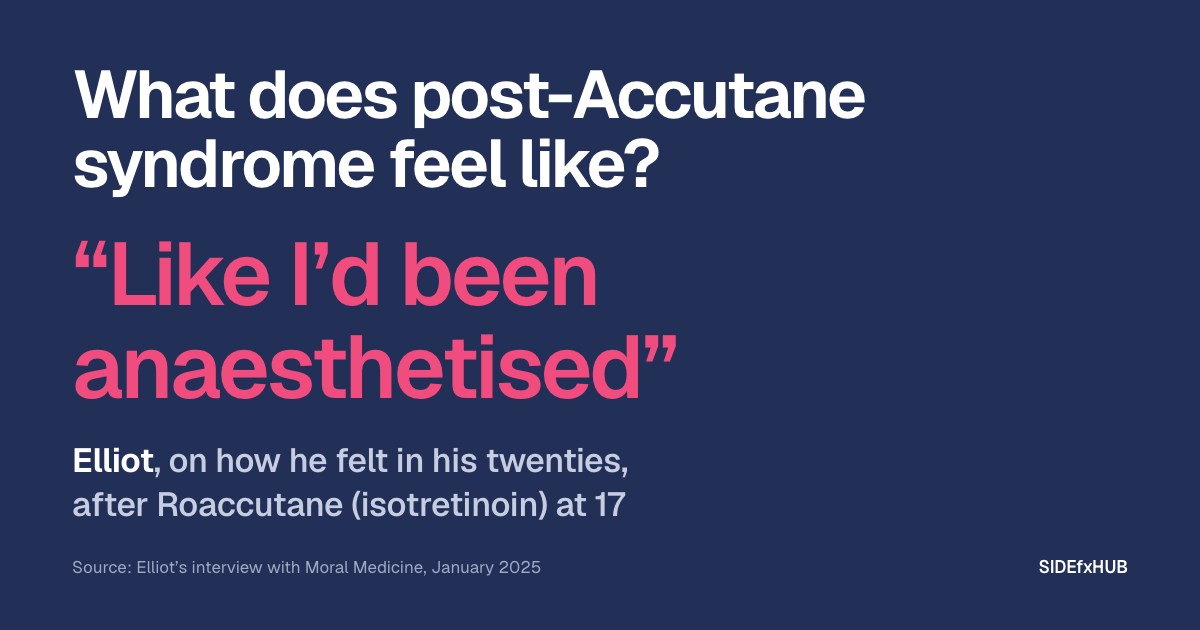
People with post-Accutane syndrome (PAS) describe a body that feels numb, no sex drive, flat emotions and foggy cognition. They say it began while they took isotretinoin (Accutane, or Roaccutane in the UK) or soon after the course, and continued after stopping.
The NHS page on isotretinoin lists erection problems and a low sex drive. It doesn’t mention numbness, flat emotions or cognition. Those are hard to recognise in yourself, and harder to explain to a doctor.
The story in 3 lines
- The UK leaflet calls isotretinoin's side effects “generally reversible”, but says “some may continue after treatment has stopped”.
- Diagnostic criteria that researchers published in 2022 describe a lasting loss of desire and of feeling in the genitals after isotretinoin, and say cognitive problems and depression can come with it.
- Nobody has measured how often this happens. We know what PAS feels like from the people who have it.
Press: contact@sidefxhub.com
Elliot was 17 when a hospital dermatologist prescribed him Roaccutane for severe acne. During the course, he says, “everything just felt very numb and dry”. Then came a heavy tiredness and an aching back.

He finished the course. Thirteen years later he lists what he lives with every day: “a dryness everywhere”, aching shoulders and tiredness. His emotions, he says, are “flatline”, apart from fear and panic.
What does PAS feel like in the body?
Dry, tired and numb, in Elliot’s account. Through his twenties he was “always tired, foggy, disconnected”, and felt “like I’d been anaesthetised”. His sense of smell never really came back, he says.
How Elliot says it unfolded
Stefan was 15 when he started Accutane, and he stopped a month early. That’s when he crashed, he says, and his body “felt like I was 90 years old”. Interviewed more than 18 years later, he says the tiredness is “just constant”.
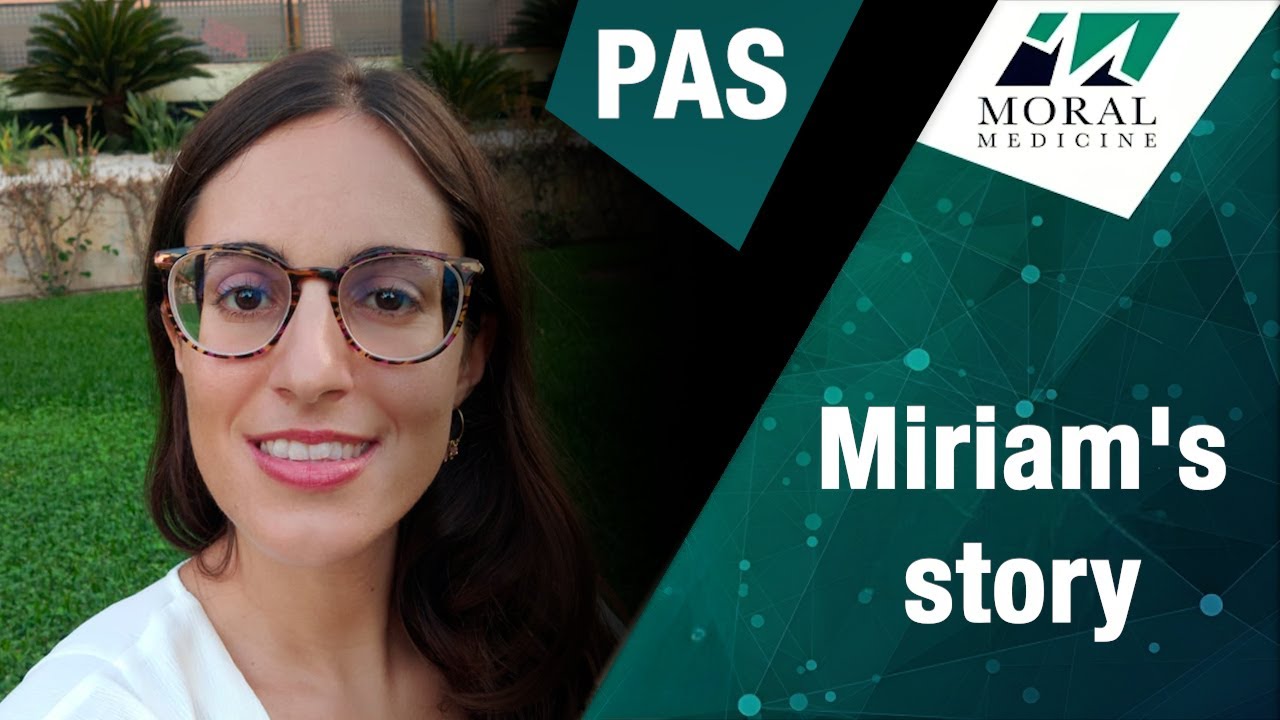
Miriam took two low-dose courses in her thirties. Four months after the second, she had to stop wearing contact lenses. She says she was later diagnosed with severe dry eye disease, and that her eyes “felt completely exposed to even the tiniest breeze”.
Her knees hurt too, she says in the film: “I’m just 35.”
The UK leaflet says there have been reports of dry eyes that didn’t clear up after stopping. The 2022 criteria say skin, joint and bowel changes can come with the sexual problems. Long-term side effects of Accutane goes through each.
What does PAS feel like sexually?
No drive, and for a time no feeling. Stefan says his libido “is just non-existent”. For a while he “couldn’t feel anything” during sex either. That part has got a little better, he says. The desire hasn’t: he can go weeks without being in the mood.
Erections aren’t the problem now, he says. “For me it’s more the brain connection not working.”
The UK leaflet lists a lower sex drive and “reduced sensation in the genitals”. It says there have been reports of long-lasting sexual problems that continued after people stopped the medicine.
In 2023, experts advising the UK medicines regulator went through the reports it had received. A few described less feeling in the genitals, and for two men it had lasted years after stopping. One patient told them orgasm still happened, but “everything feels kind of numb and disconnected”.
What does PAS feel like emotionally?
Flat. At 23 or 24, Elliot says, he realised how many years had passed: “I still haven’t had an emotion land.” Relationships ended because he couldn’t feel connected.
What he does feel is panic. It’s like being in “total fight or flight all the time”, he says.
He was an anxious teenager before the medicine, he says, with small bouts of feeling detached. Afterwards the detachment was “off the scale and it’s all the time”.
Stefan loved his grandad, he says. When the call came that he’d died, Stefan wondered whether he’d feel anything. “I kind of didn’t.” At the funeral his sister and cousins were crying, and he made himself cry.
The UK leaflet warns of depression, anxiety and altered mood, and says that stopping the medicine “may not be enough to stop the effects”. Flat emotions aren’t on its list.
What can I do?
These medicines help many people. If you have side effects, that’s a decision for you and your prescriber.
If your mood drops, or you have thoughts of harming yourself, the UK leaflet says to contact your doctor straight away. The Samaritans are on 116 123, free, at any hour.
Write your symptoms down before an appointment, in plain words: “Isotretinoin 40 mg a day from March 2019, last capsule October 2019. Since then: no sex drive, I feel flat, I lose words mid-sentence. None of this before 2019.”
Many people say it took time to be taken seriously. Bring the leaflet line: “some may continue after treatment has stopped”. You can report it without a doctor agreeing. I think I have post-Accutane syndrome takes you through the appointment.
Report it: it helps everyone
A doctor’s note helps you. A report to the medicines regulator helps everyone else: it is how patterns get noticed.
- No proof needed. A suspicion is enough, even years after stopping.
- Where: the Yellow Card scheme in the UK, MedWatch in the US.
- Use the right words. PAS has no term of its own in the regulators’ dictionary (MedDRA) yet, so name each symptom and say it continued after stopping.
Our reporting guide walks you through it
What else do people ask?
What does PAS brain fog feel like? Elliot remembers his twenties as “dizzy, confused”. Stefan forgets “simple words that I know” and struggles to concentrate at work. The 2022 criteria say cognitive problems can come with the sexual ones. The UK leaflet doesn’t mention memory or concentration.
Is it like PFS and PSSD? People with lasting symptoms after finasteride (PFS) or antidepressants (PSSD) also talk about numb genitals, no drive and flat emotions. Their words are in What does PFS feel like? and What does PSSD feel like? The 2022 criteria cover all three conditions, and say each commonly brings less desire and less feeling in the genitals.
Does PAS go away? For some people it has lasted years after stopping. Nobody knows yet who will be affected, or whether it will ease. Stefan says his numbness got a little better, while most of his symptoms hadn’t changed after 18 years. Does post-Accutane syndrome go away? has more, and so does our page on post-Accutane syndrome.
Elliot says he’s in this alone, because he could never make anyone else feel what he feels. He went on camera anyway, and told anyone watching who wants “a friend who’s going through this” to get in touch. A report is another way to be heard.
Sources
- Roaccutane 10 mg soft capsules (isotretinoin), patient leaflet, Electronic Medicines Compendium (EMC 100633), last revised April 2026. Section 4: “The side effects are generally reversible after changing the dose or stopping treatment, however some may continue after treatment has stopped”. Section 2 says isotretinoin has been associated with sexual problems: “These include problems getting or maintaining an erection, lower libido, vaginal dryness, orgasm difficulties and reduced sensation in the genitals”. It goes on: “There have been reports of long-lasting sexual problems where the symptoms have continued despite stopping treatment with isotretinoin”. Also section 2: “Cases of dry eyes not resolving after discontinuation of therapy have been reported”. Section 4, mental problems: “Depression or related disorders. Signs of this include sad or altered mood, anxiety, feelings of emotional discomfort”; “Contact your doctor straight away if you get signs of any of these mental problems. Your doctor may tell you to stop taking Roaccutane. That may not be enough to stop the effects: you may need more help, and your doctor can arrange this”. As of October 2026, the leaflet does not mention emotional numbness, memory or concentration. It lists back pain, muscle pain and joint pain, and changes to bone density.
- NHS, Isotretinoin (Roaccutane), page last reviewed 26 June 2026. Side effects include “problems with sex, such as erectile dysfunction (impotence) and low sex drive (loss of libido)”; serious side effects include mental health problems. As of October 2026, the page does not mention numbness, emotional numbness, memory or concentration.
- Healy D, Bahrick A, Bak M, et al. Diagnostic criteria for enduring sexual dysfunction after treatment with antidepressants, finasteride and isotretinoin. International Journal of Risk & Safety in Medicine, 2022; 33(1): 65–76. The criteria name the sexual form post-retinoid sexual dysfunction (PRSD). Necessary: prior treatment with isotretinoin and enduring sexual dysfunction after stopping. Additional criteria include “enduring reduction or loss of sexual desire”, “enduring reduction in genital and orgasmic sensation” and a problem present 3 months or more after stopping. Effects that “can occur independently of any sexual difficulties but may also accompany sexual problems”: cognitive impairment, skin changes, joint changes, bowel changes, depression, suicidality. The paper says the term post-Accutane syndrome (PAS) “is in widespread use and often refers to what is termed PRSD here”. It adds that the term equally often appears to cover suicidality and cognitive effects without sexual difficulties. “Features of PSSD, PFS and PRSD commonly include decreased genital and orgasmic sensation, decreased sexual desire and erectile dysfunction”. “The incidence of these conditions is unknown”. An expert consensus built from case reports. The PRSD criteria do not list emotional numbing.
- Commission on Human Medicines, Report of the Isotretinoin Expert Working Group, 26 April 2023, published by the MHRA. Section 5.3.4.3.2: 7 Yellow Card reports of genital hypoaesthesia (reduced sensation in the genitals), 3 from men and 4 from women. For 2 of the men it was still there 7 and 11 years after stopping. Two of the women still had it 5 and 10 months after stopping. Section 5.3.4.3.3 quotes a comment received through the review’s call for information. “Mechanically, I can have an orgasm, but there is no mental pleasure and everything feels kind of numb and disconnected”. Section 5.3.5: for most patients whose reports matched the lasting pattern, “the symptoms have continued long term”. Voluntary reports: they show what people describe, not how often it happens.
- Moral Medicine on YouTube. Elliot, 28 January 2025, embedded here as an extract from 1:11:14 to 1:18:00: Roaccutane at 17 at 3:45, severe acne at 5:07 and the hospital dermatologist from 13:38. On it “for about 8 months… 7 or 8 months” at 46:46. “Everything just felt very numb and dry” at 47:48, then “very heavy and tired” and lower back pain at 48:11. He finished the whole course at 49:51. His acne gone at 55:24, and “ignoring the fact that I didn’t feel good” at 56:13. “Just felt like I’d been anesthetized” at 1:05:43. Anxiety before the medicine at 22:08, small bouts of dissociation at 1:06:03 and “off the scale and it’s all the time” at 1:10:18. Thirteen years since stopping at 1:11:20. “Always tired, foggy, disconnected” at 1:12:56 and his sense of smell at 1:13:05. “Dizzy, confused” at 1:13:40. “I still haven’t had an emotion land” at 1:14:55, and relationships that ended at 1:15:15. “It’s just a dryness everywhere” at 1:16:40, shoulders “so achy all the time” at 1:17:10, “flatline emotions apart from… fear and panic” at 1:17:45 and “total fight or flight all the time” at 1:17:56. “I know I’m in this alone” at 1:24:16 and “a friend who’s going through this” at 1:25:15. Miriam, 13 October 2025, embedded here as an extract from 35:11 to 37:11: her first course in 2020, when she turned 30, at 5:31; 20 mg a day for ten months at 8:06; two courses at 8:58. She finished the second in January 2023 and stopped wearing contact lenses in May, at 13:42. She says a dry eye specialist diagnosed evaporative dry eye disease in April 2024, at 17:08, and calls the loss of glands in her eyelids “very severe” at 17:27; this is her account, and we have not seen her records. “My eyes felt completely exposed to even the tiniest breeze” at 19:34, and struggling to concentrate in a conversation at 20:00. Inside the extract: her knees, “but I’m just 35”, at 36:25, and vaginal dryness that “didn’t get better” once she stopped, at 37:09. Moral Medicine, interview with Stefan, 11 December 2024, cited without a link: 15 when he started, and 16 the month he stopped a month early, at 3:38. Stopped in May 2006 at 11:28. “It was when I stopped it where I crashed”, and “felt like I was 90 years old”, at 11:06. Still “pretty much all” of his symptoms at 11:44, and fatigue that is “just constant” at 13:24. “Simple words that I know” at 14:14 and concentrating at work at 14:24. His grandad’s funeral from 16:29, and “I kind of didn’t” at 16:54. Libido “is just non-existent” at 22:01, “I couldn’t feel anything” at 22:27, “got a little bit better” at 22:43 and “weeks without being in the mood” at 22:57. “For me it’s more the brain connection not working, like I can function now” at 55:58. We don’t link Stefan’s film, because its opening recalls another young man’s suicide. Quotes are from YouTube’s automatic captions, which don’t label speakers; we quote only lines whose speaker is clear.
- Their stories on our site: Elliot, Stefan and Miriam.
This information does not replace medical advice. Talk to your doctor before you make any decision about your treatment.
590+ people have joined the community.
Join them, then report your side effects.
No diagnosis needed. Researchers never see your name.