Does post-Accutane syndrome go away?
Post-Accutane syndrome (PAS) has eased for some people and lasted years after stopping isotretinoin for others. Nobody can say yet who will get better.
SIDEfxHUB is a patient charity. We are not health professionals, and this does not replace medical advice. Don't start, stop or change any medicine because of what you read here. Talk to your doctor first.
If you are in crisis:116 123 Samaritans (UK)988 Lifeline (US)Find a helpline
For some people, post-Accutane syndrome (PAS) has eased with time. For others it has lasted years after stopping isotretinoin (Accutane, or Roaccutane in the UK), and nobody knows yet who will get better.
Much of what’s known comes from reports that patients and doctors sent to regulators, and a report can’t say what happened after it was sent. So no one can promise you’ll recover, and no one can know that you won’t.
The story in 3 lines
- The UK leaflet calls isotretinoin's side effects “generally reversible”, but says “some may continue after treatment has stopped”.
- Where UK reports gave the detail, about half of men's erection problems carried on after stopping. A very few reports describe a problem easing (2023 UK expert review).
- How many people fully recover has never been properly studied (2022 diagnostic criteria). Patients call it PAS.
Press: contact@sidefxhub.com
Joseph took isotretinoin for five months when he was 13. About half a year after his last capsule, he says, severe panic attacks began. Little by little, things got worse.
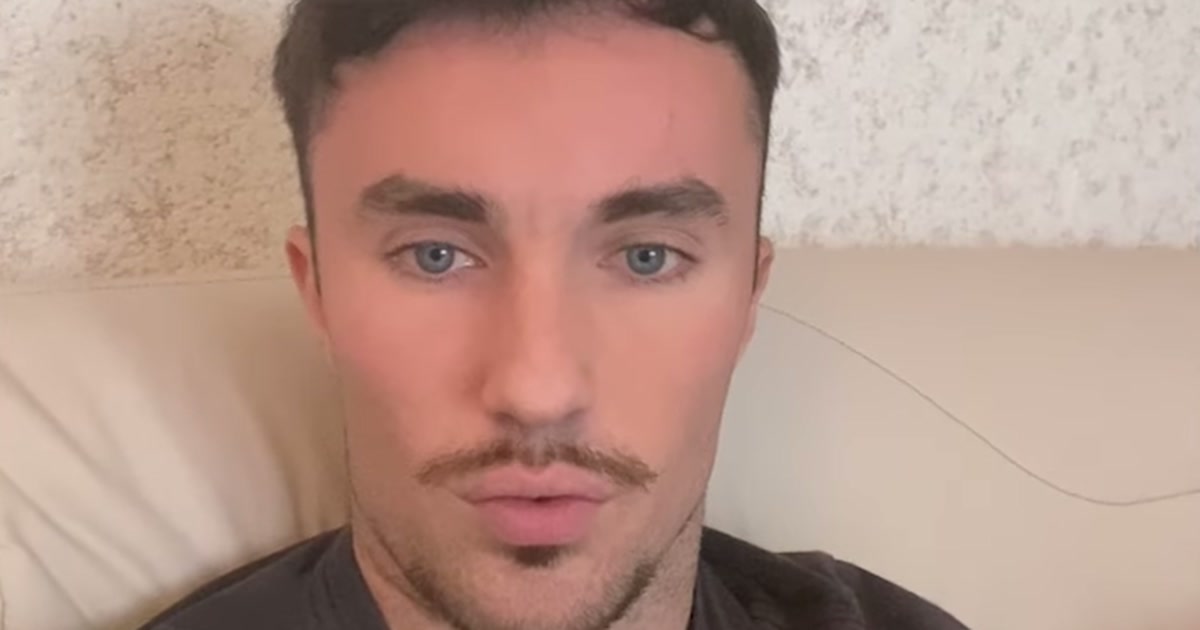
It didn’t stay that bad. With time, his symptoms have become much milder, and he credits talking about it and a family who backed him. The symptoms are still there. “I think the worst is behind me,” he says.
Can you recover from post-Accutane syndrome?
Some people have improved, going by what they report. Others haven’t, so far.
The UK leaflet calls isotretinoin’s side effects “generally reversible” after stopping, then adds that “some may continue after treatment has stopped”.
Experts advising the UK medicines regulator went through reports of erection problems. Where a report gave the detail, about half of the men said the problem didn’t stop when they stopped isotretinoin.
Dutch reports show a mix: some men had recovered within weeks of stopping, and others hadn’t.
PAS is the problem that stays after the last capsule. Does that ever ease?
In a very few reports it has. In one man, the UK review says, genital numbness had improved years later, though some effects remained.
Only a few UK reports matched the lasting sexual problems that researchers have described after isotretinoin. In most of them, the experts found, symptoms had continued long term.
Is post-Accutane syndrome permanent?
For some people it has lasted years after stopping. Nobody knows yet who will be affected, or whether it will ease.
In 2022 a group of doctors and researchers wrote diagnostic criteria for sexual problems that last after isotretinoin. They can remain, the authors said, “for months, years or indefinitely”.
In the UK reports, men who said how long their erection problems had lasted gave anything from under a year to 24 years.
Each of those is a snapshot. A report records how long a problem had lasted on the day it was sent. A man who wrote in after two years may have got better in the third, or he may not have.
What a side-effect report can tell you
The number of people who get all their sexual function back “has never been properly investigated”, the authors of the 2022 criteria wrote. In April 2023 the UK experts called for a registry of people taking isotretinoin, partly to learn about side effects that continue long term, and in October 2023 a second expert group advised against a compulsory one.
Is there a treatment for post-Accutane syndrome?
No proven one. The US regulator, the FDA, reviewed reports of sexual problems that continued after isotretinoin. Some people needed treatment and referrals to specialists such as urologists, it noted, “often with little to no improvement”.
People with PAS describe trying many things. Joseph, for one, has changed his diet. We couldn’t find a trial that has tested any treatment for PAS, so nobody can say what helps, or what might do harm.
Researchers have started looking. Dr Kenneth Peters, a US urologist, studies PAS alongside two similar conditions: PSSD, which follows antidepressants, and PFS, which follows finasteride. His team wrote in 2025 that no effective treatment was available.
They had tried treating the nerves in the genitals of three men with lasting sexual problems of this kind. The paper’s summary doesn’t say which medicine each man had taken. The men improved somewhat, the team reported, but were still badly affected.
In April 2026 Dr Peters brought together doctors and scientists who study all three.

He told us the group has more questions than answers so far. Its aim, he said, is to find the causes, and ways to prevent or treat these conditions.
What can I do?
These medicines help many people. If you have side effects, that’s a decision for you and your prescriber.
If something hasn’t lifted since your course ended, tell your GP and give your dates: “Isotretinoin 30 mg a day from February 2023, last capsule August 2023. Low sex drive since October 2023.” Say whether it’s getting better, getting worse or staying the same.
Many people say it took time to be taken seriously. Bring the leaflet line: “some may continue after treatment has stopped”. You can report it without a doctor agreeing.
Our article Is post-Accutane syndrome real? sets out what the official documents say.
Report it: it helps everyone
A doctor’s note helps you. A report to the medicines regulator helps everyone else: it is how patterns get noticed.
- No proof needed. A suspicion is enough, even years after stopping.
- Where: the Yellow Card scheme in the UK, MedWatch in the US.
- Use the right words. PAS has no term of its own in the regulators’ dictionary yet, so name each symptom and say it continued after stopping. Add how long it has lasted and whether it has changed.
Our reporting guide walks you through it
What else do people ask?
Does the low mood lift? For some people it does. The US label describes patients whose depression lifted when they stopped isotretinoin. The UK leaflet warns that stopping “may not be enough to stop the effects”. Our article on Accutane and depression after stopping has more. If you’re struggling, the Samaritans are on 116 123, free, at any hour.
Does poor night vision go away? Usually, says the US patient guide, “but it may be permanent”. On dry eyes, the UK leaflet says only that cases that didn’t clear up after stopping have been reported. Long-term side effects of Accutane goes through each one.
Is it the same for PSSD and PFS? Much the same. The 2022 criteria cover all three conditions, and their authors say recovery hasn’t been properly investigated in any of them. We’ve written about recovery from PSSD, and about all three in Side effects after stopping.
Joseph says some days are still black, and his message to other people with post-Accutane syndrome is not to lose hope. If your symptoms have lasted since your last capsule, report it, and say whether they’ve changed.
Sources
- Roaccutane 10 mg soft capsules, patient leaflet, Electronic Medicines Compendium (EMC 100633), last revised April 2026. Section 4: side effects are “generally reversible after changing the dose or stopping treatment, however some may continue after treatment has stopped”; “Mental problems”: “That may not be enough to stop the effects”. Section 2: “Cases of dry eyes not resolving after discontinuation of therapy have been reported”, and reports of long-lasting sexual problems that continued despite stopping.
- Commission on Human Medicines, Report of the Isotretinoin Expert Working Group, 26 April 2023, published by the MHRA. Section 5.3: 184 Yellow Card reports of sexual side effects to 20 May 2021. Section 5.3.4: “Where information was provided, half of men reported their erectile dysfunction did not stop when they stopped their isotretinoin”; Table 4, how long erectile dysfunction had lasted “at the time of reporting” in the 27 men who said (5 under a year; the longest 24 years). Section 5.3.4.3.2: in one man, genital numbness “had improved with sequelae at 7 years”. Section 5.3.5: in one of three men with erection problems, low sex drive and genital numbness, symptoms “partially recovered after stopping isotretinoin, although reduced sexual sensation remained”. The two passages may describe the same man; the report does not say. Section 5.3.5 also says that for most patients whose reports matched the lasting pattern, “the symptoms have continued long term”. Executive summary: limits in the data include a lack of long-term follow-up information. Section 8.5: a drug registry recommended, to gather information on the “natural progression of events” and on side effects that continue long term. A second expert group, in its report of 31 October 2023 (section 5.3.1), advised that a compulsory registry was “disproportionate to the current understanding of risks” and proposed safety studies by the manufacturers, open to all patients, instead. Voluntary reports, often missing dates and doses.
- Healy D, Bahrick A, Bak M and colleagues. Diagnostic criteria for enduring sexual dysfunction after treatment with antidepressants, finasteride and isotretinoin. Int J Risk Saf Med 2022;33(1):65-76. “The number of patients who regain 100% of their original sexual function … has never been properly investigated”; trials do not routinely follow up sexual side effects. “These enduring conditions can remain for months, years or indefinitely after the causative drug is stopped”; reports of more than two decades; no upper limit on duration. Post-retinoid sexual dysfunction is the criteria’s name for the sexual form of PAS. An expert consensus built from case reports.
- Netherlands Pharmacovigilance Centre Lareb, Isotretinoin and erectile dysfunction, 2015. Seven reports received between 2000 and 2014. Two men had recovered 9 and 15 days after stopping; two had not recovered 2 months and 5 years after stopping.
- US Food and Drug Administration, response to citizen petition FDA-2018-P-4088, 16 June 2026. Page 13: some reports where the problem eased when the drug was stopped. Page 14: in cases that continued after stopping, some patients needed treatment and referrals to specialists such as urologists, “often with little to no improvement reported in sexual dysfunction”. Page 11: reports of this kind cannot be used to calculate how often a side effect happens.
- Stachelek J, Zwaans BMM, Shtein R, Peters KM. Insights into the peripheral nature of persistent sexual dysfunction associated with post-finasteride, post-SSRI and post-accutane syndromes: lessons learned from a case study. Int Urol Nephrol 2025;57(8):2387-94. A review of the records of three men treated for 16 weeks. The mechanism is unknown, “nor is an effective treatment available”; mild to moderate improvement, but the patients “were still profoundly affected by their symptoms post-treatment”. Not a controlled trial. We read the abstract only; it does not say which medicine each man had taken.
- Absorica and Absorica LD (isotretinoin), US prescribing information and Medication Guide, revised August 2026. DailyMed, US National Library of Medicine. Section 6: some patients reported that depression “subsided with discontinuation of treatment and recurred with reinstitution of treatment”. Medication Guide, on night vision: “This usually goes away after you stop taking ABSORICA or ABSORICA LD, but it may be permanent.”
- Moral Medicine, French Patient Shares His Long-Term Struggle After Accutane (isotretinoin), interview with Joseph, 17 November 2025, in French. Five months of isotretinoin at 13, panic attacks six or seven months after the course (from about 1:00); symptoms much milder with time (about 7:52); the quote is our translation (about 12:47); his diet (from about 8:17); “don’t lose hope” (about 21:22). His story on our site: Joseph’s story: isotretinoin at 13.
- SIDEfxHUB, Interview with Dr. Kenneth Peters, PFS / PAS / PSSD Summit 2026, April 2026. Dr Peters is chair of urology at Corewell Health William Beaumont University Hospital, Michigan. On our site: Dr. Kenneth Peters on the first PFS/PSSD/PAS summit.
This information does not replace medical advice. Talk to your doctor before you make any decision about your treatment.
590+ people have joined the community.
Join them, then report your side effects.
No diagnosis needed. Researchers never see your name.