Side effects after stopping: PSSD, PFS and PAS
Most side effects stop with the medicine. UK leaflets for SSRIs, finasteride and isotretinoin warn some sexual problems can last: PSSD, PFS and PAS.
SIDEfxHUB is a patient charity. We are not health professionals, and this does not replace medical advice. Don't start, stop or change any medicine because of what you read here. Talk to your doctor first.
If you are in crisis:116 123 Samaritans (UK)988 Lifeline (US)Find a helpline
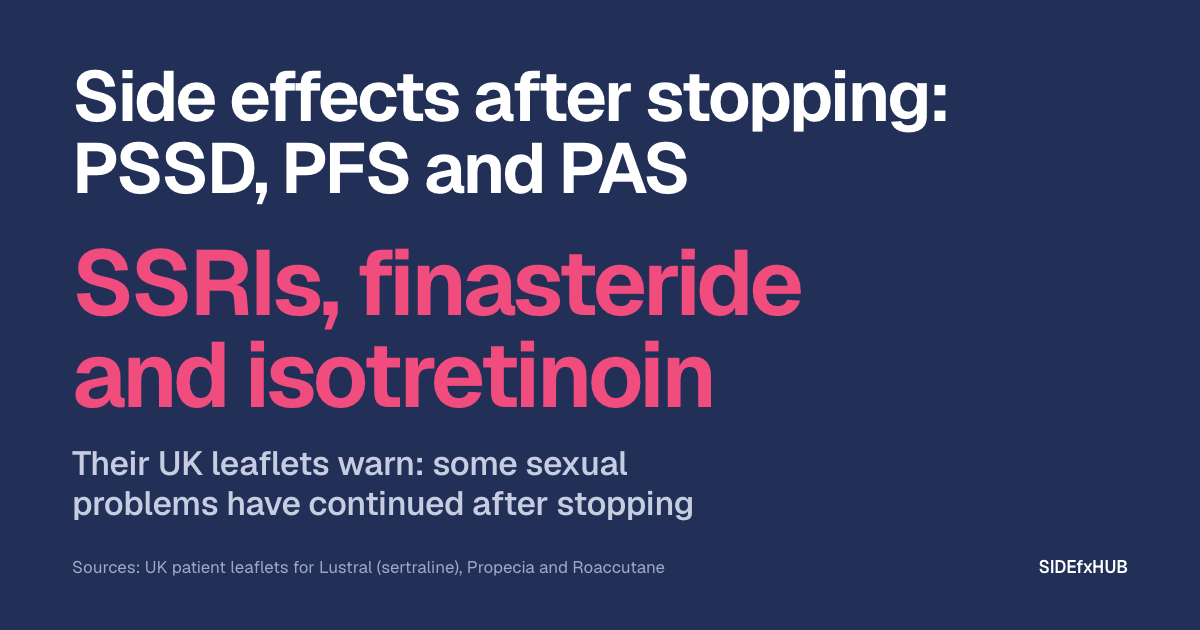
Most side effects stop with the medicine, but UK leaflets for SSRI antidepressants, finasteride and isotretinoin warn that some sexual problems have continued after stopping. They’re known as PSSD, PFS and PAS.
Harvard Health’s answer to why side effects can continue after stopping doesn’t name any of these medicines. The leaflet warning is worth knowing before you start one, or if you’ve stopped and sex still feels different.
The story in 3 lines
- Side effects caused directly by a drug usually clear within hours to days of stopping (Harvard Health).
- UK leaflets for SSRIs, finasteride and isotretinoin warn that some sexual problems have continued after stopping (leaflets for sertraline, finasteride and isotretinoin).
- Nobody has measured how often (2022 criteria). Patients call it PSSD, PFS or PAS.
Press: contact@sidefxhub.com
Max was prescribed sertraline, an SSRI, in 2018. He took it for about a month.

He describes emotional numbness and sexual problems. It felt, he says, as if his personality had vanished. Years later, after other medicines and many attempts to get better, the symptoms were still there when he was interviewed.
Do side effects go away when you stop a medicine?
Most do. Harvard Health says side effects caused directly by a drug, such as feeling sick, usually clear within hours to days. It can take longer if the drug stays in the body, for example in someone with liver or kidney disease.
The isotretinoin leaflet says its side effects are “generally reversible” when the dose is changed or treatment stops. The same sentence goes on: “however some may continue after treatment has stopped”.
Trials don’t routinely check whether sexual side effects have gone once people stop, say the doctors and researchers who wrote diagnostic criteria for these conditions in 2022.
Which medicines have sexual side effects that can last?
Three groups of medicines carry this warning in their UK leaflets.
SSRI and SNRI antidepressants, such as sertraline: the UK sertraline leaflet says that in some cases, sexual symptoms “have continued after stopping treatment”. In 2019 the EU medicines regulator asked for this warning on every SSRI and SNRI. This is called post-SSRI sexual dysfunction, or PSSD.
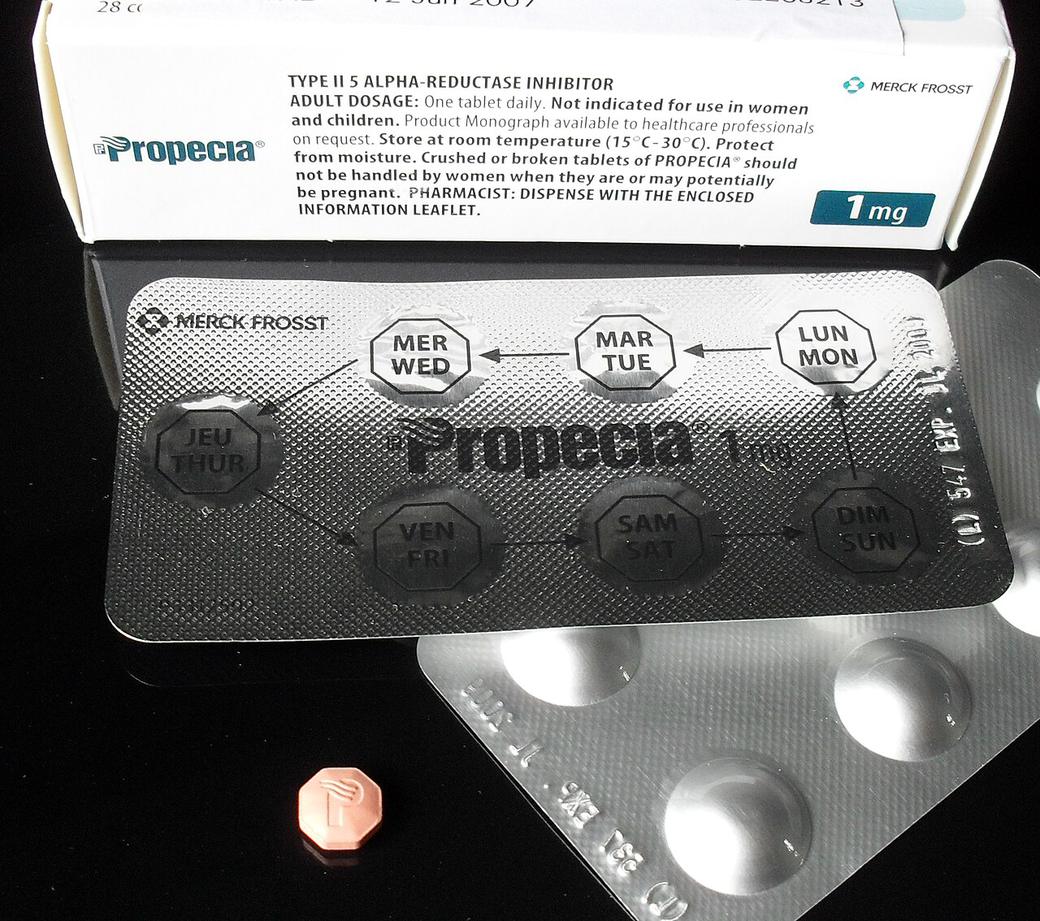
Finasteride is the hair-loss tablet sold as Propecia. Its UK leaflet lists erection, sex drive and ejaculation problems that persist “after discontinuation of treatment”. Patients call this post-finasteride syndrome, or PFS.

Isotretinoin is the acne capsule known as Roaccutane in the UK and Accutane in the US. Its UK leaflet lists sexual side effects such as erection problems and reduced feeling in the genitals, and reports of “long-lasting sexual problems” that continued despite stopping. Patients call this post-Accutane syndrome, or PAS.
How long can side effects last after stopping?
It can be anything from hours to many years. The 2022 criteria say ordinary sexual side effects of an antidepressant may linger for days or weeks after the last dose. Once a problem has lasted three months, it’s more likely to be PSSD, and the same three months counts for PFS and PAS.
After the last dose
The criteria set no upper limit. For some people it has lasted years after stopping. Nobody knows yet who will be affected, or whether it will ease.
Stefan took a short course of Accutane at 15. Moral Medicine says he had lived with PAS for almost 19 years when it filmed him in 2024.
Nobody has measured how often this happens. A 2023 review of the SSRI research couldn’t find a reliable estimate.
What can I do?
These medicines help many people. If you have side effects, that’s a decision for you and your prescriber. Don’t stop an antidepressant suddenly.
For finasteride and isotretinoin, follow what the leaflet says. The finasteride leaflet, for example, says to stop and contact your doctor if your mood changes.
If a problem hasn’t lifted since you stopped, tell your GP and give your dates: “Sertraline 50 mg from January 2023, last tablet March 2024.”
Many people say it took time to be taken seriously. Bring the leaflet line. You can report it without a doctor agreeing.
Report it: it helps everyone
A doctor’s note helps you. A report to the medicines regulator helps everyone else: it is how patterns get noticed.
- No proof needed. A suspicion is enough, even years after stopping.
- Where: the Yellow Card scheme in the UK, MedWatch in the US.
- Use the right words. If symptoms continued after stopping, write Post-SSRI sexual dysfunction (MedDRA 10086208) for an SSRI or SNRI, or Post 5-alpha-reductase inhibitor syndrome (MedDRA 10082430) for finasteride. For isotretinoin there’s no term yet, so say the symptoms continued after stopping.
Our reporting guide walks you through it
What else do people ask?
Can side effects start after you stop? Sometimes. The 2022 criteria say a lasting sexual problem may only appear once the drug is stopped, or a mild one may get worse. The UK regulator asks anyone reporting a finasteride side effect to say whether it “continued or started after treatment was stopped”.
Are these conditions real? The warnings are in the official leaflets, and PSSD and PFS each have a term in MedDRA, the dictionary regulators use to code reports. Some doctors still haven’t heard of PSSD, PFS or PAS. We look at the evidence in Is PSSD real? and Is post-Accutane syndrome real?
Is it only these medicines? No. The 2022 criteria also link PFS to dutasteride, a prostate medicine that works like finasteride. Other medicines carry other warnings: the UK regulator says fluoroquinolone antibiotics, such as ciprofloxacin, can cause disabling side effects that last months or years.
Max took sertraline for about a month in 2018. If something changed for you on a medicine and hasn’t changed back, report it and say when you stopped.
Sources
- Harvard Health Publishing, Why can side effects continue after you stop a medication?, Ask the expert, 27 March 2026. Side effects that result directly from a drug, such as nausea, generally clear “in a matter of hours to days”; slower if the drug stays in the body, for example with kidney or liver disease. Symptoms from damage a drug has already done may persist. No medicine is named.
- Lustral (sertraline) 50 mg and 100 mg film-coated tablets, patient leaflet, Electronic Medicines Compendium (EMC 2835), last revised December 2025. Section 2, “Sexual problems”: “In some cases, these symptoms have continued after stopping treatment.” Section 3, do not stop unless your doctor tells you to; the dose is reduced gradually.
- European Medicines Agency, PRAC recommendations on signals adopted at the 13-16 May 2019 meeting (EMA/PRAC/265212/2019), section 1.3. Adopted 16 May 2019: all products containing citalopram, escitalopram, fluvoxamine, fluoxetine, paroxetine, sertraline, duloxetine, venlafaxine, desvenlafaxine or milnacipran to add the persistent sexual dysfunction wording.
- Propecia 1 mg film-coated tablets, patient leaflet (UK, EMC 2194), last revised May 2026. Section 4, frequency unknown: persistent difficulty having an erection, persistent decrease in sex drive and persistent problems with ejaculation “after discontinuation of treatment”. Section 2: for depressed mood or suicidal thoughts, stop and contact your doctor as soon as possible; a patient card is provided in the pack.
- Roaccutane 10 mg soft capsules, patient leaflet (UK, EMC 100633), last revised April 2026. Section 2: sexual problems including erection problems, lower libido, vaginal dryness, orgasm difficulties and reduced sensation in the genitals, and “reports of long-lasting sexual problems where the symptoms have continued despite stopping treatment with isotretinoin”. Section 4: side effects “are generally reversible after changing the dose or stopping treatment, however some may continue after treatment has stopped”.
- Healy D, Bahrick A, Bak M and colleagues. Diagnostic criteria for enduring sexual dysfunction after treatment with antidepressants, finasteride and isotretinoin. Int J Risk Saf Med 2022;33(1):65-76. A consensus built on two published case series. Sexual dysfunction with normal antidepressant use “may linger for some days or weeks”; once it lasts three months, PSSD is more likely. A problem present 3 months or more after stopping is an additional criterion for PSSD, PFS and post-retinoid sexual dysfunction (the criteria’s name for the isotretinoin condition). No upper limit on duration. The incidence is unknown, and trials do not routinely follow up sexual side effects. A problem may first appear, or get worse, on stopping. Finasteride, dutasteride and saw palmetto are named as 5-alpha-reductase inhibitors that can trigger PFS.
- Tarchi L, Merola GP, Baccaredda-Boy O and colleagues. Selective serotonin reuptake inhibitors, post-treatment sexual dysfunction and persistent genital arousal disorder: a systematic review. Pharmacoepidemiol Drug Saf 2023;32(10):1053-67. Two retrospective interventional studies, six observational studies and 11 case reports; reliable prevalence estimates were not possible.
- MHRA, Finasteride: reminder of the risk of psychiatric side effects and of sexual side effects (which may persist after discontinuation of treatment), Drug Safety Update, 29 April 2024. Asks reporters for detail, particularly if a side effect continued or started after treatment was stopped; introduces a patient card in all finasteride packs.
- MHRA, Fluoroquinolone antibiotics: must now only be prescribed when other commonly recommended antibiotics are inappropriate, Drug Safety Update, 22 January 2024. Systemic fluoroquinolones (ciprofloxacin, delafloxacin, levofloxacin, moxifloxacin, ofloxacin) can cause long-lasting (up to months or years), disabling and potentially irreversible side effects.
- Moral Medicine, interview with Max, 11 February 2026. Sertraline in 2018 for about a month; the details come from the interview and the channel’s description. His story on our site: Max’s story: 1 month on sertraline.
- Moral Medicine, interview with Stefan, 11 December 2024. A short course of Accutane at 15; living with post-Accutane syndrome for almost 19 years, according to the channel. His story on our site: Stefan’s story: Accutane at 15.
- Photo: Propecia box and tablet, Kristoferb, public domain, via Wikimedia Commons.
This information does not replace medical advice. Talk to your doctor before you make any decision about your treatment.
590+ people have joined the community.
Join them, then report your side effects.
No diagnosis needed. Researchers never see your name.