Post-Accutane syndrome: is there a blood test?
No blood test can diagnose post-Accutane syndrome (PAS). Tests look for other causes, and a normal result doesn't rule PAS out. What to ask your GP.
SIDEfxHUB is a patient charity. We are not health professionals, and this does not replace medical advice. Don't start, stop or change any medicine because of what you read here. Talk to your doctor first.
If you are in crisis:116 123 Samaritans (UK)988 Lifeline (US)Find a helpline
No blood test can diagnose post-Accutane syndrome (PAS), when problems that began with isotretinoin (Accutane, or Roaccutane in the UK) carry on after you stop. Blood tests look for other causes, and a normal result doesn’t rule PAS out.
PAS isn’t only about sex. A checklist for recognising it, proposed by doctors in 2022, lists problems that can come with or without the sexual ones. They include trouble with concentration and memory, depression, and changes in the skin, joints and bowel.
The UK leaflet that lists the blood tests on your course also warns of “long-lasting sexual problems where the symptoms have continued despite stopping treatment”. None of those tests looks for that.
The story in 3 lines
- The UK leaflet says blood tests on a course check your liver and the fats in your blood.
- The 2022 checklist for PAS names no blood test. Nothing measurable in the body shows it yet, its authors say.
- Nobody knows how often PAS happens, the same doctors say.
Press: contact@sidefxhub.com
Miriam took two courses of isotretinoin in Spain. In this clip she talks about the second one, and the regular blood tests that made her feel safe.

“Of course they were doing regular blood tests,” she says. “I thought everything was under control.” She also talks about severe dry eyes, joint and back pain and hair loss.
What are the blood tests on an Accutane course for?
They keep the course safe. Isotretinoin can raise blood fats such as cholesterol, and the liver enzymes that show how your liver is coping. So the UK leaflet says your doctor tests them “before, during and after” treatment.
Some also have blood sugar checked. A normal result meant your liver and blood fats looked fine at the time. It couldn’t tell anyone whether sexual or other problems would last.
Blood tests on an isotretinoin course, and after
Since October 2023, UK prescribers should also ask about sexual problems before the course and at each check-up. Your notes may then show how things were before. Our page on how PAS is diagnosed explains why that matters.
Which blood tests might a doctor do for PAS symptoms?
Tests for anything else that could explain your symptoms. There’s no standard set of “PAS blood tests”.
The checklist asks for “no current medical conditions that could account for the symptoms”. Blood tests help check that.
It also asks about earlier medicines. Under the checklist, PAS only fits if you’ve never taken finasteride (a hair-loss tablet) or an SSRI or similar antidepressant, such as sertraline. Both are linked to similar lasting problems, post-finasteride syndrome (PFS) and post-SSRI sexual dysfunction (PSSD). If you took either, see our pages on PFS blood tests and PSSD blood tests.
For men seeing a doctor about erection problems for the first time, British Society for Sexual Medicine guidance says three tests “should be considered mandatory”:
- Fasting blood sugar checks for diabetes.
- A lipid profile checks cholesterol and other blood fats.
- Morning testosterone measures the main male sex hormone.
None of them can show PAS. For low mood, joint pain or bowel changes, tests depend on your symptoms and history.
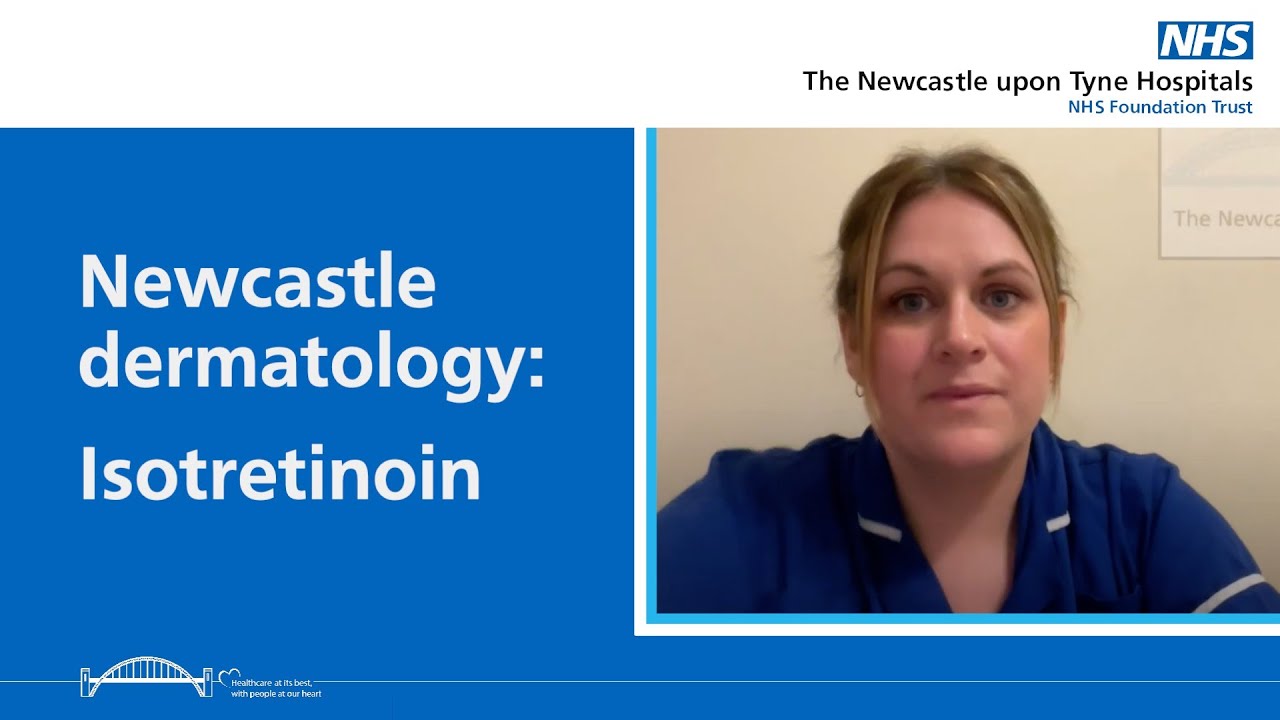
In this clip, an NHS acne clinic in Newcastle tells its own patients that sexual problems have been reported “during and following treatment”. The speaker adds that the evidence is “sparse”, and mental health and other medicines can play a part.
My blood tests are normal. Does that mean it isn’t PAS?
No. A normal result answers the question that test asked. It can’t measure genital numbness, pleasure, low mood or memory.
You don’t need an abnormal result to meet the 2022 checklist. Its authors warn that when these conditions are missed, people can face “dismissive responses from clinicians” and “unnecessary investigations”.
It’s hard to hear that your results are fine when you know something has changed. Tell your GP about each change anyway, even ones nobody asks about.
A high or low result is different. Ask your GP to explain it, PAS or not. On its own, it doesn’t show PAS. For hormones, see Does Accutane lower testosterone?
How can I prepare for my GP appointment?
Isotretinoin helps many people with severe acne. What to do about side effects is a decision for you and your prescriber.
Bring a short record:
- The medicine: dose and dates, for example “Isotretinoin 30 mg from February 2023, last capsule August 2023.”
- Every other medicine: past and present, including any antidepressant, finasteride or supplement.
- The changes: low sex drive, erection problems or vaginal dryness, genital numbness, and changes beyond sex, such as low mood or trouble concentrating. Note when each began.
- Your results: the numbers with their normal ranges and dates, including tests from your course. You may find them in the NHS App.
Three questions for your GP
- Which of my tests were for the course, and which look at my symptoms now?
- What do my results rule out, and what's still unexplained?
- What's our next step if nothing explains my symptoms?
You could start with: “My blood tests are normal, but these problems started with isotretinoin and haven't gone. Can we go through what's been checked?”
Bring the leaflet’s line on lasting sexual problems too. If your GP isn’t convinced, you can still report it.
Report it: it helps everyone
A doctor’s note helps you. A report to the medicines regulator helps everyone else: it is how patterns get noticed.
- No proof needed. A suspicion is enough, even years after stopping. Normal blood tests don’t stop you reporting.
- Where: the Yellow Card scheme in the UK, MedWatch in the US.
- Use the right words. PAS has no official term of its own yet, so name each symptom and say it continued after you stopped isotretinoin.
Our reporting guide walks you through it
What else do people ask?
Is there any test that measures PAS? Not a blood test. The checklist’s authors say a nerve test of feeling in the penis “may be helpful”, where one is available. For the feeling of sexual pleasure, they write, “there are no available tests”. They hope a test will one day replace their checklist.
Can a private blood test diagnose PAS? No. Private tests measure levels in your blood, and no level shows PAS. Before paying, ask what each test looks for and who will explain the results.
Are the tests different for women? The checklist covers women too, and lists vaginal dryness among the signs. The erection guidance above is for men. Our article on Accutane sexual side effects in women covers what women describe.
Miriam trusted the blood tests on her course. If problems have lasted since yours, take your dates and results to your GP, and report them whatever the results say. Our page on post-Accutane syndrome sets out what is known so far.
Sources
- Roaccutane 10 mg and 20 mg soft capsules, patient leaflet, Electronic Medicines Compendium (emc 100633), last revised April 2026. Section 2: liver enzymes and blood fats tested “before, during and after Roaccutane treatment”. “Your doctor may monitor blood sugar levels during treatment”, particularly in people with diabetes or who are overweight. Regular pregnancy tests for anyone who could get pregnant. “There have been reports of long-lasting sexual problems where the symptoms have continued despite stopping treatment with isotretinoin.”
- Roaccutane, summary of product characteristics (the information for doctors), emc 100633, text revised 27 April 2026. Section 4.4: liver enzymes and fasting serum lipids “should be checked before treatment, 1 month after the start of treatment, and subsequently at 3 monthly intervals”, or more often if needed. “Elevated serum lipid values usually return to normal on reduction of the dose or discontinuation of treatment.” All patients should be asked about sexual dysfunction before starting and monitored during treatment.
- Healy D, Bahrick A, Bak M and colleagues. Diagnostic criteria for enduring sexual dysfunction after treatment with antidepressants, finasteride and isotretinoin. Int J Risk Saf Med 2022;33(1):65-76. Proposed criteria from expert agreement, not a blood-test study. Section 1: “The incidence of these conditions is unknown”; “dismissive responses from clinicians, unnecessary investigations”; “In the absence of a biomarker”. Section 6 (post-retinoid sexual dysfunction): criteria 8 to 10 under “There should be”. “There should be no prior use of finasteride or an SRI when making a PRSD diagnosis.” Criterion 4 includes loss of vaginal lubrication (females). Cognitive impairment, skin, joint and bowel changes, depression and suicidality “can occur independently of any sexual difficulties”. Section 9: quantitative sensory testing of the penis “may be helpful”; “Erogenous sensation is poorly understood and there are no available tests.” Section 10: hoped to be replaced by “diagnostic markers”.
- Hackett G, Kirby M, Wylie K and colleagues. British Society for Sexual Medicine guidelines on the management of erectile dysfunction in men, 2017. J Sex Med 2018;15(4):430-457. Abstract: fasting serum glucose, lipid profile and morning total testosterone “should be considered mandatory in all newly presenting patients”. About men presenting with erectile dysfunction, not a PAS test.
- MHRA, Drug Safety Update: isotretinoin, new safety measures, 31 October 2023: prescribers should “ask patients about any sexual function concerns before prescribing isotretinoin” and monitor sexual function at each follow-up. This is advice for all patients, listed separately from the under-18 measures. The MHRA update of 22 January 2026 keeps both: patients “will be asked about any sexual function concerns before prescribing” and monitored “at each follow up appointment”.
- NHS, Blood tests, page last reviewed 2 November 2023: results may be viewable in the NHS App.
- GOV.UK, Report a problem with a medicine or medical device.
- Moral Medicine, From Mild Acne to Severe Dry Eyes, Hair Loss and Infertility: Miriam’s Nightmare After Isotretinoin, interview with Miriam, 13 October 2025 (the title is the channel’s). Our page plays an extract, 11:03 to 11:43: her second course, the dermatologist’s advice to finish it, and at about 11:36: “And of course they were doing regular blood tests. I thought everything was under control” (auto-captions). Her story on our site: Miriam’s story.
- Newcastle Hospitals, Newcastle dermatology - Isotretinoin, November 2024. From 5:13: sexual dysfunction reported “during and following treatment”; “The evidence around this is sparse”; sexual problems “can be related to mental health issues or other medications such as anti-depressants”.
Sources checked on 28 October 2026. AI-assisted writing and review, not clinical review.
This information does not replace medical advice. Talk to your doctor before you make any decision about your treatment.
640+ people have joined the registry.
Join them, then report your side effects.
Free. Sign up takes 2 minutes.