Does Accutane lower testosterone?
Accutane may lower testosterone during a course, but results in men are mixed. A normal test doesn't rule out post-Accutane syndrome (PAS).
SIDEfxHUB is a patient charity. We are not health professionals, and this does not replace medical advice. Don't start, stop or change any medicine because of what you read here. Talk to your doctor first.
If you are in crisis:116 123 Samaritans (UK)988 Lifeline (US)Find a helpline
Accutane (isotretinoin) may lower testosterone during a course, but the studies are small and the results in men are mixed. A normal result doesn’t rule out post-Accutane syndrome (PAS), where sexual and other problems can last after stopping.
PAS is more than sex. Doctors who drew up a checklist for recognising it in 2022 say it can bring other problems too, with or without the sexual ones. These include trouble with concentration and memory, depression and suicidal thoughts. If you’re struggling, the Samaritans are on 116 123 in the UK.
If sex hasn’t felt the same since your course, a normal testosterone result can feel like being told nothing is wrong. The UK leaflet for Roaccutane, Accutane’s UK name, doesn’t mention testosterone at all. It does warn of “long-lasting sexual problems where the symptoms have continued despite stopping treatment”.
The story in 3 lines
- The studies that found testosterone falling on isotretinoin were mostly of women. Looking at the men alone, a 2011 study couldn't be sure it fell.
- A 2023 UK expert review called the hormone results “conflicting”, and said it's unclear whether the changes last after the course.
- The UK leaflet warns that sexual problems have continued after stopping. Patients call it PAS.
Press: contact@sidefxhub.com
Elliot took Accutane at 17. Moral Medicine, which interviewed him, says he has lived with PAS ever since. In this half-minute extract he says what happens when he tells a doctor.

He’s careful to say people go into medicine “for all the right reasons”. Then: “The toolkit they have to reach into is like a blood test,” he says. “I know that’s going to come back normal.”
Does Accutane lower testosterone in men?
Nobody can say for sure yet. The studies that found a fall had mostly women in them.
In a 2011 study from Turkey, doctors measured hormones before a course and three months in. Testosterone fell. But about two in three of the patients were women.
When the doctors looked at the men on their own, the fall was too small to be sure it was real. They thought there may simply have been too few men to show it.
Some of the same doctors later found a fall again in a bigger study. Most of those patients were women too, a UK expert review notes.
Hardly any studies have looked at men alone. One that followed men through a six-month course found no clear change in their testosterone.
Does testosterone go back to normal after Accutane?
We don’t know, because almost nobody has checked. The studies measured hormones during a course or at its end.
The UK review, by experts who advise the government on medicines, says it’s unclear whether the changes last once the course ends. Nor can it say whether testosterone drops far enough to show as low on a blood test.
The review reports one study that tested women again a year after their course. On average, their testosterone had come back up, but was still lower than before. When we searched in October 2026, we found no study that has done this in men.
What the studies measured
Can I have PAS with normal testosterone?
Yes. The checklist for recognising PAS, drawn up in 2022, doesn’t ask for any test result to be abnormal.
It asks for sexual problems that have lasted at least three months after stopping, with nothing else that could explain them, such as another illness or medicine. Some people with it have hormone results right on the edge of normal. The authors write that this “may be a consequence of the conditions rather than a cause”. So a borderline result may come from the condition rather than cause it.
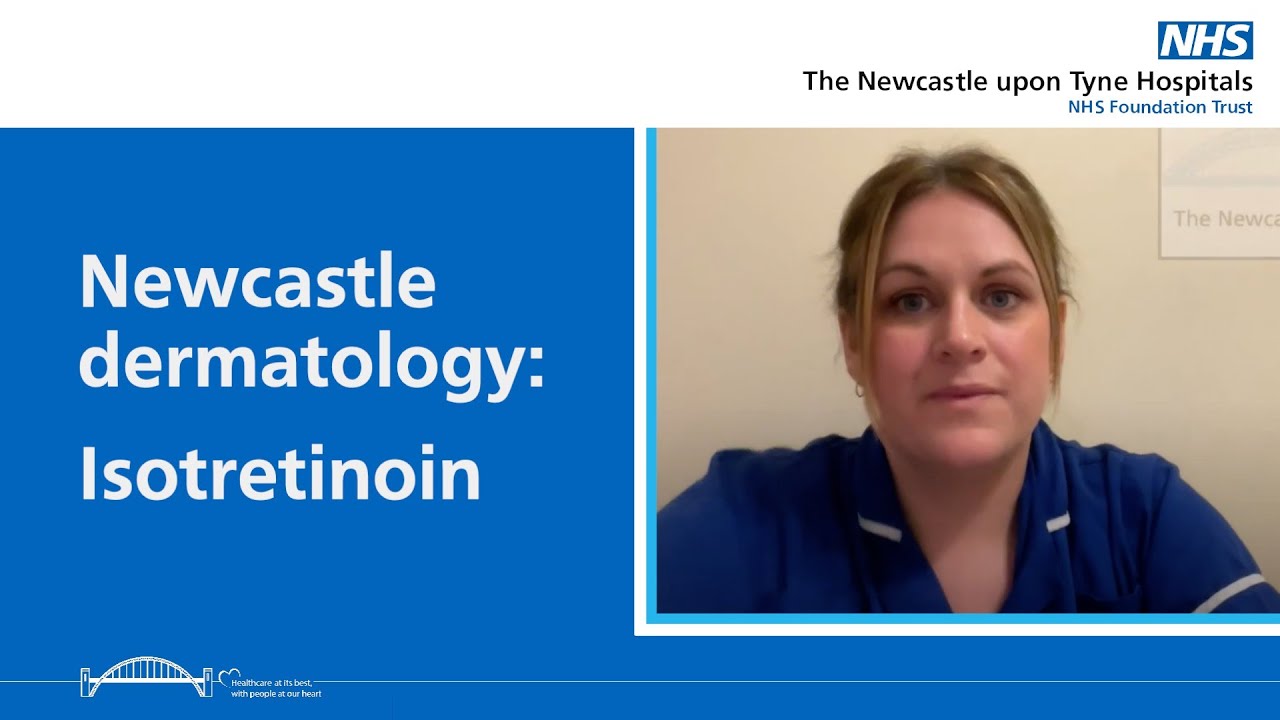
The blood tests during a course look for something else. The UK leaflet says they check your liver and the fats in your blood. An NHS team explains this in a short extract.
Our page on how PAS is diagnosed goes through the checklist one by one. For erection problems in particular, see Accutane erectile dysfunction.
What can I do?
Isotretinoin helps many people with severe acne. If you have side effects, what to do next is a decision for you and your prescriber. The UK leaflet says to talk to your doctor about any sexual problems during treatment.
If problems have lasted since your course, tell your GP and give your dates: “Isotretinoin 20 mg from March 2024, last capsule September 2024.” Mention changes beyond sex too, such as low mood or trouble concentrating. If you’ve had hormone tests, take the results, with the normal range printed next to each one.
Three questions for your GP
- What did my hormone test check, and what can't it show?
- Could anything else explain my symptoms?
- Can this go on my record and be reported to the Yellow Card scheme for side effects?
You could start with: “My testosterone came back normal, but sex hasn't been the same since my last isotretinoin capsule.”
Bring the leaflet’s line about sexual problems that continued after stopping. You can report it without a doctor agreeing.
Our guide to PFS blood tests is written for finasteride, but it explains what each hormone test looks at.
Report it: it helps everyone
A doctor’s note helps you. A report to the medicines regulator helps everyone else: it is how patterns get noticed.
- No proof needed. A suspicion is enough, even years after stopping.
- Where: the Yellow Card scheme in the UK, MedWatch in the US.
- Use the right words. PAS has no official term of its own yet, so name the symptom, such as low sex drive, and say it continued after you stopped isotretinoin.
Our reporting guide walks you through it
What else do people ask?
Can Accutane raise testosterone? In some studies, yes. A 2021 study of teenage girls with severe acne found testosterone was higher at three and six months than before the course. The UK review, which calls the hormone results “conflicting”, reports an older study where one form of testosterone in the blood went up.
Does Accutane lower DHT? DHT is a stronger hormone your body makes from testosterone. The few studies that measured it found it fell during a course. In a small French study of men, DHT fell while testosterone stayed the same. A study of women found DHT fell too. The 2022 checklist says isotretinoin can block the enzyme that turns testosterone into DHT, as finasteride, the hair-loss tablet, does. Our article on whether finasteride lowers testosterone explains what that does.
What if my testosterone comes back low? Then your doctor needs to find out why. A low result doesn’t confirm PAS, and it could have another cause.
Elliot expected his blood tests to come back normal, and he was still living with post-Accutane syndrome. If your problems have lasted since your course, you can report them, whatever your results say.
Sources
- Roaccutane 10 mg and 20 mg soft capsules, patient leaflet, Electronic Medicines Compendium (emc 100633), last revised April 2026. Section 2: “There have been reports of long-lasting sexual problems where the symptoms have continued despite stopping treatment with isotretinoin”. It also says: “Talk to your doctor if you experience any sexual problems during treatment”. Blood tests “before, during and after” treatment check liver enzyme levels; blood fats are tested too. The leaflet does not mention testosterone or other sex hormones.
- Commission on Human Medicines, Report of the Isotretinoin Expert Working Group, 26 April 2023. Section 3.1.5: summarises Karadag 2011 and 2015, Feily 2019 and Lookingbill 1988 (free testosterone rose, DHT fell); “whether the changes persist beyond treatment is unclear”. Section 3.2.2.1: “it is not clear from available studies whether the reduction in testosterone with use of isotretinoin results in levels below the normal range”; “the results for the different androgens are conflicting”. Section 3.3: the data are “unclear and further studies to confirm or refute the association are required”. Section 5.4.1.7: Çinar and colleagues, 2017, 79 women re-tested 12 months after a six-month course; testosterone “increased significantly between 6 and 18 months but remained lower than pre-treatment levels”. Section 5.4.1.8: the 2015 study had 75 female and 30 male patients.
- Karadag AS, Ertugrul DT, Tutal E, Akin KO. Isotretinoin influences pituitary hormone levels in acne patients. Acta Derm Venereol 2011;91(1):31-4. 47 patients (31 women, 16 men), hormones measured before and after three months. Total testosterone fell in the whole group (p < 0.005). In men alone the fall was not statistically significant (p = 0.063); the authors suggest the smaller subgroup lowered the statistical power. Full text read.
- Karadag AS, Takci Z, Ertugrul DT and colleagues. The effect of different doses of isotretinoin on pituitary hormones. Dermatology 2015;230(4):354-9. 105 patients on three dose schedules; total testosterone fell after three months. Abstract only; the split by sex is from the UK review (source 2).
- Çinar L, Kartal D, Ergin C and colleagues. The effect of systemic isotretinoin on male fertility. Cutan Ocul Toxicol 2016;35(4):296-9. 81 men over 18, a total of 120 mg/kg over six months: “There was no significant change in the hormone levels” (total testosterone, FSH, LH). Abstract.
- Boudou P, Soliman H, Chivot M and colleagues. Effect of oral isotretinoin treatment on skin androgen receptor levels in male acneic patients. J Clin Endocrinol Metab 1995;80(4):1158-61. Six men, three months: “no change in serum testosterone and significant decreases in 5 alpha-dihydrotestosterone”. Abstract.
- Feily A, Taheri T, Meier-Schiesser B and colleagues. The effect of low-dose isotretinoin therapy on serum androgen levels in women with acne vulgaris. Int J Womens Dermatol 2020;6(2):102-4 (online November 2019). 36 women, 20 mg a day for three months; testosterone and DHT fell, free testosterone did not change significantly. Before-and-after design, no control group.
- Akpolat D. Unexpected effects of oral isotretinoin in adolescents with acne vulgaris. Cureus 2021;13(8):e17115. 76 girls, mean age 16; free and total testosterone higher at three and six months than at the start. Full text read (PMC8437010).
- Healy D, Bahrick A, Bak M and colleagues. Diagnostic criteria for enduring sexual dysfunction after treatment with antidepressants, finasteride and isotretinoin. Int J Risk Saf Med 2022;33(1):65-76. Section 6, post-retinoid sexual dysfunction: the problem is present three months or more after stopping. No current medical condition, medication or substance misuse, and no other prior medication, should account for the symptoms. No criterion needs a test result. Isotretinoin “has both serotonin reuptake inhibiting and 5 alpha-reductase inhibiting properties”; the authors say it is not clear whether the lasting problems come from either action. Effects that “can occur independently of any sexual difficulties” include cognitive impairment, skin, joint and bowel changes, depression and suicidality. Section 9: borderline testosterone or other hormone levels “may be a consequence of the conditions rather than a cause”. Proposed criteria from expert agreement.
- Our search of PubMed on 27 October 2026 (“isotretinoin testosterone male”, “isotretinoin testosterone men”, “isotretinoin androgen levels after discontinuation”) found no study that measured testosterone in men after the course had ended.
- Moral Medicine, He Took Accutane at 17. His Life Never Returned to Normal., interview with Elliot, 28 January 2025. “For all the right reasons” at about 30:24; “The toolkit they have to reach into is like a blood test” at about 30:34; “I know that’s going to come back normal” at about 30:42; the extract ends at 30:44. His story on our site: Elliot’s story: Accutane at 17.
- Newcastle Hospitals, Newcastle dermatology - Isotretinoin, November 2024. From 3:32: isotretinoin “may increase the fats in the blood”, with “some effect on the enzymes in your liver”, and regular blood tests monitor these levels before and throughout treatment.
- GOV.UK, Report a problem with a medicine or medical device.
Sources checked on 27 October 2026. AI-assisted writing and review, not clinical review.
This information does not replace medical advice. Talk to your doctor before you make any decision about your treatment.
640+ people have joined the registry.
Join them, then report your side effects.
Free. Sign up takes 2 minutes.