Accutane night vision: can it last?
Accutane (isotretinoin) can make it harder to see in the dark. The UK leaflet and US guide say it sometimes lasts after stopping. Patients call it PAS.
SIDEfxHUB is a patient charity. We are not health professionals, and this does not replace medical advice. Don't start, stop or change any medicine because of what you read here. Talk to your doctor first.
If you are in crisis:116 123 Samaritans (UK)988 Lifeline (US)Find a helpline
Accutane (isotretinoin) can make it harder to see in the dark. Its UK leaflet and US prescribing information say that, in some cases, this has carried on after the last capsule. It’s one of the lasting effects patients call post-Accutane syndrome, or PAS.
PAS is more than one symptom, and it has no official definition yet. In 2022 doctors and researchers proposed a checklist for lasting sexual problems after isotretinoin. Beside it, they listed other effects that can come without any sexual problems: depression, problems with concentration and memory, and changes to the skin, joints and gut.
Night vision isn’t on the 2022 list. The warning comes from the medicine’s own information. The NHS page on isotretinoin doesn’t mention night vision, and says the medicine won’t usually affect driving. If you’ve found it harder to see in the dark since your course, an optician can check.
The story in 3 lines
- The UK leaflet says: “You may not see as well at night during your treatment. This can happen suddenly.”
- It adds: “In rare cases this has continued after the treatment has stopped.” The US prescribing information says it “has persisted” in some cases.
- Nobody has counted how often it lasts. As of October 2026, the UK aviation regulator asks every pilot who has taken it about their night vision.
Press: contact@sidefxhub.com
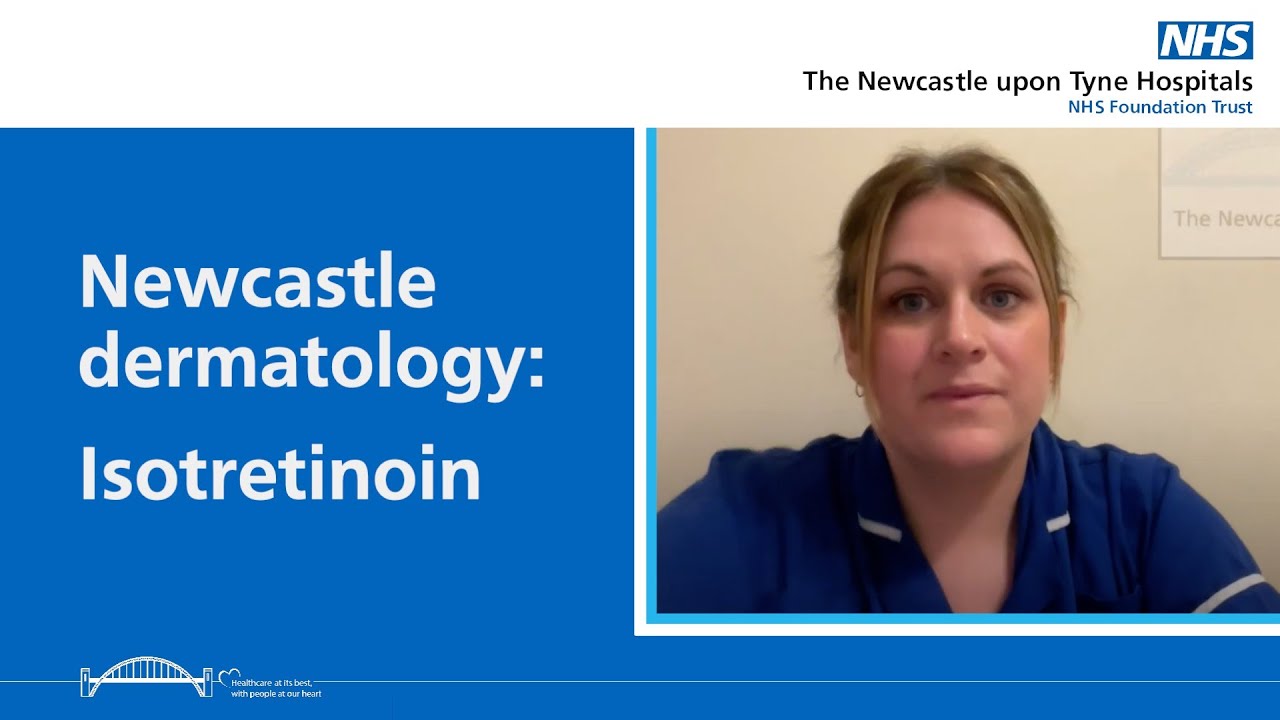
In this clip, Jackie, a senior clinician at Newcastle’s NHS skin clinic, tells new patients it can affect their night vision. She calls it rare and irreversible. The UK information for doctors says it usually clears once the course ends, and the US patient guide says it usually goes away but may be permanent. She asks about careers that need it, like flying.
What does poor night vision on Accutane feel like?
It shows up in the dark: dim rooms, unlit roads, and a long wait for your eyes to adjust after bright light. The UK leaflet lists it next to worse colour vision and eyes that are more sensitive to light. During a course, it calls these very rare: up to 1 in 10,000 people.
UK pilots who have taken isotretinoin are asked five questions about it. You can ask yourself the same ones.
Five night vision questions
From the UK Civil Aviation Authority's guidance for pilots who have taken isotretinoin. In the last two weeks:
- Do you have difficulty adapting from brightly lit rooms to dark places?
- Do you suffer eye strain at sudden bright lights?
- Do you have any difficulty seeing the stars on a clear night?
- Do you have stress, anxiety or fear of driving in the evening or at night?
- Do you have difficulty seeing colours at night?
A yes doesn't prove anything. It's something to tell your optician.
Why does Accutane affect night vision?
It seems to slow down the way your eyes get ready for the dark. Isotretinoin is a close chemical relative of vitamin A, and your eyes need vitamin A to see in dim light.
Cells called rods, at the back of the eye, do that job. They use a pigment made from vitamin A. Bright light uses the pigment up, and in the dark your eye rebuilds it. In a 2001 animal study, one dose of isotretinoin sharply slowed that rebuilding in rats. The rods themselves survived, and worked normally again within several days.
They sit at the back of the eye and use a pigment made from vitamin A.
Headlights, a lit room, a phone screen.
This is your eyes adjusting to the dark.
Seen in an animal study, not yet measured this way in people.
The rats recovered fast, so the lasting cases in people are hard to explain. The UK aviation regulator mentions this, and says that adjusting to the dark “may be affected permanently in some individuals”.
Can Accutane night vision problems be permanent?
For some people it has lasted after stopping. Nobody knows yet who will be affected, or whether it will get better.
The UK information for doctors says poorer night vision usually clears up once the course ends. The US patient guide says it “usually goes away” after stopping, “but it may be permanent”. As of October 2026, we found no study that has measured how often it lasts.
The nearest thing is a 2006 UK study of people who’d taken isotretinoin and were applying to fly in the military. Eye doctors tested how well their eyes adjusted to the dark. Most had normal results. The authors concluded that for most people it doesn’t noticeably reduce night vision.
Some had changes on the tests, mostly small. One person still had them eight years after stopping. It was a small group of young applicants, so it can’t tell you how common lasting changes are.
Is it safe to drive at night after Accutane?
An eye test is the way to find out. During a course, the US patient guide says: “Do not drive at night until you know” whether the medicine affects your vision. In Great Britain, the government’s driving rules add: “You must tell DVLA if you have night blindness.”
If you’re still taking it and your sight changes, the UK leaflet says to tell a doctor as soon as you can. These medicines help many people, and whether to carry on is a decision for you and your prescriber.
If your night vision still seems worse after your course, book an eye test. Tell the optician what you took and when: “Roaccutane 40 mg a day from March to September 2025. Since then I struggle to see on unlit roads.” Bring your answers to the five questions and the leaflet’s night vision line.
If you’re referred, an eye specialist can measure how fast your eyes adjust to the dark, and how your retina (the back of the eye) reacts to flashes of light.
You can report it without a doctor agreeing.
Report it: it helps everyone
A doctor’s note helps you. A report to the medicines regulator helps everyone else: it is how patterns get noticed.
- No proof needed. A suspicion is enough, even years after stopping.
- Where: the Yellow Card scheme in the UK, MedWatch in the US.
- Use the right words. PAS has no reporting term yet, so name each symptom, such as poorer night vision, and say it continued after stopping.
Our reporting guide walks you through it
What else do people ask?
Could it be isotretinoin still in my body? Not for long. The UK information for doctors says it’s completely gone within a month of your last dose. How long does Accutane stay in your system? has more.
Can I become a pilot after Accutane? Not while you take it, under UK aviation rules as of October 2026. After a break, a medical examiner asks about your night vision and mood, and may send you for the tests above. If night vision is a concern, your pilot’s medical certificate can be restricted.
Is it the same as Accutane dry eyes? No, the UK leaflet warns about them separately. See Accutane dry eyes, and Long-term side effects of Accutane for the others.
Jackie tells her patients about night vision before they start. If yours changed during or after a course, say so at your next eye test, and report it. Our page on post-Accutane syndrome has more.
Sources
- Roaccutane 10 mg soft capsules (isotretinoin), patient leaflet, Electronic Medicines Compendium (EMC 100633), UK. Revised April 2026; read 27 October 2026. Section 2, driving and using machines: “You may not see as well at night during your treatment. This can happen suddenly. In rare cases this has continued after the treatment has stopped.” Section 2, warnings: “visual difficulties including decreased night vision”, listed apart from dry eyes. The doctor may refer you to a specialist and may ask you to stop. Section 4, very rare (may affect up to 1 in 10,000 people): “You may see less well at night; colour blindness and colour vision gets worse. Sensitivity to light may increase”. Section 4, eye disorders: “If your sight is affected in any other way tell a doctor as soon as you can.” The frequency is for side effects during treatment. The leaflet gives no figure for how often night vision stays poorer after stopping.
- Roaccutane 10 mg soft capsules, summary of product characteristics, EMC 100633, UK. Revised 27 April 2026; read 27 October 2026. Section 4.4: decreased night vision “usually resolve[s] after discontinuation of therapy”, and onset “in some patients was sudden”. Patients with visual difficulties “should be referred for an expert ophthalmological opinion”. Section 4.7: cases “in rare instances have persisted after therapy”; patients should be “warned to be cautious when driving”. Section 4.4, pregnancy: the drug is “completely eliminated, which is within one month following the end of treatment”. Section 4.9: “Isotretinoin is a derivative of vitamin A.”
- Absorica and Absorica LD (isotretinoin), US prescribing information and Medication Guide, DailyMed, US National Library of Medicine. Revised August 2026; read 27 October 2026. Section 5.13: “Decreased night vision has been reported during isotretinoin use and in some instances the event has persisted after treatment was discontinued.” It warns patients to be cautious “when driving or operating any vehicle at night”. Section 6 lists “decreased night vision which may persist”. Medication Guide: “This usually goes away after you stop taking ABSORICA or ABSORICA LD, but it may be permanent.” Also: “Do not drive at night until you know if ABSORICA or ABSORICA LD affect your vision.”
- NHS, Isotretinoin (Roaccutane), page last reviewed 26 June 2026. “Isotretinoin will not usually affect your ability to drive, ride a bike or use machinery”. As of October 2026, the page does not mention night vision.
- UK Civil Aviation Authority, Isotretinoin policy, guidance for aeromedical examiners. The page carries no date; read 27 October 2026. Isotretinoin is “not recommended for pilots”, partly because of “night blindness (nyctalopia) while on treatment”. It adds: “dark adaptation may be affected permanently in some individuals”. And: “Animal models show that the effects of isotretinoin on retinal function reverse rapidly within several days after cessation of high dose treatment.” Certification “is not possible whilst taking isotretinoin”. Applicants must be “off treatment for 2 weeks or more”, then are assessed for night vision and mental health effects, which “may be enduring beyond cessation of treatment”. The five questions are quoted as published. Further checks may include “electrophysiological testing and dark adaptometry”. Pilots whose night blindness is enough to cause concern for night flying get a “VCL limitation”.
- Sieving PA, Chaudhry P, Kondo M and colleagues. Inhibition of the visual cycle in vivo by 13-cis retinoic acid protects from light damage and provides a mechanism for night blindness in isotretinoin therapy. Proc Natl Acad Sci U S A 2001;98(4):1835-40. Read as an abstract only. An animal study in rats and mice. High doses for two months caused no loss of rod cells. A single dose slowed rod recovery after bright light, and “rhodopsin regeneration was markedly slowed”. After a single dose, rod function “recovered to normal within several days”.
- Mollan SP, Woodcock M, Siddiqi R and colleagues. Does use of isotretinoin rule out a career in flying? Br J Ophthalmol 2006;90(8):957-9. Full text. Birmingham and Midland Eye Centre and the Royal Centre for Defence Medicine. A look back at 47 consecutive military aviator applicants who had taken isotretinoin (44 men, 3 women, aged 17 to 33), compared with 20 people who hadn’t. All had dark adaptation tests and an electroretinogram. 34 had no abnormality and two had abnormal results on both tests. The authors suggest “laboratory evidence of night blindness in 11 further subjects”. “One subject had subclinical changes remaining in the ERG 96 months after cessation of isotretinoin.” They conclude that for most people it does not lead to a clinically significant reduction in night vision. A small, selected group, tested between 3 months and 8 years after stopping.
- GOV.UK, Night blindness (nyctalopia) and driving, read 27 October 2026. DVLA keeps the records of drivers “in Great Britain” (DVLA on GOV.UK, read 27 October 2026). “You must tell DVLA if you have night blindness.” It also says you can be fined up to £1,000 if you do not tell the DVLA about a medical condition that affects your driving.
- Healy D, Bahrick A, Bak M and colleagues. Diagnostic criteria for enduring sexual dysfunction after treatment with antidepressants, finasteride and isotretinoin. Int J Risk Saf Med 2022;33(1):65-76. Proposed criteria, agreed by experts. Section 6 lists isotretinoin effects “that can occur independently of any sexual difficulties”: cognitive impairment, skin changes, joint changes, bowel changes, depression and suicidality. The term PAS “is in widespread use”. Section 6 does not mention eyesight.
- Newcastle Hospitals, Newcastle dermatology - Isotretinoin, 29 November 2024, embedded here as an extract from 2:26 to 2:38. Jackie, a dermatology advanced practitioner, in the film’s own subtitles: “Isotretinoin can affect your night vision and although this is rare it is irreversible”. She asks patients to tell the clinic if they are thinking of a career that relies on night vision, such as being a pilot.
- NHS, Vitamin A, page last reviewed 3 August 2020. Vitamin A, also known as retinol, has functions including “helping vision in dim light”.
Sources checked on 27 October 2026. AI-assisted writing and review, not clinical review.
This information does not replace medical advice. Talk to your doctor before you make any decision about your treatment.
640+ people have joined the registry.
Join them, then report your side effects.
Free. Sign up takes 2 minutes.