Post-Accutane syndrome doctor: who to see
We found no NHS service for post-Accutane syndrome (PAS). See your GP or dermatology team, bring your dates and the leaflet's warning, and ask who helps.
SIDEfxHUB is a patient charity. We are not health professionals, and this does not replace medical advice. Don't start, stop or change any medicine because of what you read here. Talk to your doctor first.
If you are in crisis:116 123 Samaritans (UK)988 Lifeline (US)Find a helpline
We couldn’t find an NHS service for post-Accutane syndrome (PAS) in October 2026, so start with your GP or the dermatology (skin) team that prescribed your Accutane. PAS is the name for side effects of Accutane (isotretinoin, or Roaccutane in the UK) that carry on after stopping. Bring the dates you took it and the leaflet’s warning, and ask who can help with each symptom.
PAS is more than sexual problems. In 2022 doctors and researchers drew up a checklist for recognising PAS and similar conditions. They say the name seems to be used just as often for suicidal thoughts, or problems with memory and concentration, when there are no sexual problems at all. They also list depression and changes to the skin, joints and bowels. If you’re struggling, the Samaritans are on 116 123.
So you may need more than one doctor. Since 2023, UK rules say the dermatology team should ask about your mood and sex life before you start and at every check-up. We found nothing in them about checking your mood or sex life after your last capsule.
The story in 3 lines
- The UK leaflet says isotretinoin's side effects usually go when you stop, but “some may continue after treatment has stopped”.
- In 2023 patients told UK experts of a “lack of appropriate services” for sexual problems that had carried on long term.
- We found no NHS page or service for PAS (October 2026). You can report it yourself, whoever you see.
Press: contact@sidefxhub.com
Miriam took two low-dose courses of isotretinoin in Spain. When her eyes stayed dry after the second, it took three doctors to get a diagnosis. Later she saw a joint specialist about her knee. In this extract she explains why her younger brother came with her to so many appointments.

“It’s not just the family that doesn’t understand,” she says. “Sometimes it’s the doctors.” She found herself arguing just to get another test.
Is there a post-Accutane syndrome specialist in the UK?
Not on the NHS, as far as we can find. When we searched the NHS website for “post-accutane syndrome”, no page about it came up. You can pay to see a private doctor, but we don’t recommend anyone by name. Ask them to write to your GP, so it’s all on your NHS record.
In 2023, experts advising the UK medicines regulator heard from patients and families about isotretinoin. Some said they hadn’t been believed when they raised sexual side effects. People also said there weren’t the right services or treatments for their sexual problems, especially when these had carried on long after stopping.
Should I go back to my dermatologist or see my GP?
Either can be your first stop. The UK leaflet says a dermatologist must be in charge of isotretinoin treatment, and it’s usually your GP who sent you there.
Still seeing the dermatology team? Tell them at your next check-up. In this extract, Dr Shareen Doak of the UK medicines regulator lists the 2023 rules. Every check she names happens before or during the course.

If the skin team has signed you off, go to your GP. The British Association of Dermatologists’ patient guide also says you can talk to your GP if you’re worried about treatment. Ask whether to go back to dermatology or see someone else.
Write your dates on one page: “Roaccutane 20 mg a day from February 2023, last capsule August 2023. Dry eyes since October 2023.” Our guide I think I have post-Accutane syndrome shows what else to note. Our free letter for your doctor puts it all on one page with the sources.
Three questions for your GP
- Could anything else explain these symptoms, and how do we check?
- Who can you refer me to for each one?
- Can my isotretinoin dates and each symptom go on my record?
You could start with: “I took isotretinoin for acne, and I've had problems ever since that haven't gone away. The leaflet says some side effects can continue after stopping.”
Which specialist deals with which symptom?
It depends on the symptom. For most of them, the NHS website says to start with a GP:
- Dry eyes: an optician or GP. If they can’t find a cause, they may refer you to an eye specialist (ophthalmologist). More in Accutane dry eyes.
- Erection problems: a GP, or a sexual health clinic. Many see people without an appointment.
- Low sex drive or vaginal dryness: a GP.
- Low mood or anxiety: a GP, or in England refer yourself to NHS Talking Therapies from age 18 (16 in some areas).
- Joint pain: a GP. In many areas you can go straight to an NHS physiotherapy service.
- Memory problems that keep happening: a GP.
- Hair loss: a GP, before you pay for a private hair clinic.
Miriam saw one specialist for her eyes and another for her knee. None of these services is set up for PAS, so say each time that the problem started on or after isotretinoin.
In England, if your GP refers you, the NHS says you usually have a legal right to choose the hospital. Your GP picks the shortlist, so say what you’d prefer while you’re still in the room.
What can I do?
These medicines help many people. If you have side effects, that’s a decision for you and your prescriber.
Many people say it took time to be taken seriously. You can report it without a doctor agreeing.

Report it: it helps everyone
A doctor’s note helps you. A report to the medicines regulator helps everyone else: it is how patterns get noticed.
- No proof needed. A suspicion is enough, even years after stopping.
- Where: the Yellow Card scheme in the UK, MedWatch in the US.
- Use the right words. PAS has no medical term yet, so name each symptom and say that it continued after stopping.
Our reporting guide walks you through it
What else do people ask?
What if my doctor says Accutane can’t do this? Show them the information for doctors. It describes sexual problems that lasted after people stopped: the symptoms “have continued despite discontinuation of isotretinoin”. The 2022 checklist’s authors call conditions like PAS “little known and poorly understood by healthcare professionals”. Is post-Accutane syndrome real? goes through the evidence.
I’m a woman. Who should I see? Your GP, in the same way. The UK leaflet lists vaginal dryness and less feeling in the genitals among the sexual side effects. Our page on sexual side effects in women covers what women describe.
Do I need a diagnosis to report it? No. The UK regulator says you don’t have to prove the medicine caused it: “only a suspicion is needed”. Our guide to reporting isotretinoin side effects shows what to write.
Miriam’s brother went with her to many of her appointments. If you can, take someone with you too. Our page on post-Accutane syndrome explains the condition.
Sources
- Roaccutane 10 mg and 20 mg soft capsules, patient leaflet, Electronic Medicines Compendium (EMC 100633), last revised April 2026; read 28 October 2026. Section 2: “Roaccutane treatment must be supervised by a dermatologist”. Section 2 also lists the sexual problems, including vaginal dryness and reduced sensation in the genitals. Section 4: side effects are “generally reversible after changing the dose or stopping treatment, however some may continue after treatment has stopped”.
- Roaccutane, summary of product characteristics, EMC 100633; read 28 October 2026. Section 4.4: reports of long-lasting sexual dysfunction where the symptoms “have continued despite discontinuation of isotretinoin”. Patients are asked before starting, and “monitored for the development of new sexual disorders during treatment”.
- Healy D, Bahrick A, Bak M, et al. Diagnostic criteria for enduring sexual dysfunction after treatment with antidepressants, finasteride and isotretinoin. Int J Risk Saf Med 2022;33(1):65-76. Proposed criteria agreed by expert consensus. Section 6: “Additional isotretinoin effects that can occur independently of any sexual difficulties” are cognitive impairment, skin, joint and bowel changes, depression and suicidality. The term PAS “often refers to what is termed PRSD here but equally often appears to include suicidality and other cognitive effects without sexual difficulties”. Introduction: these conditions are “little known and poorly understood by healthcare professionals”.
- Commission on Human Medicines, Report of the Isotretinoin Expert Working Group, 26 April 2023, published by the MHRA. Section 5.2, pages 72 and 73. Some people felt “they were not believed when they raised concerns about sexual side effects”. Others raised the “lack of appropriate services and treatments, especially for those where symptoms had not resolved after stopping and had continued long term”.
- MHRA, Drug Safety Update: isotretinoin, introduction of new safety measures, 31 October 2023. Prescribers should “ask patients about any sexual function concerns before prescribing isotretinoin” and monitor mental health and sexual function “at each follow up appointment”. The referrer is “usually the GP”. Yellow Card reports can cover reactions “experienced at any time”. Still in place in the MHRA’s Drug Safety Update of 22 January 2026: patients are monitored for mental health and sexual function side effects “at each follow up appointment”; the second prescriber for under-18s is “no longer required”.
- British Association of Dermatologists, Isotretinoin: patient guide, produced October 2023, next review October 2026. “If you would like further information, or if you have any concerns about your treatment, you should discuss this with your GP, dermatology healthcare professional or pharmacist.”
- NHS, Isotretinoin (Roaccutane), page last reviewed 26 June 2026: “usually prescribed by a healthcare professional who specialises in treating skin conditions”. NHS website search for “post-accutane syndrome”, 28 October 2026: 125 results, none about PAS.
- NHS symptom pages, read 28 October 2026. Dry eyes, reviewed 6 January 2025: an optician or GP, who may refer you to an ophthalmologist. Erectile dysfunction, reviewed 28 July 2023: “See a GP or go to a sexual health clinic”; “Many sexual health clinics offer a walk-in service”. Low sex drive, reviewed 26 May 2026, and Vaginal dryness, reviewed 24 July 2025: see a GP. NHS talking therapies, reviewed 5 November 2025: an England service; self-referral from 18, or 16 in some areas. Joint pain, reviewed 26 February 2026: in many areas, physiotherapy “without needing a referral from a GP”. Memory loss, reviewed 9 October 2023: see a GP if memory problems keep happening. Hair loss, reviewed 24 January 2024: “See a GP if you’re worried about your hair loss”, and see a GP “before thinking about going to a commercial hair clinic”.
- NHS, Your choices in the NHS, page last reviewed 10 May 2023. Applies to the NHS in England.
- MHRA, The Yellow Card scheme: guidance, last updated 24 July 2025: “only a suspicion is needed”. Yellow Card scheme.
- Moral Medicine, From Mild Acne to Severe Dry Eyes, Hair Loss and Infertility: Miriam’s Nightmare After Isotretinoin, interview with Miriam, 13 October 2025 (the title is the channel’s). Our page plays an extract, 35:23 to 36:26: her brother at appointments, arguing for tests, a rheumatologist for her knee. Three doctors before a diagnosis, at about 26:41. Quotes from YouTube’s automatic captions. Her story on our site: Miriam’s story.
- MHRA, Isotretinoin Impact Review information session, 22 January 2026. Our page plays an extract, 5:15 to 6:07, checked against the MHRA’s own captions. Patients are advised “to talk to their GP or dermatology team” about mental health concerns. The checks: “assessment of mental health and sexual function before starting treatment, and monitoring of mental health and sexual function during treatment”.
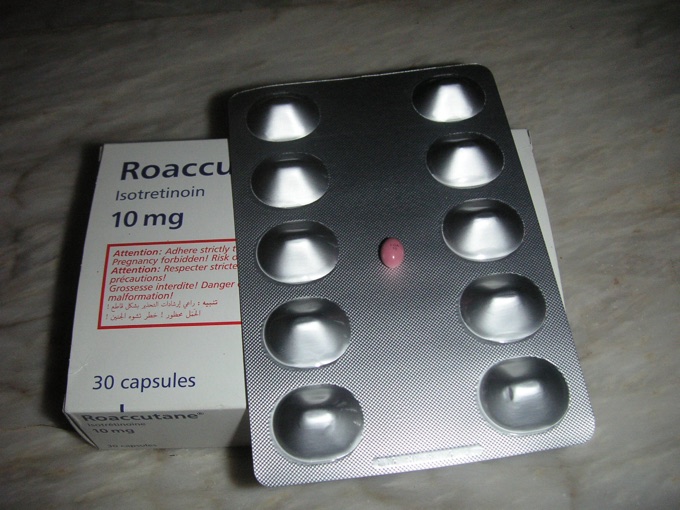
- Photo: Jpogi and André Teixeira Lima, Roaccutane.JPG, Wikimedia Commons, CC BY 3.0; scaled down.
Sources checked on 28 October 2026. AI-assisted writing and review, not clinical review.
This information does not replace medical advice. Talk to your doctor before you make any decision about your treatment.
640+ people have joined the registry.
Join them, then report your side effects.
Free. Sign up takes 2 minutes.