Accutane fatigue: can tiredness last?
Worn out since taking isotretinoin? What the official texts say about tiredness, when it needs a doctor quickly, and what to bring to your GP.
Exhausted since taking Accutane (isotretinoin, sold in the UK as Roaccutane)? The US label lists fatigue among the side effects people have reported, and some people with post-Accutane syndrome (PAS) say their tiredness lasted years after stopping.
Tiredness has many everyday causes, and a GP can check for those. On isotretinoin it can also be a warning sign: the UK leaflet links feeling tired with liver and kidney problems that need a doctor straight away.
Stefan was 15 when he started Accutane, and stopped in May 2006. “It was when I stopped it where I crashed,” he told Moral Medicine. His body, he says, “felt like I was 90 years old”.
More than 18 years later he still lives with it. “Chronic fatigue, I mean that’s just constant,” he says. A day with enough energy to play the guitar is a good day.
What do the official texts say about tiredness?
Is tiredness a side effect of Accutane?
The US label says yes, though it can’t say how often. It lists fatigue, lethargy, weakness and generally feeling unwell among reactions seen in trials or reported after the medicine went on sale.
One doctor’s records give a rough idea. In a New Zealand review of his patients’ notes, about 1 in 8 reported tiredness during treatment, more often on higher doses. The review doesn’t say how people felt after their course ended.
The UK leaflet doesn’t list tiredness on its own. It calls “Generally feeling unwell” very rare. It also says drowsiness has been reported very rarely, and that if it happens you shouldn’t drive. The NHS page on isotretinoin doesn’t mention tiredness.
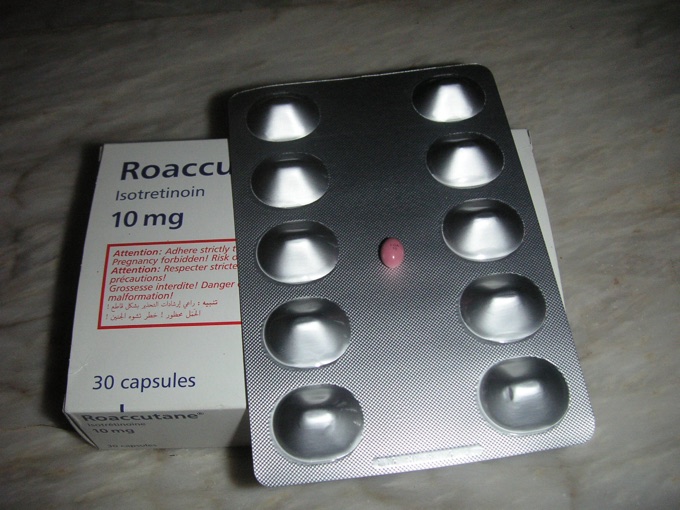
PAS is the name patients use when problems carry on after stopping isotretinoin. It’s more than tiredness, and more than the sexual problems the name is often linked with. In 2022, doctors and researchers proposed criteria that list problems with cognition, depression, and changes to the skin, joints and bowel.
Can Accutane fatigue last after stopping?
Some people say so, though it has barely been studied. The UK leaflet says side effects “are generally reversible after changing the dose or stopping treatment, however some may continue after treatment has stopped”. It doesn’t say which ones, or for how long.
The one report we found on tiredness after a course is a small study in a US journal of seven video interviews with people describing long-term effects. Four described neurological symptoms, such as brain fog and fatigue, that either carried on after stopping or began afterwards. Seven people can’t show how often this happens.
Elliot took Roaccutane at 17. In this extract, 13 years on, he describes his twenties. From the outside he looked busy and active. Inside, he says, he was “always tired, foggy, disconnected”.

For some people it has lasted years after stopping. Nobody knows yet who will be affected, or whether it will ease.
Could my tiredness be something else?
Yes, and a few causes need a doctor quickly. The UK leaflet says to stop taking Roaccutane straight away and contact your doctor if tiredness comes with the signs below.
Tiredness the UK leaflet says needs a doctor straight away
- With yellow skin or eyes. These can be signs of hepatitis, an inflamed liver.
- With trouble passing water or swollen, puffy eyelids. These may be signs of kidney inflammation.
The leaflet calls both very rare. It also lists anaemia, with weakness, dizziness and pale skin, among its very common side effects.
Low energy can also be a sign of depression. The US Medication Guide lists feeling “like you have no energy” among the signs to tell a doctor about right away. Our page on depression after stopping Accutane has more. If you’re struggling, the Samaritans are on 116 123 in the UK.
Tiredness also has everyday causes. The NHS page on tiredness lists poor sleep, stress and some illnesses, such as glandular fever. It says to see a GP if you’ve felt tired for a few weeks and don’t know why. Our pages on sleep after Accutane and blood tests for PAS may help.
What can I do?
These medicines help many people. If you have side effects, that’s a decision for you and your prescriber. Follow what the leaflet says about the warning signs above.
Bring your dates to the GP: “Roaccutane 30 mg a day from February 2024, last capsule August 2024. Exhausted since, even after a full night’s sleep.”
Three questions for your GP
- Which everyday causes should we rule out, and how?
- Could this be one of the side effects the leaflet says may continue after stopping?
- Can my isotretinoin dates go on my record, and can we report this on a Yellow Card?
You could start with: “I've been worn out since my isotretinoin course, and it hasn't lifted since I stopped.”
Many people say it took time to be taken seriously. You can report it without a doctor agreeing.
Report it: it helps everyone
A doctor’s note helps you. A report to the medicines regulator helps everyone else: it is how patterns get noticed.
- No proof needed. A suspicion is enough, even years after stopping.
- Where: the Yellow Card scheme in the UK, MedWatch in the US.
- Use the right words. PAS has no MedDRA term yet, so name each symptom, tiredness included, and say that it continued after stopping.
Our reporting guide walks you through it


What else do people ask?
How do I describe it to my GP? In your own words: sleepy, heavy, drained or flat. If you feel emotionally flat rather than tired, our page on emotional numbness after Accutane covers that.
Does Accutane make you sleepy? The UK leaflet says drowsiness has been reported very rarely. The US label lists drowsiness and lethargy without saying how often. Either way, don’t drive if you feel drowsy.
Is fatigue a sign of PAS? Not on its own. Tiredness is common and has many causes. People with PAS describe it, but the criteria proposed in 2022 don’t list it.
Stefan counts a day with energy for the guitar as a good one. If yours are rare too, say so on a Yellow Card, and say when it started.
Sources
- Absorica and Absorica LD (isotretinoin), US prescribing information and Medication Guide, revised August 2026, read 6 November 2026. DailyMed, US National Library of Medicine. Section 6, reactions “identified in clinical trials or postmarketing reports”. It says “it is not always possible to reliably estimate their frequency or establish a causal relationship to drug exposure”. Body as a Whole: “Fatigue”. Neurological: “drowsiness, lethargy, malaise”, “weakness”. Medication Guide, signs of depression or psychosis to report “right away”: “feel like you have no energy”, “sleep too much or have trouble sleeping”, “lose interest in activities you once enjoyed”.
- Roaccutane 10 mg and 20 mg soft capsules, patient leaflet, Electronic Medicines Compendium (EMC 100633), last revised April 2026, read 6 November 2026. Very rare (“may affect up to 1 in every 10,000 people”): “Yellow skin or eyes, and feeling tired. These can be signs of hepatitis. Stop taking Roaccutane straight away and contact your doctor.” And: “Difficulty urinating (passing water), swollen and puffy eyelids, feeling excessively tired. These may be signs of kidney inflammation.” In the very rare list: “Generally feeling unwell” and “Convulsions, drowsiness, dizziness”. Under driving: “Drowsiness and dizziness have been reported very rarely. If this happens to you, you should not drive or operate machinery.” Also listed: “Anaemia – weakness, dizziness, pale skin”. Section 4: side effects “are generally reversible after changing the dose or stopping treatment, however some may continue after treatment has stopped”. The leaflet does not list fatigue or tiredness as a side effect in its own right.
- Roaccutane, Summary of Product Characteristics, EMC 100633, read 6 November 2026. Section 4.8 table: “malaise” and “drowsiness” in the “Very Rare” column. No entry for fatigue.
- NHS, Isotretinoin (Roaccutane), page last updated 7 July 2026, read 6 November 2026. Lists dry skin, rash and sun sensitivity among side effects; tiredness is not mentioned.
- NHS, Tiredness and fatigue, page last updated 12 November 2025, read 6 November 2026. Common causes include “not getting enough sleep or finding it hard to get to sleep (insomnia)”, “stress, depression and dealing with life challenges” and “some illnesses, like glandular fever and COVID-19”. See a GP if “you’ve been feeling tired for a few weeks and you’re not sure why” or “your tiredness affects your daily life”.
- Rademaker M. Adverse effects of isotretinoin: a retrospective review of 1743 patients started on isotretinoin. Australas J Dermatol 2010;51(4):248-53. One dermatologist’s patients in New Zealand over six years; chart review. Abstract: tiredness “seen in 12%”, dose-dependent, “5%” under 0.25 mg/kg/day against “18%” over 0.75 mg/kg/day; tiredness led 12 patients to stop. Patients were started on isotretinoin “for various dermatological conditions”; the abstract reports side effects “during the study period” and says nothing about after the course. Abstract read through PubMed (NCBI E-utilities) 6 November 2026.
- Ghadimi TR, Martinez MJ, Rieder EA. Self-reported long-term side effects of isotretinoin: a case series. J Drugs Dermatol 2023;22(4):423-424. Seven video interviews from one YouTube channel. Not indexed under fatigue in PubMed; found through our own pages. Our PubMed search on 6 November 2026 (isotretinoin with fatigue or tiredness in title or abstract, 21 results) found no study of tiredness after a course ends. Symptoms that “either persisted after stopping isotretinoin or started after stopping isotretinoin” included “neurologic symptoms (4/7) (brain fog and fatigue)”; the paper gives brain fog and fatigue as examples for the group and doesn’t say how many had each. Seven people, no comparison group. Read 6 November 2026.
- Healy D, Bahrick A, Bak M and colleagues. Diagnostic criteria for enduring sexual dysfunction after treatment with antidepressants, finasteride and isotretinoin. Int J Risk Saf Med 2022;33(1):65-76. Proposed criteria from an expert panel, not an official diagnosis. Section 6: isotretinoin effects “that can occur independently of any sexual difficulties” include “cognitive impairment”, “skin changes”, “joint changes”, “bowel changes”, “depression” and “suicidality”. Fatigue is not listed (searched 6 November 2026).
- Moral Medicine, interview with Stefan, 11 December 2024, cited without a link (as on our other pages, because the film’s opening recalls another young man’s suicide). Stopped in May 2006 at 11:28. “It was when I stopped it where I crashed” and “felt like I was 90 years old” at 11:06. “Chronic fatigue I mean that’s just constant” at 13:22; a day with “a bit of energy to watch Telly or play a video game or play guitar, that’s a good day for me” at 13:24. Quotes from YouTube’s automatic captions, lightly punctuated; we quote only lines whose speaker is clear. His story on our site: Stefan’s story: Accutane at 15.
- Moral Medicine, He Took Accutane at 17. His Life Never Returned to Normal., interview with Elliot, 28 January 2025 (the title is the channel’s). Our page plays 1:12:36 to 1:13:12. Thirteen years since stopping at 1:11:19. “I was tired all the time” at 1:12:51 and “always tired, foggy, disconnected” at 1:12:56, after describing himself as “working all the time”. Quotes from YouTube’s automatic captions.
- MHRA, Yellow Card - How to report, 12 November 2024.
- MedDRA terms as listed in our reporting data. There is no term for lasting effects after isotretinoin.
Sources checked on 6 November 2026. AI-assisted writing and review, not clinical review.
Lasting side effects after isotretinoin?
Make them count.
Our step-by-step guide finds the form for your country.