Isotretinoin for teenagers: what parents ask
What parents should watch for at home during isotretinoin, whether side effects can continue after the course, and who to tell.
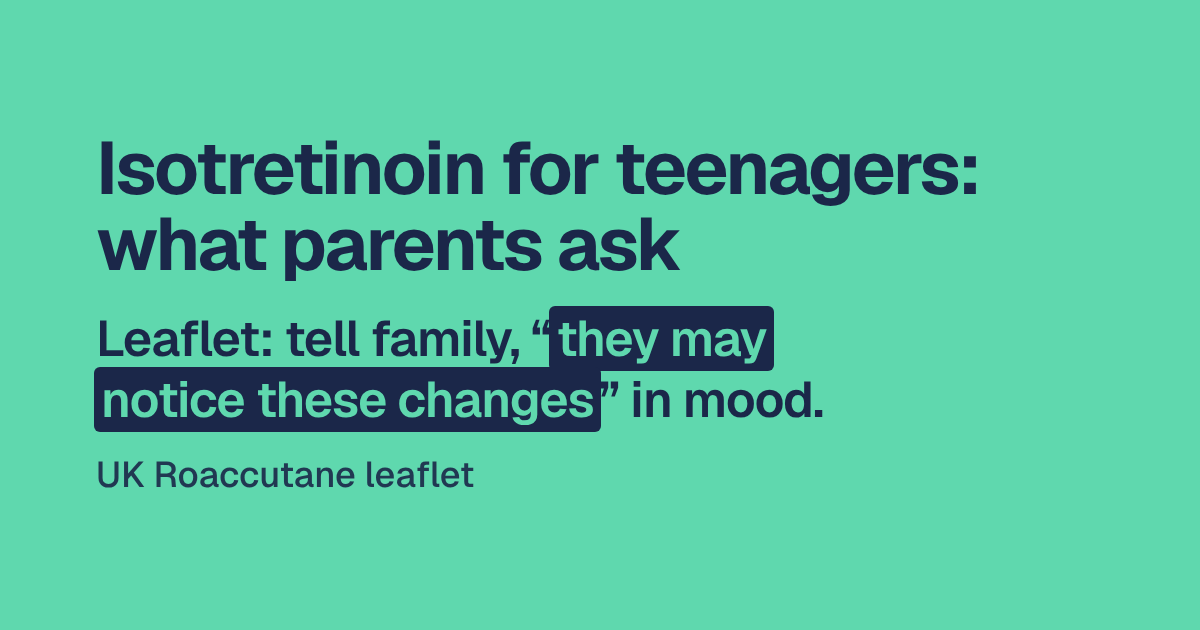
Is your child about to start isotretinoin (Roaccutane, or Accutane)? In the UK, a teenager prescribed it signs a risk form, and a parent should be asked to sign too.
Your main job at home is to watch their mood, because the UK leaflet warns some side effects may continue after the course ends. When they last, patients call it post-Accutane syndrome, or PAS.
The NHS page on isotretinoin mentions neither the form nor the leaflet’s advice to tell family.
Joseph, from France, was 13 when he took isotretinoin. His acne was severe, he says, and nothing else had worked. Months after the course had ended, severe anxiety and panic attacks began.
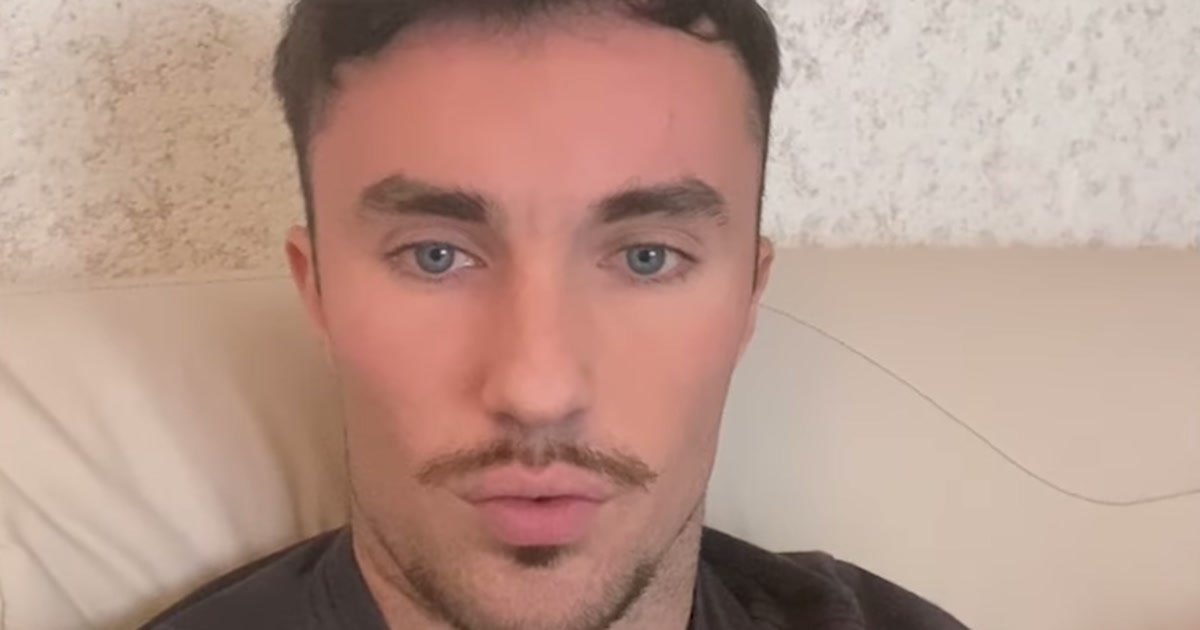
In his story he describes years of looking for answers, while doctors told him the medicine couldn’t be responsible. With time his symptoms have improved in a meaningful way, he says. He’s clear this isn’t a cure.
So what will you both sign, and what should you watch for during and after the course?
What will my child and I be asked to sign for isotretinoin?
As of October 2026, one form: the Acknowledgement of Risk Form. Your child and the prescriber sign it. When the patient is under 18, the form’s notes say a parent or guardian “should also be asked to sign”.
In your child’s voice, one line reads: “I understand I am advised to tell a family member or friend I am taking isotretinoin. I should tell them about potential side effects to look out for”.
You may be asked to wait outside first. The British Association of Dermatologists’ guidance for clinics recommends that, for the first talk about risk, “the young person should be seen alone”, so they can speak freely. Afterwards, a parent “should usually be involved”.
If the form isn’t shared with a parent, the guidance says a parent or another responsible adult should still be “advised to look out for mood changes”.

What should parents watch for during isotretinoin?
Mood, above all. The UK leaflet tells patients: “You may not notice some changes in your mood and behaviour”.
It lists depression as a side effect, with anxiety among the signs, and adds: “Some people have had thoughts about hurting themselves or ending their own lives (suicidal thoughts), have tried to end their own lives (attempted suicide), or have ended their lives (suicide). These people may not appear to be depressed”.
The leaflet says what to do: “Contact your doctor straight away if you get signs of any of these mental problems”.
Your child must also be given a patient reminder card. It says to stop taking isotretinoin and contact the dermatology team or GP over “serious concerns about your mental health or thoughts of harming yourself”.
Out of hours it gives NHS 111, and 999 for an emergency. The Samaritans are on 116 123, free.
A course of isotretinoin, seen from home
Can isotretinoin side effects continue after the course?
Some can, the leaflet says. Side effects are “generally reversible” after stopping, “however some may continue after treatment has stopped”.
About sex it is specific: “There have been reports of long-lasting sexual problems where the symptoms have continued despite stopping treatment with isotretinoin”.
The UK medicines regulator’s 2026 review says: “We do not know how often this happens, or how long those side effects can last”.
Patients call lasting side effects PAS. For some people it has lasted years after stopping. Nobody knows yet who will be affected, or whether it will ease.
PAS is more than sexual problems. Proposed 2022 criteria say depression, suicidal thoughts and problems with cognition can follow isotretinoin, with or without sexual problems.
Stefan was 15 when he took a short course. Moral Medicine, the channel that filmed his story, says he has been living with PAS for almost 19 years.
More in Accutane and depression after stopping and Is isotretinoin safe?
What can I do?
Isotretinoin helps many people with severe acne, which can scar and lower mood too. Whether your child takes it, and what to do about a side effect: that’s a decision for you, your child and the prescriber.
Keep what comes home from the first appointment: a copy of the signed form, the reminder card and the dermatology team’s contact details.
Write down dates and any change you notice: “Roaccutane 30 mg a day from 6 January 2026. Low mood since early March”.
Who do you tell? During the course, the dermatology team. Afterwards, your child’s GP.
Questions to take to the clinic or GP
An opening line: “My child is taking isotretinoin, and I've noticed a change I want to write down.”
- Who do we call if their mood changes, and how fast?
- What will you check at each follow-up?
- The leaflet says some side effects may continue after stopping. What happens if that is us?
Many people say it took time to be taken seriously. Bring the leaflet line: “some may continue after treatment has stopped”.
For advice as a parent, the regulator’s isotretinoin page names YoungMinds.
You can also report a side effect yourself. The regulator asks for reports from “healthcare professionals, patients, and caregivers”. Our guide to reporting isotretinoin side effects shows the form.
Report it: it helps everyone
A doctor’s note helps you. A report to the medicines regulator helps everyone else: it is how patterns get noticed.
- No proof needed. A suspicion is enough, even years after stopping.
- Where: the Yellow Card scheme in the UK, MedWatch in the US.
- Use the right words. PAS has no MedDRA term yet, so name each symptom and say it continued after stopping.
Our reporting guide walks you through it
What else do people ask?
What is checked before and during a course? As of October 2026, the clinic should assess your child’s mental health before prescribing, with a questionnaire, and ask about sexual function. Both should be checked again at each follow-up, and the leaflet adds blood tests. Our under-18 rules article has the detail.
From what age can isotretinoin be prescribed? The UK leaflet says it “should not be used to treat prepubertal acne and not in children aged less than 12 years of age”. Under 12, safety and effect aren’t known.
Does my daughter need contraception if she isn’t sexually active? The leaflet says isotretinoin “can seriously harm an unborn baby”, so anyone who could get pregnant follows strict rules. Contraception is required “even if you do not have periods or you are not sexually active (unless your doctor decides this is not necessary)”.
Joseph talks about the hardest periods of his life. He also talks about the support his family gave him.
Sources
- Roaccutane 10 mg and 20 mg soft capsules, patient leaflet, Electronic Medicines Compendium (EMC 100633), last revised April 2026. Section 1: not for prepubertal acne and not under 12. Section 2, “Pregnancy prevention programme”: contraception “even if you do not have periods or you are not sexually active”. Section 2, “Mental health problems”: tell friends and family. Section 2 also has muscle and joint pain “particularly in children and teenagers undertaking vigorous physical activity”, blood tests before, during and after treatment, and the sentence on sexual problems that we quote in full. Section 3: acne can get worse in the first weeks. Section 4: side effects are “generally reversible”. Section 4, “Mental problems”: “Depression or related disorders”, with anxiety among the signs, frequency not known. “Contact your doctor straight away if you get signs of any of these mental problems”. Dry skin and lips, and “joint pain particularly in children and teenagers”, are listed as very common.
- Isotretinoin Acknowledgement of Risk Form, version 3.0, MHRA approval date February 2026. Its notes say the prescriber and patient, “and usually a parent or guardian if the patient is under 18 years old”, should go through the form together. A parent or guardian “should also be asked to sign”, unless the prescriber thinks that is not in the patient’s best interests. The patient must be given a copy of the completed form, the Patient Information sheet with the dermatology team’s contact details, and the Patient Reminder Card. The mental health assessment includes questionnaires, for example “PHQ-9/PHQ-A and GAD-2”. The patient’s line on telling a family member or friend goes on: “I should tell them about potential side effects to look out for so I can inform my dermatology team”.
- Patient Reminder Card for Isotretinoin, version 2.1, MHRA approval date October 2023. “You should stop taking isotretinoin and contact your dermatology team or GP for further advice if you have serious concerns about your mental health or thoughts of harming yourself or other serious side effects”. It lists NHS 111 or the local mental health crisis team out of hours, 999 or A&E, and the Samaritans on 116 123. It has a space for the dermatology team’s names and number.
- British Association of Dermatologists, Changes to isotretinoin prescribing 2026: FAQs, written for healthcare professionals. The PDF version is dated 22 January 2026; we read the page on 12 October 2026. Question 10: for the initial discussion around risk the young person “should be seen alone, with consideration of the need for a chaperone”. A parent or guardian “should usually be involved in any further discussion” and be asked to co-sign. Question 9: where the form is not shared with parents, “parents or another responsible adult should still be counselled about possible mental health side effects and advised to look out for mood changes and report any concerns”.
- MHRA, Isotretinoin: changes to prescribing guidance and additional risk minimisation measures, Drug Safety Update, 22 January 2026. Prescribers “should assess” mental health before prescribing, with patient-reported outcome measures, and “ask patients about any sexual function concerns”. They should monitor both “at each follow up appointment”. Isotretinoin “should be used for acne that is severe or at risk of causing permanent scarring when other appropriate treatments have not been effective”. Reports are asked for from “healthcare professionals, patients, and caregivers”.
- MHRA, Review of the impact of recommendations for the prescribing of isotretinoin, Public Assessment Report, 22 January 2026. Plain language summary: “Some side effects may continue even after stopping isotretinoin. We do not know how often this happens, or how long those side effects can last”.
- MHRA, Isotretinoin: an expert review of suspected psychiatric and sexual side effects, last updated 25 February 2026. “Further help and support” names YoungMinds, with support for young people, parents and professionals. We checked the page on 12 October 2026.
- NHS, Isotretinoin (Roaccutane), page last reviewed 26 June 2026. When we checked on 12 October 2026, it mentioned neither the form nor the leaflet’s advice to tell friends and family.
- Medicines for Children, Oral isotretinoin: guide for young people, version 2. “Acne and acne scars may affect self-confidence which can lead to low mood, especially in young people”.
- Moral Medicine, French Patient Shares His Long-Term Struggle After Accutane (isotretinoin), interview with Joseph, 17 November 2025, in French (the title is the channel’s). Our page plays an extract, 0:09 to 2:08, checked against the French captions: his age, the severe acne that nothing else had cleared, and the panic attacks months after the course. The rest of what we say about him comes from his story on our site: Joseph’s story: isotretinoin at 13.
- Stefan’s story: Accutane at 15, on our site, from Moral Medicine’s interview with Stefan, 11 December 2024.
- MHRA, Isotretinoin Impact Review information session, held 22 January 2026. Our page plays an extract, 14:07 to 15:08. Professor Sir Munir Pirmohamed chairs the Commission on Human Medicines, which advises the MHRA. Checked against the MHRA’s own captions. In the session he says a parent or guardian signs too; the form’s own wording is “should also be asked to sign”.
- Healy D, Bahrick A, Bak M, et al. Diagnostic criteria for enduring sexual dysfunction after treatment with antidepressants, finasteride and isotretinoin, International Journal of Risk & Safety in Medicine, 2022. Proposed expert-consensus criteria, not an official diagnosis. The isotretinoin section says depression, suicidality and cognitive impairment “can occur independently of any sexual difficulties but may also accompany sexual problems”.
640+ people have joined the registry.
Join them, then report your side effects.
Free. Sign up takes 2 minutes.