No morning erections after SSRIs: is it PSSD?
SSRIs can stop morning erections. UK leaflets warn sexual problems have sometimes continued after stopping. If erections don't return, it can fit PSSD.
SIDEfxHUB is a patient charity. We are not health professionals, and this does not replace medical advice. Don't start, stop or change any medicine because of what you read here. Talk to your doctor first.
If you are in crisis:116 123 Samaritans (UK)988 Lifeline (US)Find a helpline
SSRI antidepressants, such as sertraline, can cause erection problems, including lost morning erections. UK leaflets warn that sexual problems have sometimes continued after stopping. If your morning erections haven’t come back, it can be part of post-SSRI sexual dysfunction, or PSSD, especially if your genitals also feel numb.
PSSD is more than an erection problem. In 2022, a group of doctors and researchers proposed a checklist to recognise it. Its main sign is a lasting change in how the genitals feel, often numbness. The checklist also lists feeling emotionally numb, problems with concentration and memory, and changes in other senses.
It’s tempting to treat morning erections as a test: if they’ve gone, it can’t be “in my head”. They’re a real clue, but a rough one. Depression can weaken them too, and they aren’t the main sign on the checklist.
The story in 3 lines
- The UK paroxetine leaflet lists "abnormal erection" among its very common side effects.
- SSRI leaflets warn that sexual problems "have continued after stopping treatment" in some cases (sertraline leaflet).
- The 2022 PSSD checklist lists lost night-time erections as one possible sign. No reliable figure exists for how often PSSD happens.
Press: contact@sidefxhub.com
Luis took paroxetine, an SSRI, at a low dose for just over a month in 2022. He’d been feeling a bit anxious and wasn’t sleeping well. The day after his last tablet, he felt better.

A few weeks later, he says, his genitals began to go numb, little by little. Then one Sunday in June he woke up feeling “empty”, with no morning erection. When he was filmed the next year, the numbness, low desire and missing morning erections were all still there.
Why do SSRIs stop morning erections?
Nobody knows exactly why. Erection problems are a known side effect: the paroxetine leaflet says changes in sexual function may affect more than 1 in 10 people. Our article on antidepressant sexual problems covers the other side effects.
Sleep may play a part. Erections come and go in cycles during dreaming sleep, called REM sleep. A 2026 review found SSRIs are among the antidepressants that most reliably cut down REM sleep.
But less dreaming sleep doesn’t always mean fewer erections. In a 1989 study, healthy men given one large dose of fluoxetine had less REM sleep, but their night-time erections didn’t change. We searched in October 2026 and found no study that followed morning erections in men on an SSRI for months.
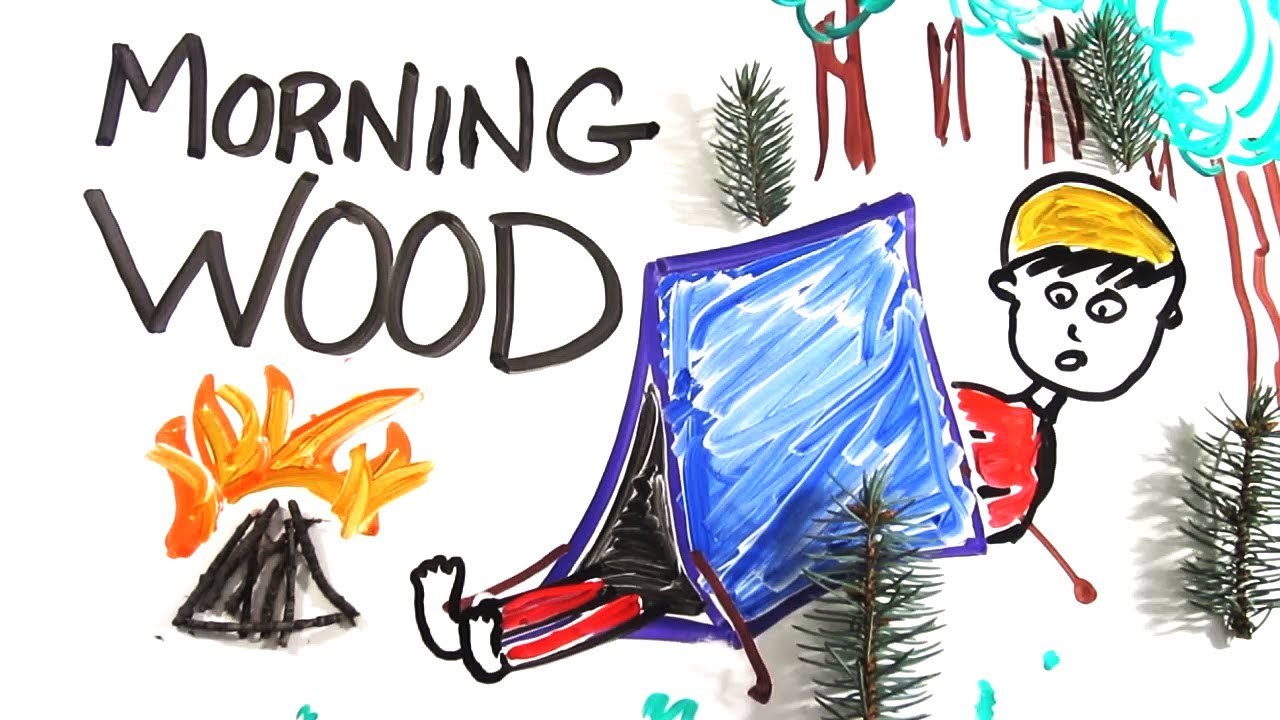
This short science extract explains why erections happen in your sleep. It says nothing about medicines.
Will my morning erections come back after stopping?
They may. But the sertraline leaflet says: “In some cases, these symptoms have continued after stopping treatment.”
The checklist says ordinary sexual side effects can linger for days or weeks after the last tablet. Once problems have lasted three months, PSSD is more likely.
The checklist needs a lasting change in how your genitals feel. So ask yourself a second question: does touch feel different?
For some people it has lasted years after stopping. Nobody knows yet who will be affected, or whether it will ease. Our article on lasting erection problems from a medicine sets out what each leaflet says.
The psychiatrist Josef Witt-Doerring describes the symptoms beyond sex in this 90-second clip. It’s about PSSD in general, not morning erections.

Does no morning wood mean it’s physical?
Not on its own. The NHS says that, depending on the cause of erection problems, you may still get an erection “when you wake up”. Doctors have used overnight sleep tests for decades to tell a psychological cause from a physical one.
Depression muddies that test. US researchers found that men with depression had weaker, shorter erections in their sleep than healthy men, and found it again in a larger study. A third study looked at men taking no medicine. The changes were still there when their mood first lifted after talking therapy.
If you were depressed before the tablets, missing morning erections can’t tell depression and the tablets apart. Timing tells you more: were your morning erections normal before you started, and when did they change? Our article on PSSD or depression goes through the differences.
Normal test results don’t mean it’s in your head, either. A 2008 medical report described a man who started fluoxetine (Prozac) at 18 and lost his night and morning erections within days. His erection problems stayed after he stopped.
Over the next 11 years, his blood tests, hormones and blood flow to the penis all came back normal, and doctors found no psychological cause. Our article on PSSD blood tests explains what normal results mean.
What can I do?
These medicines help many people. If you have side effects, that’s a decision for you and your prescriber. Don’t stop suddenly.
Write down your dates and what changed: “Sertraline 50 mg from January 2023, last tablet March 2024. No morning erections since spring 2023. Touch feels numb.” Add changes beyond sex, such as feeling emotionally flat or struggling to concentrate, and say how things were before.
Three questions for your GP
- Could this be a lasting effect of the SSRI, as the leaflet describes?
- What else should we rule out, and how?
- Can this go on my record and be reported to the Yellow Card scheme?
You could start with: "My morning erections went after I took an SSRI and haven't come back. The leaflet says sexual problems have sometimes continued after stopping."
Many people say it took time to be taken seriously. Bring the leaflet line. You can report it without a doctor agreeing.
Report it: it helps everyone
A doctor’s note helps you. A report to the medicines regulator helps everyone else: it is how patterns get noticed.
- No proof needed. A suspicion is enough, even years after stopping.
- Where: the Yellow Card scheme in the UK, MedWatch in the US. Our Yellow Card guide for PSSD shows each step.
- Use the right words. If symptoms continued after stopping, write Post-SSRI sexual dysfunction (MedDRA 10086208).
Our reporting guide walks you through it
What else do people ask?
Can a sleep test prove it’s PSSD? No. A ring worn overnight can show whether erections happen in your sleep. It can’t show which medicine, if any, changed them. Our article on PSSD sensation studies covers tests of genital feeling.
Could it be low testosterone or something else? It could. The NHS lists hormone problems and diabetes among the causes of erection problems. In a large Italian clinic study of mostly middle-aged men, those who noticed fewer sleep erections tended to have lower testosterone and a higher risk of heart disease. Our article on erection problems at 20 covers the everyday causes in younger men.
I’m still taking my SSRI. What now? Raise it with your prescriber: the leaflet lists erection problems as a side effect. Note the date it started. Don’t stop suddenly. Our PSSD page explains the condition.
Luis woke up one Sunday, weeks after his last tablet, and his morning erection wasn’t there. If your morning erections went during or after an SSRI and haven’t come back, write down your dates today and report it.
Sources
- Seroxat (paroxetine) 10 mg, 20 mg and 30 mg film-coated tablets, patient leaflet, Electronic Medicines Compendium (EMC 7592), last revised October 2024. Section 2: “In some cases, these symptoms have continued after stopping treatment.” Section 4, very common side effects (may affect more than 1 in 10 people): “Change in sex drive or sexual function. For example, lack of orgasm and, in men, abnormal erection and ejaculation.” The leaflet does not mention morning or night-time erections.
- Lustral (sertraline) 50 mg and 100 mg film-coated tablets, patient leaflet, Electronic Medicines Compendium (EMC 2835), last revised December 2025. Section 2, “Sexual problems”: “In some cases, these symptoms have continued after stopping treatment.” Section 4: erectile dysfunction and decreased sexual interest are common (may affect up to 1 in 10 people).
- Healy D, Bahrick A, Bak M and colleagues. Diagnostic criteria for enduring sexual dysfunction after treatment with antidepressants, finasteride and isotretinoin. Int J Risk Saf Med 2022;33(1):65-76. Proposed criteria from an expert group, not an official diagnosis. Section 3, PSSD, necessary: “An enduring change in somatic (tactile) or erogenous (sexual) genital sensation after treatment stops”. Additional: lasting loss of desire, erectile dysfunction, orgasm problems, and a problem “present for ≥3 months after stopping treatment”. There should be no matching pre-drug problem, and “No current medical conditions that could account for the symptoms”. Ancillary sexual symptoms “may include” “decreased or loss of nocturnal erections (males)”. Ancillary non-sexual symptoms “may include” “emotional numbing”, “other sensory problems involving skin, smell, taste or vision” and cognitive impairment. Ordinary sexual dysfunction “may linger for some days or weeks following discontinuation of treatment”. Also: “once dysfunction lasts for three months, it is more likely to be PSSD”. And: “The incidence of these conditions is unknown”.
- Szynkarek A, Tyrybon W, Karcz M and colleagues. Restorative or disruptive? Effects of antidepressants on sleep architecture in depression. CNS Drugs 2026;40(6):787-801. Narrative review: SSRIs and SNRIs “most consistently suppress REM sleep”. It does not measure erections. Read as the abstract only.
- Schmidt MH. Sleep-related erection neurophysiology. Sleep Med 2018;49:24-27. “Erection cycles occur during rapid eye movement (REM) sleep in humans.” Read as the abstract only.
- von Bardeleben U, Steiger A, Gerken A, Holsboer F. Effects of fluoxetine upon pharmacoendocrine and sleep-EEG parameters in normal controls. Int Clin Psychopharmacol 1989;4 Suppl 1:1-5. A single 80 mg dose in healthy men: “reduction of rapid-eye-movement sleep. Nocturnal penile tumescence activity was unaltered.” One dose only; says nothing about months of use. Read as the abstract only.
- NHS, Erectile dysfunction (impotence), page last reviewed 28 July 2023. “Depending on the cause, you may still be able to get an erection at other times, such as when you wake up”. It lists hormone problems, diabetes, depression and anxiety among the conditions linked to frequent erection problems. It also names “some medicines”.
- Qin F, Gao L, Qian S and colleagues. Advantages and limitations of sleep-related erection and rigidity monitoring: a review. Int J Impot Res 2018;30(4):192-201. Sleep erection monitoring “has been used to differentiate psychogenic from organic erectile dysfunction”. Methods include the mercury strain gauge, the Snap gauge and the RigiScan. Read as the abstract only.
- Thase ME, Reynolds CF 3rd, Glanz LM and colleagues. Nocturnal penile tumescence in depressed men. Am J Psychiatry 1987;144(1):89-92. 10 men with major depression against 10 healthy men: “significantly reduced minutes of tumescence time”. Read as the abstract only.
- Thase ME, Reynolds CF 3rd, Jennings JR and colleagues. Diminished nocturnal penile tumescence in depression: a replication study. Biol Psychiatry 1992;31(11):1136-42. University of Pittsburgh. 51 men with major depression: “significant abnormalities of NPT and diminished penile rigidity”. Read as the abstract only.
- Nofzinger EA, Thase ME, Reynolds CF 3rd and colleagues. Sexual function in depressed men. Arch Gen Psychiatry 1993;50(1):24-30. 40 unmedicated men with depression treated with cognitive behaviour therapy: “nocturnal penile tumescence abnormalities in depressed men did not reverse when measured in early remission”. Read as the abstract only.
- Csoka AB, Bahrick AS, Mehtonen OP. Persistent sexual dysfunction after discontinuation of selective serotonin reuptake inhibitors. J Sex Med 2008;5(1):227-233. Case 1, published with consent: fluoxetine from 1996, at 18, for four months. Within 3 to 4 days “He no longer had nocturnal or morning erections”; after stopping, “his erectile dysfunction has remained”. Over 11 years, physical examinations and blood work including testosterone, prolactin and glucose were normal; a penile Doppler ultrasound showed arterial blood flow “extremely good”. Abstract: “No psychological issues related to sexuality were found in any of the three cases.” Volunteers recruited through an online support group.
- Corona G, Rastrelli G, Balercia G and colleagues. Perceived reduced sleep-related erections in subjects with erectile dysfunction: psychobiological correlates. J Sex Med 2011;8(6):1780-8. 3,888 men attending an erectile dysfunction clinic in Florence, mean age about 52. Fewer perceived sleep erections went with lower testosterone and a higher 10-year cardiovascular risk score. Read as the abstract only.
- Moral Medicine, Luis’s Happy Life Destroyed by PSSD, interview with Luis, 28 August 2023 (34 minutes), embedded here as an extract from 19:50 to 22:40. From the YouTube auto-captions: paroxetine (3:26 to 3:30). Not sleeping well, a little anxious (6:37 to 6:45). The minimum dose for “a month and a week” (12:56 to 13:13), March to April of the year before (13:28 to 13:33). Felt better the day after stopping (16:16 to 16:23). Genital numbness “little by little” (19:50 to 19:53). A Sunday in June (20:16 to 21:22); woke up “empty” (21:26 to 21:37); “no morning erection” (22:11 to 22:15). Interviewer’s summary, which Luis confirms: still genital numbness, loss of sex drive, emotional blunting and “no more morning wood” (22:47 to 23:44).
- AsapSCIENCE, The Science of ‘Morning Wood’, 14 November 2012 (2 minutes), embedded here as an extract from 0:18 to 1:32. General background on sleep cycles and erections.
- Dr Josef Witt-Doerring, PSSD (Post SSRI Sexual Dysfunction): What are the Non Sexual Symptoms?, 18 December 2022 (90 seconds). Paraphrased from the YouTube auto-captions: emotional blunting and numbing, changes in smell, taste or vision, cognitive impairment and difficulty focusing.
Sources checked on 27 October 2026. AI-assisted writing and review, not clinical review.
This information does not replace medical advice. Talk to your doctor before you make any decision about your treatment.
640+ people have joined the registry.
Join them, then report your side effects.
Free. Sign up takes 2 minutes.