Low-dose SSRIs: can PSSD still happen?
Some people describe PSSD after low SSRI doses. Higher doses are linked to more sexual side effects. We found no study of whether a low dose cuts the risk.
SIDEfxHUB is a patient charity. We are not health professionals, and this does not replace medical advice. Don't start, stop or change any medicine because of what you read here. Talk to your doctor first.
If you are in crisis:116 123 Samaritans (UK)988 Lifeline (US)Find a helpline
Some people say they got post-SSRI sexual dysfunction (PSSD) after only a low dose of an SSRI antidepressant, such as escitalopram or sertraline. PSSD means sexual problems that can last after you stop. We searched in October 2026 and found no study that tested whether a low dose makes it less likely.
PSSD is more than sex. In 2022, a group of doctors and researchers proposed a checklist to recognise it. The main sign is a lasting change in how the genitals feel, often numbness. The checklist also includes feeling emotionally numb, problems with concentration and memory, and changes in other senses, such as taste or smell.
The NHS page on escitalopram says a low starting dose “reduces the chances of side effects”. That means side effects while you’re on it. The page says nothing about problems that carry on after your last tablet, at any dose.
The story in 3 lines
- The UK leaflet for Cipralex (escitalopram), which also covers the 5 mg tablet, warns that sexual problems have in some cases “continued after stopping treatment”.
- A 2026 review lists a higher dose as one thing linked to more sexual side effects while people take antidepressants.
- We found no study that tested whether a low dose lowers the risk of PSSD. A 2023 review asked for that research.
Press: contact@sidefxhub.com
Stephen took escitalopram (Lexapro) for about 15 years without trouble. Seven months after coming off it, he was anxious about work and housing, so he went back on a low dose. He stopped after six days. In this extract he explains why he wasn’t worried, and what happened next.

“This is a very short exposure, it’s a low dose,” he remembers thinking. “If I stop now, everything will go back to normal.” A week and a half later his genitals went numb, and he felt nothing for his family. When he was filmed, nearly three years on, it hadn’t lifted.
Do lower doses cause fewer sexual side effects?
Probably, while you’re taking the tablets. The 2026 review lists a higher dose among the things linked to them.
The US information for doctors on paroxetine, another SSRI, shows this in one trial of people with panic disorder. People took one of three daily doses. Lower sex drive and ejaculation problems were among the side effects it calls “dose-related”: they turned up more as the dose went up.
Lower doesn’t mean none, though. The Cipralex leaflet lists sexual problems as common: delayed ejaculation, erection problems, lower sex drive and, in women, difficulty reaching orgasm.
Can PSSD happen after a low dose?
Some people say it has. Stephen is one. Anthony took 25 mg of sertraline for poor sleep, 11 tablets in all. Our article on PSSD after a few pills tells his story.
Luis was a bit anxious and sleeping badly, so he took paroxetine at what he calls “the minimum dose”. “It’s like nothing,” he says. A couple of months after his last tablet, his genitals began to go numb, little by little. We wrote about him in lost morning erections after SSRIs.
These are people’s own accounts. They can’t tell you how often it happens. Stephen’s story also can’t show whether the low dose mattered, because he’d taken the same medicine for years before.
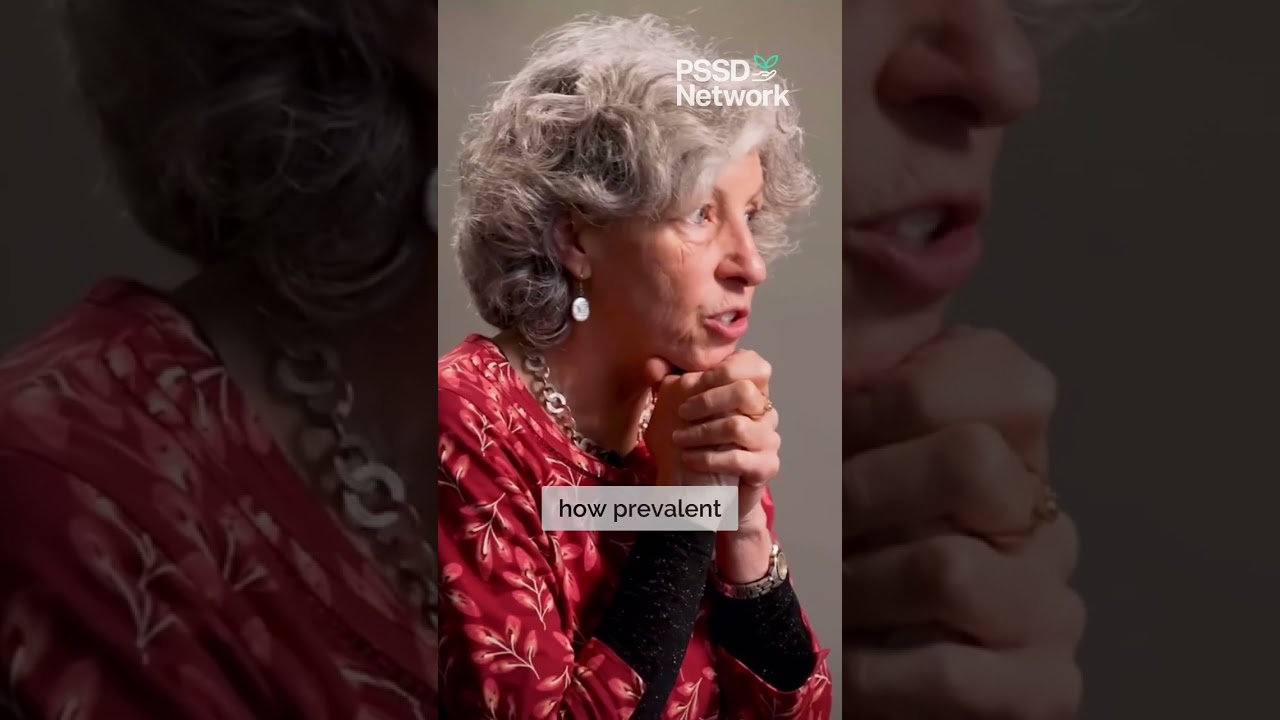
If your GP hasn’t heard of PSSD, this short extract from Professor Joanna Moncrieff, a psychiatrist, is worth showing them. It’s background on the condition, not about the dose.
Is the risk of PSSD lower on a low dose?
We don’t know. The only two studies we found that asked about dose were online surveys aimed at people with PSSD.
The 2015 one found that the dose people had taken didn’t predict how bad their symptoms were. In the 2021 one, more of the people who answered had taken “relatively high doses”.
Neither went looking for people who took an SSRI and were fine, so neither can show whether a low dose makes PSSD less likely.
People on a low dose and people on a usual dose.
Including the people who feel fine.
Who still has problems later, low dose against usual dose.
What can I do?
These medicines help many people. If you have side effects, that’s a decision for you and your prescriber. Don’t stop suddenly.
If something has changed, a low dose isn’t a reason to brush it off. Tell your prescriber what changed and when, with your dose and dates: “Escitalopram 5 mg from 3 March 2026, last tablet 9 March. Genitals numb since 20 March.” Mention changes beyond sex too, such as feeling emotionally flat.
Three questions for your prescriber
- Could this be the lasting effect the leaflet describes, even at my dose?
- What else could explain it, and how would we check?
- Can this go on my record and be reported to the Yellow Card scheme?
You could start with: “I was on a low dose, but something changed and it hasn't gone back.”
Many people say it took time to be taken seriously. Bring the leaflet line. You can report it without a doctor agreeing.
Report it: it helps everyone
A doctor’s note helps you. A report to the medicines regulator helps everyone else: it is how patterns get noticed.
- No proof needed. A suspicion is enough, even years after stopping.
- Where: the Yellow Card scheme in the UK, MedWatch in the US. Our Yellow Card guide for PSSD shows each step.
- Use the right words. If symptoms continued after stopping, write Post-SSRI sexual dysfunction (MedDRA 10086208).
Our reporting guide walks you through it
What else do people ask?
My problems began as my dose came down. Can that happen? Some people say so. The 2022 checklist says a lasting problem sometimes shows up only once the medicine is stopped. In one collection of patient reports, three people on SSRIs said sex got steadily worse as their dose came down. Tell your prescriber what you notice as the dose changes, and don’t stop suddenly. Our page on PSSD or withdrawal explains the difference.
What about a low dose for hot flushes? In the US, paroxetine at 7.5 mg (Brisdelle) is licensed for menopausal hot flushes. Even at that dose, its information for doctors warns it may lower sex drive and delay orgasm. Our page on PSSD in women covers what women describe.
Do all SSRIs carry the warning? In 2019 the EU medicines regulator asked for the “continued after stopping” line on six SSRIs, including escitalopram, sertraline and paroxetine. It asked the same for four SNRIs, a related group of antidepressants. Our list of antidepressants linked to PSSD names them.
Stephen was sure six days at a low dose couldn’t matter. If PSSD sounds like what happened to you, report it with your dose and dates. A low dose still counts.
Sources
- Cipralex 5 mg, 10 mg and 20 mg film-coated tablets, patient leaflet, Lundbeck, Electronic Medicines Compendium (EMC 7718), last revised May 2025. One leaflet for all three strengths. Section 2: “In some cases, these symptoms have continued after stopping treatment.” Section 4, common (up to 1 in 10 people): “Sexual disturbances (delayed ejaculation, problems with erection, decreased sexual drive and women may experience difficulties achieving orgasm)”. Section 3: “Do not stop taking Cipralex until your doctor tells you to do so.”
- NHS, Escitalopram, one page with all sections, last reviewed 18 June 2026: “Your doctor may prescribe a low dose to start with and increase it after a few weeks. This reduces the chances of side effects.” The page lists low sex drive among common side effects and doesn’t say sexual problems can continue after stopping.
- Healy D, Bahrick A, Bak M and colleagues. Diagnostic criteria for enduring sexual dysfunction after treatment with antidepressants, finasteride and isotretinoin. Int J Risk Saf Med 2022;33(1):65-76. Proposed criteria. Section 3: the core change in genital sensation; ancillary symptoms “may include: emotional numbing”, “depersonalization”, “other sensory problems involving skin, smell, taste or vision” and “cognitive impairment”. Section 9: “an enduring sexual dysfunction may only appear when the drug is stopped, or a mild dysfunction on treatment may worsen on stopping”. The paper sets no dose threshold.
- Zini J, Turecki G. Antidepressant-induced sexual dysfunction in adults: a targeted scoping review and clinical update. J Clin Psychopharmacol 2026 Jun. Abstract read: 65 studies; “Reported risk factors have been associated with higher antidepressant dose, male sex, older age, pre-existing sexual dysfunction, and greater depressive severity.” About side effects during treatment.
- Paxil (paroxetine) tablets, US prescribing information, Apotex, DailyMed, revised September 2026. Section 6.1, a 10-week fixed-dose study in panic disorder (PD-1) of 10, 20 and 40 mg against placebo. Its “Dose-related adverse reactions” include “libido decreased” and “abnormal ejaculation”. In fixed-dose studies of 20 and 40 mg, “abnormal ejaculation” was also dose-related in generalised anxiety disorder, and “impotence and abnormal ejaculation” in PTSD. Two other fixed-dose studies (OCD-1, SAD-3) showed “no clear relationship” with dose.
- Moral Medicine, I Took Lexapro for 15 Years Without a Problem. Six Days Changed My Life Forever, interview with Stephen, 20 July 2026, embedded here as an extract from 5:40 to 6:28. From the YouTube automatic captions. About 15 years on it (4:31 to 4:36). Tapered off, then well for about seven months (4:51 to 5:01). Anxious about housing and work, back on “a low dose of Lexapro” (5:08 to 5:25). Stopped “after 6 days” (5:40 to 5:43). “This is a very short exposure, it’s a low dose. If I if I stop now, everything will go back to normal” (5:43 to 5:50; the repeated words are removed in the text). A week and a half later his genitals “went completely numb”, with no feelings for his family (5:52 to 6:20). “In my case approaching 3 years” (16:05). His story on our site: Stephen’s story: 6 days back on Lexapro.
- Moral Medicine, Luis’s Happy Life Destroyed by PSSD, interview with Luis, 28 August 2023. From the YouTube automatic captions. Paroxetine (3:26 to 3:30). A little anxious, not sleeping well (6:37 to 6:45). “The minimum dos[e]”, “it’s like nothing”, for “a month and a week” (12:56 to 13:15). Stopped in April, fine in April and May, more apathetic from June (16:39 to 17:41). Genital numbness “little by little” (19:50 to 19:53).
- Moral Medicine, interview with Anthony, 20 October 2025: sertraline 25 mg for poor sleep, 11 tablets. His story on our site: Anthony’s story: 11 pills of sertraline.
- PSSD Network, Professor Joanna Moncrieff on PSSD, June 2026, embedded here from 1:03 to 1:29. From the YouTube automatic captions: “it’s their emotional functioning as well” and “their doctors may well not be aware of that”. Background, not evidence about dose.
- Ben-Sheetrit J, Aizenberg D, Csoka AB, Weizman A, Hermesh H. Post-SSRI sexual dysfunction: clinical characterization and preliminary assessment of contributory factors and dose-response relationship. J Clin Psychopharmacol 2015;35(3):273-8. Abstract read. Online survey of 532 people who answered an invitation in a PSSD forum: “dose/defined daily dose ratio and anxiety did not” predict current sexual dysfunction severity. The authors say “selection and report biases” “do not allow generalization or estimation of incidence”.
- Patacchini A, Cosci F. Exposure to serotonin selective reuptake inhibitors or serotonin noradrenaline reuptake inhibitors and sexual dysfunction: results from an online survey. Int J Risk Saf Med 2021;32(3):229-42. Abstract read (full text could not be opened). Online survey of 135 people who said they had PSSD: “The syndrome was more represented among young, heterosexual males after the exposure to SSRI/SNRI at relatively high doses.” No comparison group.
- Tarchi L, Merola GP, Baccaredda-Boy O and colleagues. Selective serotonin reuptake inhibitors, post-treatment sexual dysfunction and persistent genital arousal disorder: a systematic review. Pharmacoepidemiol Drug Saf 2023;32(10):1053-67. “It was not possible to determine reliable estimates of prevalence”; “There is a need to investigate a possible dose-response relationship between SSRI exposure and persistent sexual adverse effects.”
- Our search: Europe PMC, 28 October 2026, for PSSD or persistent sexual dysfunction after antidepressants together with dose. No study compared the risk of PSSD between people on low and usual doses.
- Healy D, Le Noury J, Mangin D. Enduring sexual dysfunction after treatment with antidepressants, 5α-reductase inhibitors and isotretinoin: 300 cases. Int J Risk Saf Med 2018;29(3-4):125-34. Reports to RxISK.org: “Three subjects on SSRIs reported an increasing loss of sexual function as the dose was tapered.” Self-selected reports.
- Brisdelle (paroxetine) 7.5 mg capsules, US prescribing information, DailyMed, revised February 2025. Licensed for moderate to severe hot flushes of the menopause; section 5.10: “In female patients, SSRI use may result in decreased libido and delayed or absent orgasm.” A US product.
- European Medicines Agency, PRAC recommendations on signals adopted at the 13-16 May 2019 PRAC meeting, section 1.3. It names citalopram, escitalopram, fluoxetine, fluvoxamine, paroxetine and sertraline, and desvenlafaxine, duloxetine, milnacipran and venlafaxine, with the leaflet wording “In some cases, these symptoms have continued after stopping treatment.”
- MedDRA lowest level term Post-SSRI sexual dysfunction, code 10086208.
Sources checked on 28 October 2026. AI-assisted writing and review, not clinical review.
This information does not replace medical advice. Talk to your doctor before you make any decision about your treatment.
640+ people have joined the registry.
Join them, then report your side effects.
Free. Sign up takes 2 minutes.