Vortioxetine sexual side effects and PSSD
Vortioxetine (Brintellix, Trintellix) can lower sex drive and affect orgasm. Canada's leaflet warns this may last after stopping. That is called PSSD.
SIDEfxHUB is a patient charity. We are not health professionals, and this does not replace medical advice. Don't start, stop or change any medicine because of what you read here. Talk to your doctor first.
If you are in crisis:116 123 Samaritans (UK)988 Lifeline (US)Find a helpline

Vortioxetine (Brintellix, Trintellix) is an antidepressant that can lower sex drive and make orgasm harder, more often at the top dose. Canada’s leaflet warns these problems may continue after stopping, in some cases for months or years. That’s called post-SSRI sexual dysfunction (PSSD). SSRIs are the group of antidepressants that includes sertraline.
PSSD is more than a sex problem, even though the name says so. The checklist doctors and researchers proposed in 2022 names its main sign as a lasting change in how the genitals feel, often numbness. It also lists emotional numbing, problems with concentration and memory, and changes in other senses such as smell or taste.
The UK leaflet for the same medicine, sold here as Brintellix, lists sexual problems but says nothing about them lasting. The NHS has no page on vortioxetine. So in the UK you can read the leaflet in your pack and never learn what Canada tells its patients.
The story in 3 lines
- The UK Brintellix leaflet lists sexual problems as a side effect, with a higher risk at the 20 mg dose.
- Canada’s Trintellix leaflet says these problems may continue “for months or years afterwards in some cases”.
- Nobody has measured how often. Of 300 lasting cases published in 2018, two followed vortioxetine. Patients call it PSSD.
Press: contact@sidefxhub.com
Nick, in the US, wrote about his PSSD for the PSSD Network, a patient group. He took antidepressants for anxiety and says they helped him a lot. He names Trintellix, and says his symptoms began the first time he tried to stop, in 2020.
“I also experience the common PSSD symptom of numb genitalia, where in my case everything just feels like the back of my hand.”
He also writes that he’s “practically unable to feel the feelings of excitement, of love, of joy”. He doesn’t say whether Trintellix was his only antidepressant, so his story can’t prove what vortioxetine does on its own. It shows how PSSD can feel.
How common are vortioxetine’s sexual side effects?
It depends on the dose, and on whether anyone asks. For men, says the US label (its official drug information), it can mean less desire and problems with erection or ejaculation. For women, less desire, and an orgasm that comes late or not at all.
The US label gives figures from seven trials that asked about sex directly, in people whose sex life was fine at the start. On the top dose, 20 mg, 34 in 100 women developed a problem, against 20 in 100 on a dummy pill. For men it was 29 in 100, against 14 in 100.
The UK information for doctors also says the risk was higher at 20 mg, and problems have been reported at lower doses too. When people had to bring it up themselves, the numbers were much smaller. That shows how much asking changes the answer.
Every trial we found measured sex while people were still taking vortioxetine. None followed anyone after the last tablet.
Can vortioxetine’s sexual side effects last after stopping?
Canada says they may. Its Trintellix leaflet, updated in July 2026, says sexual problems may continue after stopping, “including for months or years afterwards in some cases”.
We searched the medical research in October 2026 and found no study that checked people’s sex lives after they stopped vortioxetine. We did find two lasting cases, both men, among 300 reports sent to RxISK, a drug-safety website. Reports like these can’t show how common it is.
For some people, PSSD has lasted years after stopping. Nobody knows yet who will be affected, or whether it will ease.
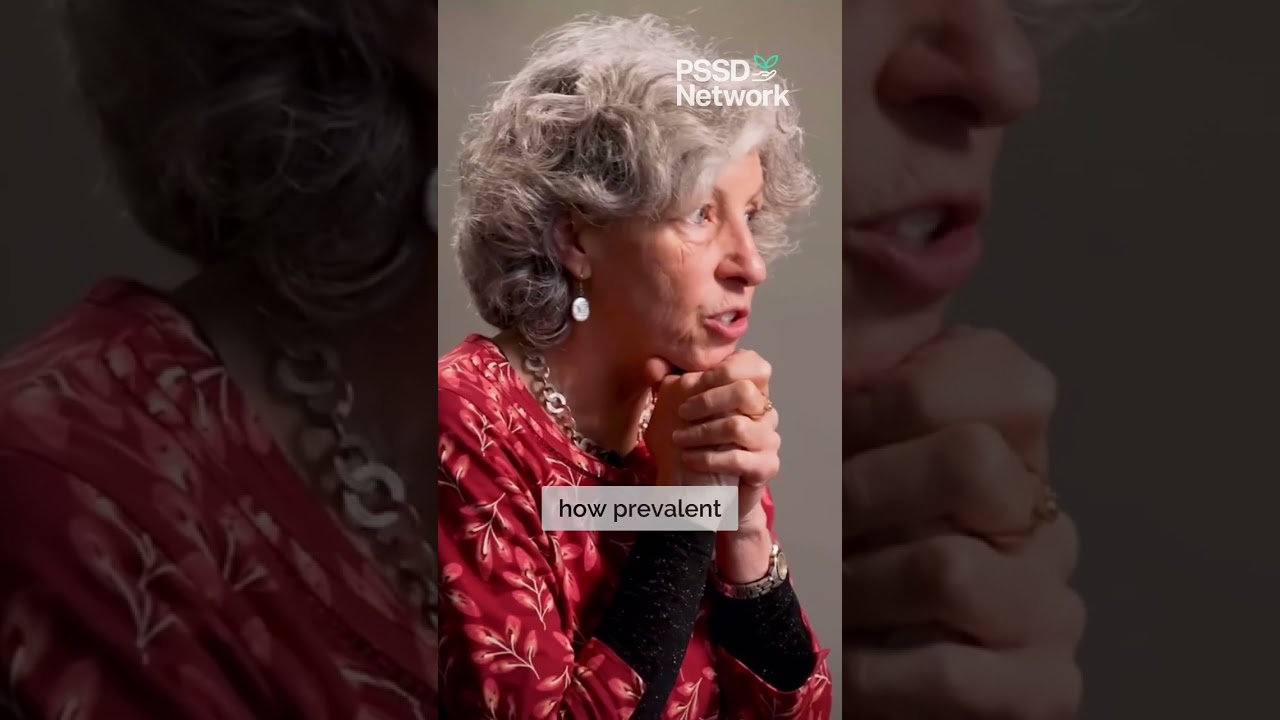
Professor Joanna Moncrieff, a psychiatrist at UCL, says some people report these problems lasting for years, and that many doctors may not know about them. Her extract is general background on PSSD, useful if your GP hasn’t heard of it.
Why doesn’t the UK leaflet mention it?
Vortioxetine was left out when the EU medicines regulator asked for an “after stopping” warning in 2019. UK leaflets for sertraline and similar antidepressants now carry it: sexual problems have sometimes “continued after stopping treatment”. A footnote in the EU recommendation says vortioxetine was part of the review but not included. It doesn’t say why.
Canada’s 2021 review counted vortioxetine among the SSRIs and asked for a warning on all of them. In the UK, the medicines regulator said on 15 October 2026 that the name PSSD will go into the leaflets of ten antidepressants. Vortioxetine isn’t on that list.
Vortioxetine and the “after stopping” warning
What can I do?
These medicines help many people. If you have side effects, that’s a decision for you and your prescriber. Don’t stop suddenly.
If sex or your feelings have changed since your last tablet, tell your GP and give your dates: “Brintellix 10 mg from June 2024, last tablet March 2025.” List every antidepressant you’ve taken, and note changes beyond sex, such as feeling emotionally flat.
Three questions for your GP
- Could this be the lasting effect that Canada’s Trintellix leaflet describes?
- What else should we rule out, and how?
- Can this go on my record and be reported to the Yellow Card scheme?
You could start with: “Canada’s leaflet for vortioxetine says sexual problems can continue after stopping. I think that’s happening to me.”
Many people say it took time to be taken seriously. Take Canada’s leaflet line with you. You can report it without a doctor agreeing.
Not sure who can report? This NHS video answers it in about two minutes.

Report it: it helps everyone
A doctor’s note helps you. A report to the medicines regulator helps everyone else: it is how patterns get noticed.
- No proof needed. A suspicion is enough, even years after stopping.
- Where: the Yellow Card scheme in the UK, MedWatch in the US. Our Yellow Card guide for PSSD shows each step.
- Use the right words. If symptoms continued after stopping, write Post-SSRI sexual dysfunction (MedDRA 10086208).
Our reporting guide walks you through it
What else do people ask?
Can it be PSSD if vortioxetine isn’t an SSRI? Yes. The PSSD checklist covers any medicine that, like an SSRI, stops nerve cells taking back serotonin, a brain chemical. The UK information for doctors says vortioxetine does this too. After stopping, ordinary side effects can linger for some weeks. Once problems last three months, the checklist says, PSSD is more likely.
I switched to vortioxetine after an SSRI. Which one do I report? Name them all. If the problems began on the first medicine and never went away, say so. One report can list every medicine with its dates. Our list of antidepressants linked to PSSD gives the brand names.
Does vortioxetine affect women too? Yes. In the US trials, women had more problems at the higher doses. Our article on PSSD in women covers what is known so far.
Nick says the PSSD community gives him the strength to keep going. If something changed for you on vortioxetine and hasn’t come back, our page on PSSD is the place to start.
Sources
- Lundbeck Limited. Brintellix 10 mg film-coated tablets, patient leaflet, Electronic Medicines Compendium (EMC 10441), leaflet revised May 2026. Section 3: “Do not stop taking Brintellix without talking with your doctor.” Section 4 lists “sexual dysfunction” among side effects of unknown frequency. It adds: “An increased risk of sexual dysfunction has been reported with the 20 mg dose, and in some patients this side effect was observed at lower doses.” The leaflet has no line about sexual problems continuing after stopping (checked 28 October 2026).
- Lundbeck Limited. Brintellix summary of product characteristics, EMC, revised May 2026. Section 4.8: sexual dysfunction, frequency not known, based on post-marketing cases; on the Arizona Sexual Experience Scale (ASEX), “Doses of 5 to 15 mg showed no difference to placebo. However, the 20 mg dose of vortioxetine was associated with an increase in sexual dysfunction”; cases below 20 mg reported after marketing. Section 5.1: “inhibition of the serotonin (5-HT) transporter” and direct action on serotonin receptors.
- Takeda Pharmaceuticals America. Trintellix (vortioxetine) US prescribing information, DailyMed, revised February 2025. Section 5.8: sexual dysfunction in men and women. Section 6.1: volunteered reports in 5% of men on 20 mg, against 2% on placebo. Table 3 pools the ASEX questionnaire from seven placebo-controlled trials, in people without sexual dysfunction at the start. Women: 22%, 23%, 33% and 34% on 5, 10, 15 and 20 mg, against 20% on placebo. Men: 16%, 20%, 19% and 29%, against 14%. Measured during treatment.
- Lundbeck Canada. Trintellix product monograph, including patient medication information, date of authorization 10 July 2026, via Health Canada’s Drug Product Database. The patient information says sexual problems “may continue after TRINTELLIX has been discontinued, including for months or years afterwards in some cases”; the same line is in the May 2024 version. Section 7: “Selective serotonin reuptake inhibitors (SSRIs), including vortioxetine, may cause symptoms of sexual dysfunction.”
- Health Canada. Summary Safety Review: SSRIs and SNRIs, assessing the potential risk of sexual dysfunction despite treatment discontinuation, 6 January 2021. SSRIs authorised in Canada include vortioxetine; product information for all SSRIs and SNRIs to be updated; the review “could not confirm, nor rule out, a causal link”.
- European Medicines Agency, PRAC. Recommendations on signals adopted at the 13-16 May 2019 meeting, EMA/PRAC/265212/2019, section 1.3. Footnote 6: “Clomipramine and vortioxetine were part of the signal assessment but are not concerned by the recommendation to update the product information.”
- MHRA. Antidepressants: new safety measures for all patients, Drug Safety Update, 15 October 2026. Footnote 1 lists citalopram, escitalopram, duloxetine, fluvoxamine, fluoxetine, paroxetine, sertraline, venlafaxine, amitriptyline and nortriptyline.
- Healy D, Le Noury J, Mangin D. Enduring sexual dysfunction after treatment with antidepressants, 5α-reductase inhibitors and isotretinoin: 300 cases. Int J Risk Saf Med 2018;29(3-4):125-134. Reports sent to RxISK.org; Table 1: vortioxetine, 2 (both men). Self-reports to a website; they cannot show how often this happens.
- Healy D, Bahrick A, Bak M and colleagues. Diagnostic criteria for enduring sexual dysfunction after treatment with antidepressants, finasteride and isotretinoin. Int J Risk Saf Med 2022;33(1):65-76. Proposed criteria. Section 3: dysfunction can follow “any serotonin reuptake inhibiting (SRI) drug”. Core criterion: “An enduring change in somatic (tactile) or erogenous (sexual) genital sensation after treatment stops.” Non-sexual symptoms “may include” “emotional numbing”, “other sensory problems involving skin, smell, taste or vision” and “cognitive impairment”. Section 9: side effects “may linger for some days or weeks”; “once dysfunction lasts for three months, it is more likely to be PSSD”.
- Our search of the medical literature (Europe PMC, which includes PubMed), 28 October 2026, for vortioxetine with PSSD, persistent, enduring or post-treatment sexual dysfunction: no study measured sexual function after stopping vortioxetine. The only cases specific to vortioxetine were the two in source 8.
- PSSD Network. Patient spotlight: Nick, undated, read 28 October 2026. His own words, quoted as published.
- NHS medicines A to Z: no page for vortioxetine (28 October 2026).
- PSSD Network, Professor Joanna Moncrieff discusses Post-SSRI Sexual Dysfunction, June 2026, extract from 1:03 to 1:29. General context, not evidence about vortioxetine.
- NHS Black Country Integrated Care Board, What is the Yellow Card Scheme?, 4 November 2021.
Sources checked on 28 October 2026. AI-assisted writing and review, not clinical review.
This information does not replace medical advice. Talk to your doctor before you make any decision about your treatment.
640+ people have joined the registry.
Join them, then report your side effects.
Free. Sign up takes 2 minutes.