Citalopram emotional numbness: can it last?
Feelings gone quiet on citalopram, or since stopping? How common it is, what the research says, and what to take to your GP.
Feelings gone flat on citalopram (Cipramil, Celexa)? You’re not imagining it. The UK leaflet lists “reduced emotions, indifference (apathy)” as a common side effect.
For some people the numbness hasn’t lifted after stopping. Emotional numbing is one of the recognised symptoms of post-SSRI sexual dysfunction, or PSSD, despite the name.
Opressor was at university in 2018 when a psychiatrist prescribed him citalopram, together with another medicine. He noticed emotional numbness straight away. He took it for two or three months, he says, and the numbness was still there weeks and months after he stopped.

Games, films, talking to friends: “There’s not the same feeling anymore,” he says.
How do you tell it apart from the depression itself?
Can citalopram make you feel emotionally numb?
Yes, and the UK leaflet names it. The Cipramil leaflet lists “reduced emotions, indifference (apathy)” among the common side effects, which it says may affect up to 1 in 10 people. The prescribing information for doctors calls it apathy.
The NHS antidepressants page also lists feeling “emotionally numb” as a common side effect. The NHS citalopram page doesn’t mention it.
In someone with depression, indifference can look like the illness itself. It’s easy not to link the flatness to the tablets.
How common is emotional blunting on citalopram?
Nobody knows exactly. In one online survey of people taking a single antidepressant, a team led from Oxford asked whether their emotions felt blunted. Among those on citalopram, 58 of 127 said yes: nearly half.
The rates were much the same across most antidepressants. People who felt blunted also had higher depression scores, so the authors think blunting may partly be a leftover symptom of depression. Two of the four authors worked for a drug company.
An earlier interview study by the same Oxford group found that most people felt able to tell the medicine’s emotional effects apart from their depression. Neither study followed people after they stopped.
Can citalopram emotional numbness last after stopping?
For some people it has lasted years after stopping. Nobody knows yet who will be affected, or whether it will ease.
The 2022 diagnostic criteria for PSSD, proposed by an international group of doctors and researchers, say its “ancillary non-sexual symptoms may include: emotional numbing”. They add: “Emotional and genital numbing commonly go together.” The core sign is a lasting change in genital sensation, still there at least three months after the last dose.
The Cipramil leaflet already warns that sexual side effects have sometimes “continued after stopping treatment”. In October 2026 the UK medicines regulator said the term PSSD will be added to the leaflets of citalopram and nine other antidepressants.
Andy was prescribed citalopram at 23. Moral Medicine, who interviewed him, says he has lived with PSSD for more than 13 years, with symptoms that go far beyond sex.


Opressor’s case isn’t simple, because other medicines followed his citalopram. Some people also feel numb for a while as they come off an antidepressant. PSSD or withdrawal? explains the difference.
What can I tell my GP?
These medicines help many people. If you have side effects, that’s a decision for you and your prescriber. Don’t stop suddenly.
Use your own words, such as “nothing makes me laugh any more” or “I don’t care about things I loved”. Give your dates: “Citalopram 20 mg from May 2022, last tablet February 2024.” Say whether the flatness began before, during or after.
Questions to take to your GP
You could open with: "Since citalopram, my feelings have gone flat, and I'd like to work out why."
- The leaflet lists "reduced emotions, indifference". Could that be what I have?
- How can we tell it apart from my depression?
- If it lasts after stopping, can you report it as a side effect?
Feeling nothing for a long time can be very hard. If you ever think about ending your life, Samaritans are free on 116 123 in the UK and Ireland, day or night.
Report it: it helps everyone
A doctor’s note helps you. A report to the medicines regulator helps everyone else: it is how patterns get noticed.
- No proof needed. A suspicion is enough, even years after stopping.
- Where: the Yellow Card scheme in the UK, MedWatch in the US.
- Use the right words. Write “emotional numbness” and when it began. If symptoms continued after stopping, write Post-SSRI sexual dysfunction (MedDRA 10086208).
Our reporting guide walks you through it
What else do people ask?
Is Celexa the same as citalopram? Yes. Celexa is the US brand and Cipramil the UK one. Generic tablets are simply labelled citalopram. It’s the same medicine, so this page applies to all of them.
Does the US label mention it? The US Celexa label lists apathy among the psychiatric reactions seen in trials. It doesn’t say whether sexual side effects can continue after stopping.
Is it the depression or the citalopram? It can be either, or both, so the two are easy to mix up. Timing can be a clue, so note when the flatness began. Our article on emotional blunting on antidepressants covers the wider research.
Opressor noticed the numbness while he was still taking citalopram, and assumed it was in his head. If your feelings went flat on citalopram and haven’t come back, write down when it began and report it. Read more about PSSD.
Sources
- Cipramil 20 mg film-coated tablets, patient information leaflet, Lundbeck Limited, Electronic Medicines Compendium (EMC 992), last revised January 2025. Read 6 November 2026. Section 2: “Medicines like Cipramil (so called SSRIs/SNRIs) may cause symptoms of sexual dysfunction (see section 4). In some cases, these symptoms have continued after stopping treatment.” Section 4, common side effects (may affect up to 1 in 10 people): “Reduced emotions, indifference (apathy)”, “Decreased sex drive”, “For men, problems with ejaculation and erection”, “For women, failing to reach an orgasm”. The summary of product characteristics, text revised November 2023, read 6 November 2026: section 4.8 lists apathy as common under psychiatric disorders and depersonalisation as uncommon; section 4.4: “There have been reports of long-lasting sexual dysfunction where the symptoms have continued despite discontinuation of SSRIs/SNRI.”
- NHS, Antidepressants, page last reviewed 12 June 2025, read 6 November 2026. Common side effects include “mood changes – like feeling more angry or emotionally numb”; sexual problems “for some people, these problems may carry on after stopping antidepressants”. NHS, Side effects of citalopram, page last reviewed 26 June 2026, read 6 November 2026: lists “sexual problems, such as low sex drive (loss of libido)”; no mention of emotional numbness or apathy. “Do not suddenly stop taking it because it may cause withdrawal symptoms.”
- Goodwin GM, Price J, De Bodinat C, Laredo J. Emotional blunting with antidepressant treatments: a survey among depressed patients. J Affect Disord 2017;221:31-5. Author manuscript read in full, 6 November 2026. Internet survey of panel members in Canada, the US and the UK, 10 September to 8 October 2010; 669 depressed adults on a single antidepressant. Table 2: citalopram, 58 of 127 (46%) reported emotional blunting on a single screening question; overall 310 of 669 (46%); rates “generally between 43% and 56%” across drugs. Blunting “correlates with a higher HAD-D score, and may be a residual symptom of depression rather than simply a side effect of treatment”. Two authors were from Institut de Recherches Internationales Servier. No follow-up after stopping.
- Price J, Cole V, Goodwin GM. Emotional side-effects of selective serotonin reuptake inhibitors: qualitative study. Br J Psychiatry 2009;195(3):211-7. Abstract read 6 November 2026: individual and group interviews; “Most participants felt able to distinguish between emotional side-effects of antidepressants and emotional symptoms of their depression or other illness.”
- Healy D, Bahrick A, Bak M and colleagues. Diagnostic criteria for enduring sexual dysfunction after treatment with antidepressants, finasteride and isotretinoin. Int J Risk Saf Med 2022;33(1):65-76. Read 6 November 2026. Section 3, PSSD: necessary criterion “An enduring change in somatic (tactile) or erogenous (sexual) genital sensation after treatment stops”; “The problem is present for ≥3 months after stopping treatment.” “Ancillary non-sexual symptoms may include: emotional numbing”. “Emotional and genital numbing commonly go together.” “Emotional numbing or depersonalization may be a person’s main complaint in primary care”. Proposed criteria from expert agreement.
- MHRA, Antidepressants: new safety measures for all patients to improve communication of the risk of suicidal thoughts and behaviours and persistent sexual dysfunction, Drug Safety Update volume 20, issue 3, 15 October 2026. Read 6 November 2026. “The term “Post SSRI Sexual Dysfunction” (“PSSD”) will be added to the PILs of antidepressants associated with a risk of sexual dysfunction that may continue even after the drug is stopped”. Footnote 1 lists ten medicines: citalopram, escitalopram, duloxetine, fluvoxamine, fluoxetine, paroxetine, sertraline, venlafaxine, amitriptyline, nortriptyline.
- Celexa (citalopram) tablets, US prescribing information, Allergan, revised October 2023, DailyMed. Read 6 November 2026. Section 6 lists apathy among “frequent” psychiatric adverse events; it gives no statement on sexual dysfunction continuing after stopping.
- Moral Medicine, The Hidden Nightmare of SSRIs: One Man’s 6-Year Struggle with PSSD After Citalopram, interview with Opressor, 4 January 2025 (29 minutes; the title is the channel’s), embedded here from 2:32 to 3:54. From the YouTube auto-captions. He went to a psychiatrist “in 2018” for ADHD and was prescribed a combination including citalopram (2:32 to 2:53). “I immediately noticed the emotional [numbness] while on the medication” (3:10 to 3:17). He took it “for a couple of months two to three months” (3:20 to 3:25). “After stopping the medication I was still dealing with this … emotional [numbness] like … months and weeks after the discontinuation” (3:29 to 3:39). “It wasn’t the only SSRI that I took so I took more medication and that worsened my situation even more” (3:45 to 3:54). “There’s not the same feeling anymore” (2:03 to 2:06). On first noticing the numbness: “I thought it was just just in my head” (6:12 to 6:15). The channel’s description says it was prescribed “without proper diagnosis or warning about potential side effects”. His story on our site: Opressor’s story.
- Moral Medicine, Andy’s 13 Year Battle with PSSD, 5 October 2024 (27 minutes; the title is the channel’s). The channel’s description: prescribed citalopram “at the age of 23”; side effects “which go far beyond just sexual dysfunction” that “he has endured for over the last 13 years”. His story on our site: Andy’s story.
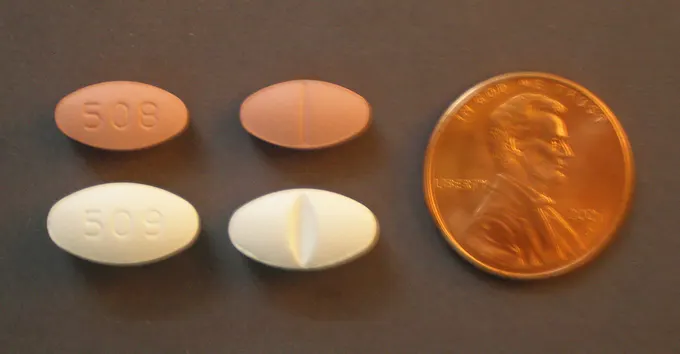
- Photo: Citalopram20-40.jpg by Elbreapoly, public domain, Wikimedia Commons.
- MedDRA term Post-SSRI sexual dysfunction, code 10086208.
Sources checked on 6 November 2026. AI-assisted writing and review, not clinical review.
Lasting side effects after an antidepressant?
Make them count.
Our step-by-step guide finds the form for your country.