Dapoxetine, an SSRI: can its side effects last?
Something still different after Priligy? What is and is not known about dapoxetine side effects lasting, and the steps you can take.
Dapoxetine (Priligy) is an SSRI, the same family as many antidepressants. Its leaflet lists lower interest in sex, erection problems and numbness as common side effects.
Can they last? We found no published case of that after dapoxetine. With other SSRIs, a lasting version has a name: post-SSRI sexual dysfunction, or PSSD.
One detail is easy to miss. Almost everyone on an SSRI gets some change in genital feeling soon after starting, say the doctors who wrote the 2022 criteria for PSSD. In a man with premature ejaculation, that change can pass as an improvement.
Priligy’s product information has no warning that problems can continue after stopping. The leaflets for SSRI antidepressants do.
Because dapoxetine is taken for sex rather than mood, its link to antidepressants is easy to miss. Here is what that link means.
Is dapoxetine an SSRI?
Yes. Its leaflet says it belongs to the “selective serotonin reuptake inhibitors”. A 2025 review calls it the only drug approved for premature ejaculation. It works by delaying ejaculation, which people on antidepressants know as a side effect.
Dapoxetine is taken only when sex is expected, never more than once in 24 hours, and most of it leaves the blood within a day. Antidepressants are usually taken every day for months. Nobody has studied whether taking an SSRI now and then changes the risk of lasting problems.
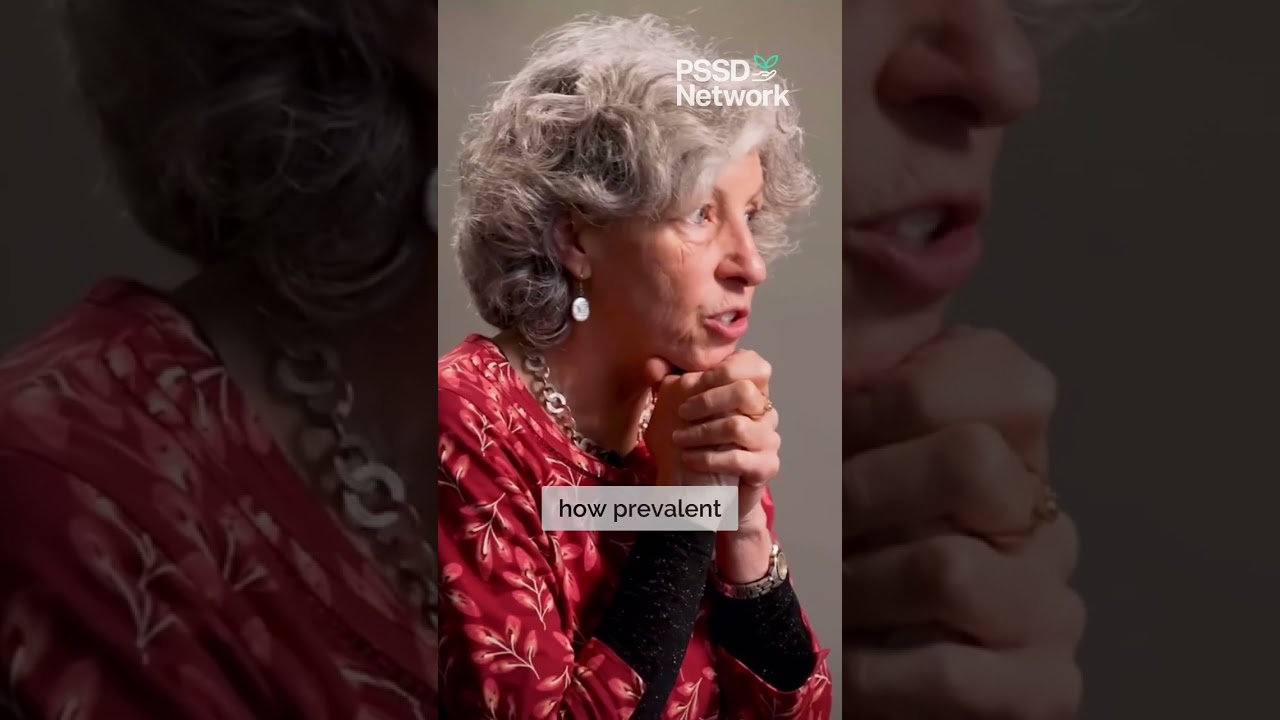
Why watch this? Joanna Moncrieff, a professor of psychiatry at UCL, explains in 90 seconds why SSRIs affect sex and why some doctors don’t know the problems can outlast the tablets. It’s background on SSRIs in general.
What are the side effects of dapoxetine?
The most common ones aren’t sexual. Its leaflet puts dizziness, headache and feeling sick first, and warns that it can make you faint.
The sexual ones are listed too. Among the common side effects, which affect up to 1 in 10 men, the leaflet lists these.
- “Lower interest in sex”.
- “Difficulty getting or keeping an erection”.
- “Feeling numb or having ‘pins and needles’”.
Less often, it lists “Loss of sex drive, problems reaching orgasm”. The version written for doctors adds tingling or numbness of the penis, called “paraesthesia of genital male”.
Those are side effects while taking it. After stopping, the leaflet says, you may sleep badly and feel dizzy, even if you didn’t take it every day.
Can dapoxetine side effects last after stopping?
Nobody can say yet. Priligy’s product information doesn’t say that sexual problems have continued after stopping. The UK sertraline leaflet does: it says they have sometimes “continued after stopping treatment”.
PSSD is more than sexual problems. The 2022 criteria describe a lasting change in genital sensation, often numbness, and also emotional numbing, problems with cognition and changes in other senses.
The sertraline leaflet’s line came from a 2019 EU review naming six SSRIs and four SNRIs. Dapoxetine wasn’t among them, and the document doesn’t say why. Our page on which antidepressants are linked to PSSD lists all ten.
We searched the medical research in October 2026 and found no case of lasting problems after dapoxetine. That doesn’t mean it never happens: nobody has a reliable figure for how often PSSD follows any SSRI, and PSSD has been reported after a few days of an antidepressant.
Why watch this? Dr Josef Witt-Doerring, a psychiatrist who used to work at the US medicines regulator, describes what PSSD feels like, including genital numbness. It’s general context; he doesn’t discuss dapoxetine.

What can I do?
These medicines help many people. If you have side effects, that’s a decision for you and your prescriber.
If things have felt different since your last tablet, tell your GP. Give your dates: “Dapoxetine 30 mg about twice a month from May 2025, last tablet August 2025.” Use your own words for what changed: “touch feels numb”, “orgasm with no pleasure”, “I feel flat”.
Three questions for your GP
- Could dapoxetine still be affecting me now I've stopped?
- What else could explain these changes, and how do we check?
- What's our next step if nothing changes?
You could start with: "Dapoxetine is an SSRI, and since stopping, things haven't gone back to normal."
Many people say it took time to be taken seriously. You can report it without a doctor agreeing.
Report it: it helps everyone
A doctor’s note helps you. A report to the medicines regulator helps everyone else: it is how patterns get noticed.
- No proof needed. A suspicion is enough, even years after stopping.
- Where: the Yellow Card scheme in the UK, MedWatch in the US.
- Use the right words. If symptoms continued after stopping, write Post-SSRI sexual dysfunction (MedDRA 10086208).
Our reporting guide walks you through it
What else do people ask?
Is numbness on dapoxetine normal? The leaflet lists feeling numb or “pins and needles” as a common side effect while you take it. If it hasn’t gone weeks after your last tablet, tell your GP. Our page on genital numbness after SSRIs explains what researchers know.
Does sertraline for premature ejaculation help after stopping? Doctors sometimes prescribe it for this outside its licence. In a 2006 trial, about 2 in 3 men followed up had the problem back within six months of stopping. For the other 1 in 3, the delay was still there. More on sertraline’s sexual side effects.
Is dapoxetine an antidepressant? It isn’t licensed for depression. It’s an SSRI, though, and its leaflet says to see a doctor straight away if your mood changes or you have thoughts of harming yourself. If you’re struggling, Samaritans are free on 116 123 in the UK and Ireland.
Professor Moncrieff’s point holds for any SSRI: your doctor may not know the changes can outlast the medicine. If yours have, a report adds to the record on PSSD, even years later.
Sources
- Priligy 30 mg and 60 mg film-coated tablets, Summary of Product Characteristics, A. Menarini, published in English by the Swedish Medical Products Agency, date of revision 28 June 2021. Section 4.1: premature ejaculation, men aged 18 to 64. Section 4.2: on-demand use only, not more than once every 24 hours. Section 4.4: other sexual dysfunction, suicidality, withdrawal effects. Section 4.8, table 1: common, libido decreased, erectile dysfunction, paraesthesia. Uncommon: loss of libido, anorgasmia, ejaculation failure, male orgasmic disorder, paraesthesia of genital male. Section 5.1: dapoxetine is a potent SSRI. Section 5.2: plasma levels below 5% of peak by 24 hours; terminal half-life about 19 hours. There is no statement that sexual dysfunction has persisted after stopping. We found no UK version: the Electronic Medicines Compendium returned no results for Priligy or dapoxetine on 21 October 2026.
- European Medicines Agency, Priligy, Article 29(4) referral, Annex III: summary of product characteristics, labelling and package leaflet, version valid at the Commission decision of 20 January 2012. Package leaflet sections 1 (SSRI), 3 (“If you stop taking Priligy”) and 4 (possible side effects; stop and see your doctor if mood changes or thoughts of self-harm).
- European Medicines Agency, PRAC, Recommendations on signals adopted at the 13-16 May 2019 PRAC meeting. Persistent sexual dysfunction after discontinuation: citalopram, escitalopram, fluoxetine, fluvoxamine, paroxetine, sertraline, desvenlafaxine, duloxetine, milnacipran and venlafaxine. Dapoxetine is not mentioned.
- Healy D, Bahrick A, Bak M and colleagues. Diagnostic criteria for enduring sexual dysfunction after treatment with antidepressants, finasteride and isotretinoin. Int J Risk Saf Med 2022;33(1):65-76. Change in genital sensitivity within an hour of starting, which “may be noticeable or obscured by an apparent benefit such as improvement in premature ejaculation in men”.
- Chang J, Zhao W, Ma L and colleagues. Management of male premature ejaculation: from past to future. Front Endocrinol 2025. Dapoxetine “the only drug approved for the treatment of premature ejaculation”; other SSRIs are used off-label, “leveraging their side effects”.
- Sertraline (Lustral), UK patient leaflet, Electronic Medicines Compendium (EMC 2835).
- Arafa M, Shamloul R. Efficacy of sertraline hydrochloride in treatment of premature ejaculation: a placebo-controlled study using a validated questionnaire. Int J Impot Res 2006;18(6):534-8. 147 men, four weeks of sertraline and four of placebo (single-blind crossover); 66 of 100 men followed up relapsed within 6 months of stopping sertraline; the follow-up had no placebo comparison.
- Healy D, Mangin D. Post-SSRI sexual dysfunction: barriers to quantifying incidence and prevalence. Epidemiol Psychiatr Sci, 18 September 2024. Cites the sertraline trial: the delaying effect persisted for 34% of participants six months after stopping.
- Our search for published cases, 21 October 2026: PubMed, PubMed Central and Europe PMC for dapoxetine with persistent, post-SSRI sexual dysfunction, PSSD, “after discontinuation”, case report and genital anaesthesia. No case report of lasting sexual problems after dapoxetine was found. We also read these for dapoxetine. Healy D and colleagues, Citizen petition: sexual side effects of SSRIs and SNRIs, Int J Risk Saf Med 2018; Chinchilla Alfaro K and colleagues, Persistent sexual dysfunction after SSRI withdrawal: a scoping review and presentation of 86 cases from the Netherlands, Expert Opin Drug Saf 2022.
- PSSD Network, Professor Joanna Moncrieff discusses Post-SSRI Sexual Dysfunction, June 2026.
- Dr Josef Witt-Doerring, What is PSSD and Why is No One Talking About it?, 9 January 2023.
Lasting side effects after an antidepressant?
Make them count.
Our step-by-step guide finds the form for your country.