What happens when you stop taking finasteride?
Hair gained on finasteride is likely to go within 9 to 12 months of stopping. Sexual side effects can continue after the last tablet. That's called PFS.
SIDEfxHUB is a patient charity. We are not health professionals, and this does not replace medical advice. Don't start, stop or change any medicine because of what you read here. Talk to your doctor first.
If you are in crisis:116 123 Samaritans (UK)988 Lifeline (US)Find a helpline
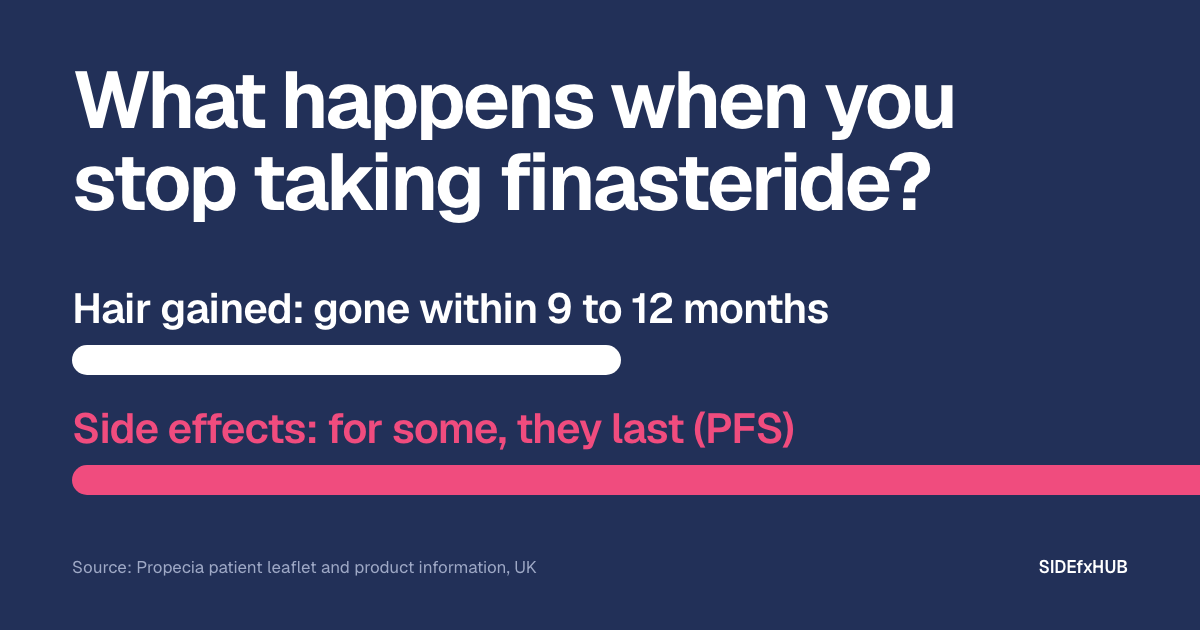
When you stop taking finasteride, the UK leaflet says the hair you gained is likely to go within 9 to 12 months. Sexual side effects don’t follow that timetable: the same leaflet warns they can continue after the last tablet, which is called post-finasteride syndrome (PFS).
Your hair’s timetable was measured almost to the month. The side effects weren’t timed the same way, so nobody can tell you in advance whether yours will clear.
In three lines
- Stop finasteride and the hair you gained is likely to go within 9 to 12 months (UK leaflet).
- The same leaflet lists erection, sex drive and ejaculation problems that persisted after stopping (leaflet).
- Nobody has measured how often, or for how long (2022 criteria). Patients call it PFS.
Press: contact@sidefxhub.com
Marko took finasteride for three days. He noticed symptoms and stopped straight away. The next day, he says, he crashed.

For a year he had symptoms in his body and his mind, and he couldn’t work.
What happens to your hair when you stop finasteride?
The hair you gained goes, slowly. The UK prescribing information says the gain starts to reverse by six months, and your hair is back to where you started by 9 to 12 months. In the US trials, men who swapped to a dummy tablet after their first year had lost the gain by the end of the second.
The drug itself leaves much faster: half of it is out of your blood within hours. Side effects don’t always leave with it.
After the last finasteride tablet
Do finasteride side effects go away after stopping?
For some men they do, and for some they don’t. In the trials, sexual side effects cleared in the men who stopped because of them, the US label says. The UK leaflet also lists erection, sex drive and ejaculation problems that persisted after stopping.
Nobody has measured how often that happens, or for how long. Trials don’t usually follow people up to check that sexual side effects have gone, as the authors of the 2022 diagnostic criteria point out.
For some people it has lasted years after stopping. Nobody knows yet who will be affected, or whether it will ease.
Dr Michael Irwig, then at George Washington University, followed men whose symptoms had already lasted at least three months after stopping. About a year later, he found almost all still had them.
Alex was a pharmacy student. He describes side effects that began while he was taking finasteride and continued after he stopped.

Can side effects start after you stop finasteride?
They can. The 2022 diagnostic criteria say a lasting sexual problem may only appear once the drug is stopped, or a mild one may get worse. Patients often call this a crash, as Marko does.
The UK leaflet doesn’t describe side effects that start after the last tablet. In 2024 the UK medicines regulator asked anyone reporting a finasteride side effect to say whether it “continued or started after treatment was stopped”.
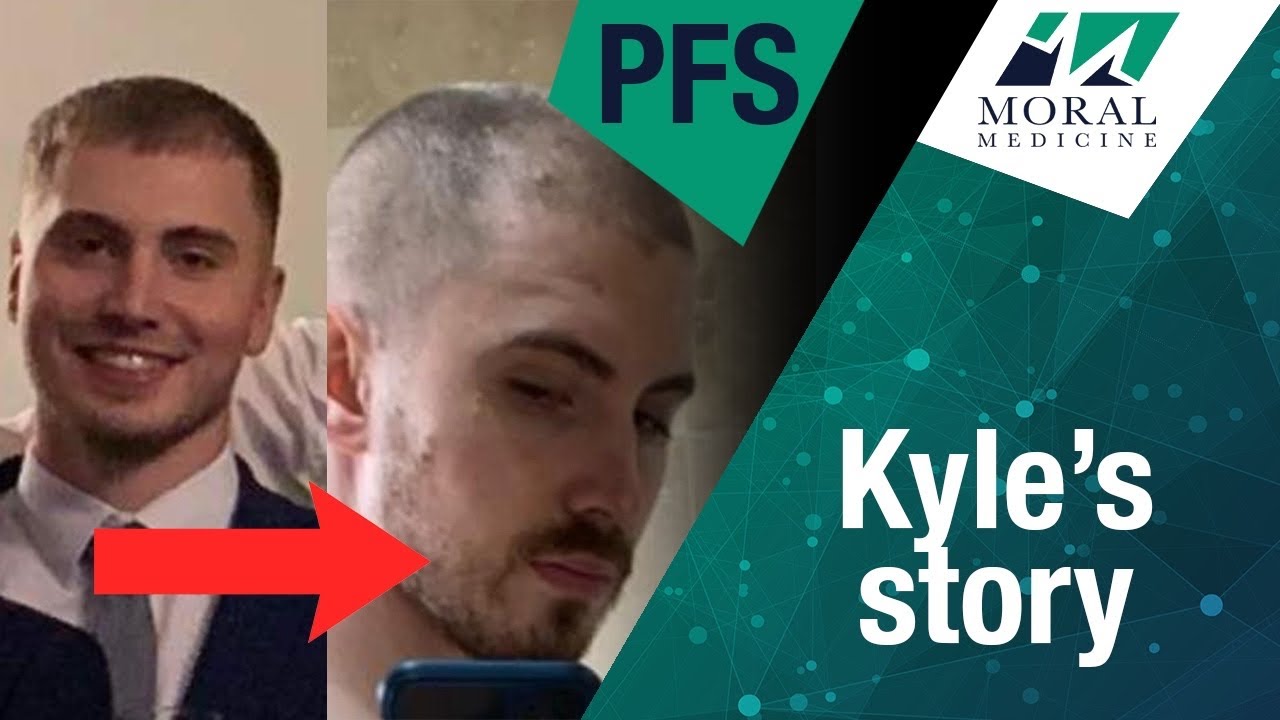
Kyle took finasteride for only a short time. He says that in the months after he stopped, his body changed in ways he had never thought possible.
If yours started after you stopped, tell your doctor, and say so in any report you make.
What can you do if side effects don’t go away?
Finasteride helps many men keep their hair. If you have side effects, that’s a decision for you and your prescriber. About mood, the UK leaflet says: if you feel low or have suicidal thoughts on the 1 mg tablet, stop taking it and contact your doctor as soon as possible.
Take the leaflet and the patient card from the pack to your doctor. The leaflet suggests you note what happened, when it started and how long it lasted. For example: “Finasteride 1 mg from March 2024, last tablet June 2025. Low sex drive since May 2025, worse after stopping.”
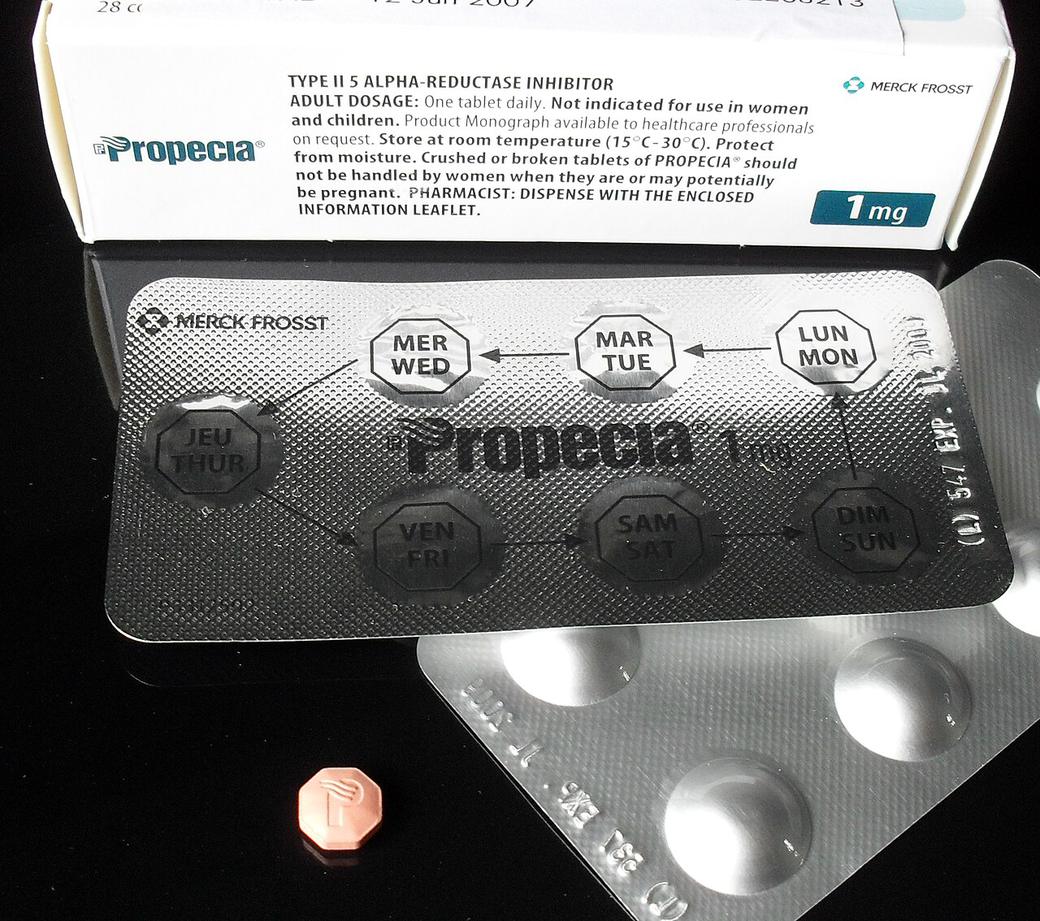

Report it: it helps everyone. A doctor’s note helps you. A report to the medicines regulator helps everyone else: it is how patterns get noticed.
- No proof needed. A suspicion is enough, even years after stopping.
- Where: the Yellow Card scheme in the UK, MedWatch in the US.
- Use the right words. If symptoms continued after stopping, write Post 5-alpha-reductase inhibitor syndrome (MedDRA 10082430).
Our reporting guide walks you through it
What else do people ask about stopping finasteride?
Should I taper finasteride instead of stopping at once? Nobody knows whether tapering changes anything. We found no study comparing the two, and the label gives no tapering schedule. You’ll find confident advice online both ways.
How do I know if it’s PFS? PFS means side effects that continue after stopping. The 2022 diagnostic criteria count a problem still there three months after stopping as support for the diagnosis. Other causes, such as another medicine or a medical condition, should be ruled out. Side effects that clear after stopping aren’t PFS.
Can finasteride affect your mood? Yes. In 2025 the EU medicines regulator confirmed suicidal thoughts as a side effect of finasteride tablets. If you feel low, the NHS says to call your doctor or 111. If you have thoughts of harming yourself, call 999 or go to A&E. The Samaritans are on 116 123, free, at any hour.
Five years after three tablets, Marko is much better, but he says he isn’t the person he was. If your side effects haven’t cleared, read about post-finasteride syndrome.
Sources
- Propecia 1 mg film-coated tablets, patient information leaflet (UK, electronic Medicines Compendium). Hair gained is likely to be lost within 9 to 12 months of stopping. Persistent erection, sex drive and ejaculation problems after stopping are listed (frequency not known). For depression or suicidal thoughts: stop and contact a doctor. Also the patient card, and the advice to note what happened, when it started and how long it lasted.
- Propecia 1 mg, summary of product characteristics (UK). Section 4.2: the benefit begins to reverse by six months and returns to baseline by 9 to 12 months. Section 4.8: post-marketing reports of sexual dysfunction persisting after stopping. Section 5.2: mean half-life about 5 to 6 hours in men aged 18 to 60, and 8 hours in men over 70. No tapering schedule.
- Propecia, US prescribing information (DailyMed). Adverse reactions: in the 1 mg trials, sexual side effects resolved in men who stopped because of them and in most who continued. Post-marketing reports describe sexual dysfunction that continued after stopping. Clinical studies: 48 men switched to placebo after 12 months had lost the gain in hair count by 24 months. No tapering schedule.
- Healy D, Bahrick A, Bak M, et al. Diagnostic criteria for enduring sexual dysfunction after treatment with antidepressants, finasteride and isotretinoin. International Journal of Risk & Safety in Medicine, 2022; 33(1): 65–76. A consensus built on published case series. Trials do not routinely follow up sexual side effects, and how many people fully recover “has never been properly investigated”. The conditions can last months, years or indefinitely. A problem may first appear, or get worse, on stopping. A problem present 3 months or more after stopping is an additional criterion for PFS, and other causes must be ruled out.
- Irwig MS. Persistent sexual side effects of finasteride: could they be permanent? Journal of Sexual Medicine, 2012; 9(11): 2927–32. 54 men whose sexual side effects had lasted at least 3 months after stopping were reassessed 9 to 16 months later (mean 14 months); 96% still had them. The men were recruited because their symptoms had lasted, so the figure describes only men who already had persistent symptoms.
- MHRA, Finasteride: reminder of the risk of psychiatric side effects and of sexual side effects (which may persist after discontinuation of treatment). Drug Safety Update, volume 17, issue 9, 29 April 2024. Asks reporters to say whether a side effect continued or started after treatment was stopped; introduces a patient card.
- European Medicines Agency, finasteride- and dutasteride-containing medicinal products: referral, 2025. Confirms suicidal thoughts as a side effect of finasteride 1 mg and 5 mg tablets; frequency unknown.
- NHS, Side effects of finasteride, page last reviewed 2 August 2023. Side effects can sometimes carry on after stopping; call a doctor or 111 for low mood; 999 or A&E for thoughts of self-harm.
- Moral Medicine interviews on YouTube: Marko, March 2026; Alex, July 2023; Kyle, October 2024. The details of their stories come from the interviews and the channel’s own descriptions.
- Photo: Propecia box and tablet, Kristoferb, public domain, via Wikimedia Commons.
This information does not replace medical advice. Talk to your doctor before you make any decision about your treatment.
590+ people have joined the community.
Join them, then report your side effects.
No diagnosis needed. Researchers never see your name.