Dr. Will Powers on the Genetics of Post-Drug Syndromes
Dr. Will Powers on the genetic patterns he has found in people affected by PFS, interviewed at the PFS/PSSD/PAS Summit 2026.
SIDEfxHUB is a patient charity. We are not health professionals, and this does not replace medical advice. Don't start, stop or change any medicine because of what you read here. Talk to your doctor first.
If you are in crisis:116 123 Samaritans (UK)988 Lifeline (US)Find a helpline
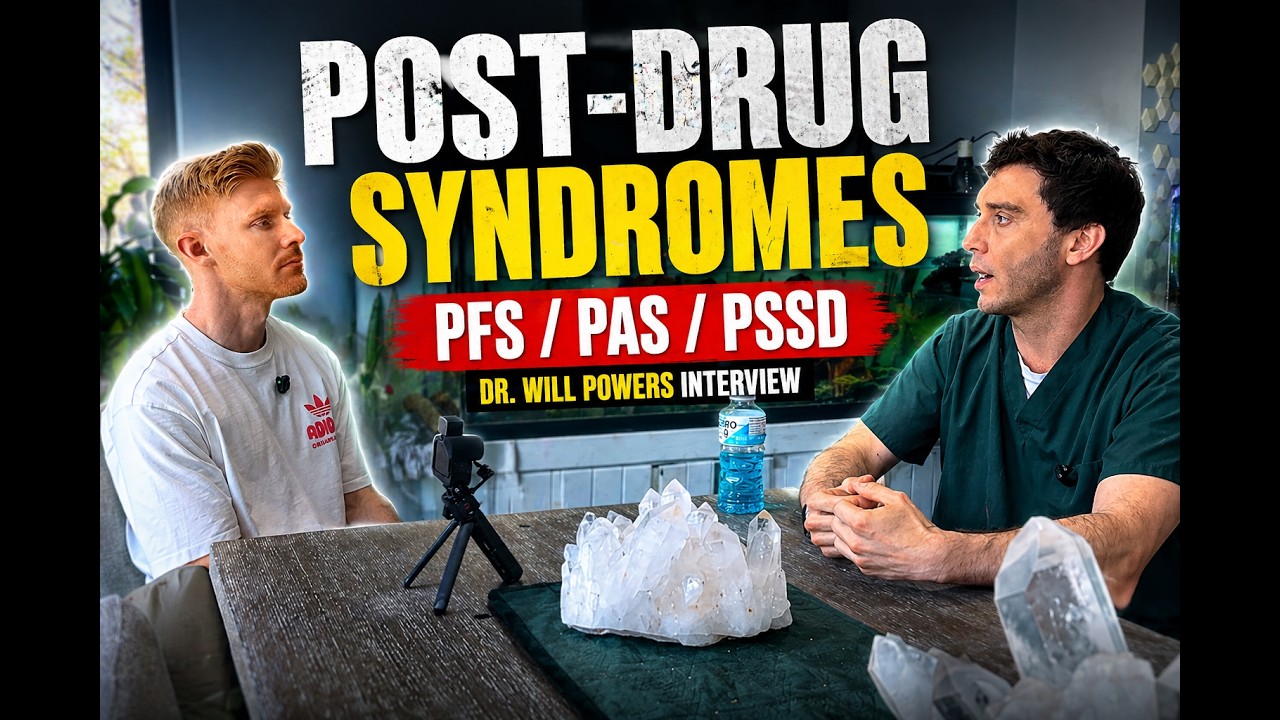
At the PFS/PSSD/PAS Summit in April 2026, Robb from SIDEfxHUB sat down with Dr. Will Powers, a board-certified family medicine physician, to talk about a quieter kind of research: several years spent collecting genetic data, one person at a time, from people affected by post-finasteride syndrome (PFS), post-SSRI sexual dysfunction (PSSD) and post-Accutane syndrome (PAS).
Who Dr. Powers is
Dr. Powers is a board-certified family medicine physician. According to RxISK’s account of the Summit, written by Dr. David Healy, who was in the room: Dr. Powers had spent several years collecting genome data from patients who were transitioning, some of whom were also taking finasteride to preserve a hairline — and that is how he encountered PFS. He then began collecting genomes specifically from people affected by it, and reported finding patterns consistent with what those patients described happening to them.
What he’s found so far
The honest headline, again per that same account: the findings do not currently point to a cure, and do not identify something broken that can be repaired. What they may eventually offer is narrower — indications of who might run into problems before starting one of these drugs, or before attempting to stop, and which options to avoid.
That is a different kind of answer than “why does this happen.” It is also the kind that could let someone make a genuinely informed choice, which is much of what is missing today for people being prescribed these drugs.
RxISK also reports that Dr. Powers has more recently seen people with PSSD, and that the pattern there appears different to the finasteride one — and that he is seeking data from people with post-isotretinoin problems, where he has far less to work from.
None of this is peer-reviewed or independently confirmed yet, and nothing here is a treatment recommendation — it’s early-stage pattern-finding, presented at a research meeting, not a result. We’re covering it because sustained research attention on these conditions is rare, and because by the accounts of people who were there, Dr. Powers was himself upfront about how early the work is.
The bigger picture
Dr. Powers was one of several clinicians at the Summit — alongside Dr. Kenneth Peters, who organised the event, and Dr. Irwin Goldstein and Dr. Rachel Rubin — working toward a consensus statement on PFS, PSSD and PAS, due before the end of 2026. For the fuller account of what was presented at the Summit, read the first-hand report published by RxISK, whose founder Dr. David Healy was there.
Our thanks
Our thanks go to Dr. Powers for the years of work this represents, and to Dr. Peters for organising the Summit that brought it into a room with other researchers. Robb also spoke to Dr. Peters about why he organised the event — read that interview here.
If you’re living with PFS, PSSD or PAS, the most useful thing you can do is make sure you’re counted: join our patient community and report your side effects to your national regulator. Work like Dr. Powers’ depends on people being willing to be part of the data.
This information does not replace medical advice. Talk to your doctor before you make any decision about your treatment.
610+ people have joined the community.
Join them, then report your side effects.
Free. Sign up takes 2 minutes.