Volunteer for SIDEfxHUB: help with PFS and PSSD
You can volunteer with SIDEfxHUB from home, as a patient, relative or supporter, writing, talking to the media or fundraising for PFS and PSSD work.

You can volunteer from home to help people with post-finasteride syndrome (PFS) and post-SSRI sexual dysfunction (PSSD), conditions that can last after finasteride or an antidepressant is stopped. SIDEfxHUB, a UK charity, needs people to write, pitch stories to journalists and apply for grants, in the hours they have.
Most of our volunteers have one of these conditions, or love someone who does. Small, regular help moves things that no single person can.
Why does volunteering for PFS and PSSD matter?
These conditions are often missed, and patients do much of the work of being noticed. The UK medicines regulator now asks for a safety card in finasteride packs. It warns of depression and, in some cases, thoughts of suicide. It also says decreased sex drive and erectile dysfunction have sometimes “continued after treatment was stopped”.
The names suggest sex alone, but that’s only part of it. The criteria proposed in 2022 describe PSSD as a lasting change in genital sensation, often numbness, which can come with emotional numbing, problems with cognition and changes in other senses. For PFS they list problems with cognition, depression and suicidal thoughts, which can happen without any sexual problems.
If you’re struggling with thoughts of suicide, you can call Samaritans free on 116 123, day or night.
Every article, press contact and grant helps more people put a name to what happened to them.
Can I volunteer if I’m unwell myself?
Yes. Living with PFS or PSSD, or caring for someone who has it, takes a lot of energy. We know that, and we plan around it.
You choose how much you give. Some people help for an hour a month. Others take on a small project when they feel able, then step back for a while. Telling us you need a break is always fine.
Most tasks can be done from home, on a laptop, when it suits you. You don’t need to share your diagnosis or your story to help. If you do want to tell your story, we’ll ask for your written consent and agree what details you’re happy to share.
What volunteer roles are there?
We have three kinds of role. Each one is open to patients, relatives and anyone who cares about the cause.
- Copywriter. Help keep our articles clear and up to date. Plain writing matters more than a medical background. Experience with search (SEO) is a bonus.
- Media volunteer. Help journalists in the UK find accurate stories about PFS and PSSD. That can mean drafting a short pitch, finding the right reporter or preparing a fact sheet.
- Fundraiser. Help us apply to foundations, companies and trusts for money for patient support and research.
If none of these fits, tell us what you’re good at. Translation, design, data and admin skills are all useful to a small charity.
You’ll work on something that matters to you, with people who understand it. Many volunteers say that turning a hard experience into useful work helps.
You’ll also learn real skills: writing for the public, working with journalists, or writing grant applications. These look good on a CV, and we’re happy to give a reference for the work you’ve done.
Your work is credited where you want it to be, and kept anonymous where you don’t.
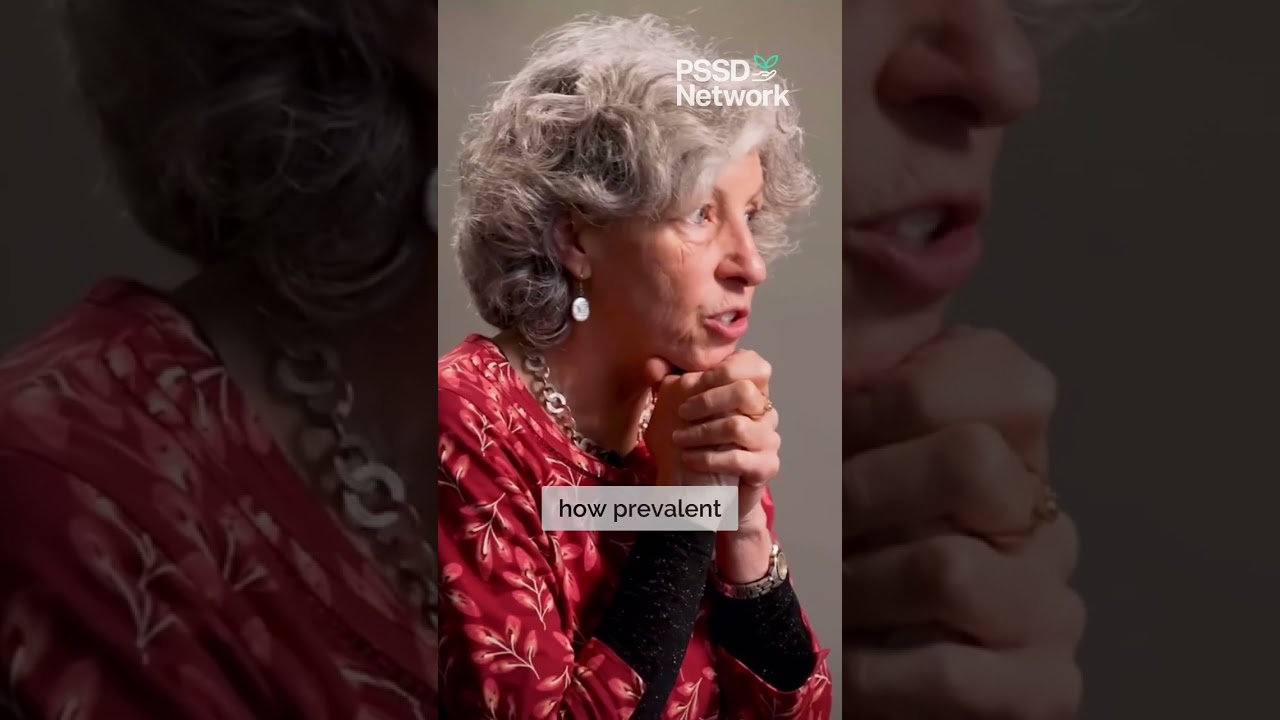
Professor Joanna Moncrieff, a psychiatrist at UCL, talks here about PSSD and how aware doctors are of it. It’s general background on why awareness work is needed, and it isn’t about volunteering.
How do I apply to volunteer?
Send us a short email. There’s no form and no interview panel.
What to put in your email
- The role you're interested in, or “not sure yet”.
- A line or two about your background, for example: “I write for a living and have PSSD.”
- Roughly how much time you can give: “About two hours a month.”
Write to contact@sidefxhub.com, or find more about us on our about us page.
We’ll reply, suggest a first small task, and go from there.
You don’t have to volunteer to help. The quickest thing anyone affected can do is report it.
Report it: it helps everyone
A doctor’s note helps you. A report to the medicines regulator helps everyone else: it is how patterns get noticed.
- No proof needed. A suspicion is enough, even years after stopping.
- Where: the Yellow Card scheme in the UK, MedWatch in the US.
- Use the right words. For finasteride or dutasteride, if symptoms continued after stopping, write Post 5-alpha-reductase inhibitor syndrome (MedDRA 10082430). For an SSRI or SNRI, write Post-SSRI sexual dysfunction (MedDRA 10086208).
Our reporting guide walks you through it
These medicines help many people. If you have side effects, that’s a decision for you and your prescriber. Don’t stop an antidepressant suddenly. For finasteride, follow what the leaflet and the safety card say.
What else do people ask?
Do I need medical or charity experience? No. Clear writing, good organisation or simply knowing the condition from the inside is enough to start. We’ll explain how we check facts, and every article is checked against its sources before it goes live.
Can I volunteer from outside the UK? Yes. We’re a UK charity, but our readers and volunteers live in many countries, and most of the work happens online. Media work focuses on the UK, so UK contacts help most there.
Will my name be public? Only if you want it to be. Many volunteers stay anonymous, and that’s fine.
One email is enough to start. Write to contact@sidefxhub.com and tell us what you’d like to do. You can also read more about PFS and PSSD.
Sources
- MHRA. Finasteride: review of safety data and expert advice on management of risks, 29 April 2024, and the full report (PDF). Patient cards: “Decreased sex drive and erectile dysfunction have also been reported (which in some cases continued after treatment was stopped)”; depression and, in some cases, thoughts of suicide.
- Healy D, Bahrick A, Bak M and colleagues. Diagnostic criteria for enduring sexual dysfunction after treatment with antidepressants, finasteride and isotretinoin. Int J Risk Saf Med 2022;33(1):65-76. Proposed criteria from expert agreement. Section 3: an enduring change in genital sensation; ancillary symptoms include emotional numbing, other sensory problems and cognitive impairment. Section 5: cognitive impairment, depression and suicidality as finasteride effects that “can occur independently of any sexual difficulties”.
- GOV.UK. Report a problem with a medicine or medical device.
- PSSD Network, Professor Joanna Moncrieff discusses Post-SSRI Sexual Dysfunction, June 2026. General context.
Sources checked on 22 October 2026. AI-assisted writing and review, not clinical review.
640+ people have joined the registry.
Join them, then report your side effects.
Free. Sign up takes 2 minutes.