Brain fog in PFS and PSSD: what helps
Brain fog after finasteride or an SSRI can be hard to put into words. How people describe it, what research has found, and what may help day to day.

Struggling to focus or remember things since finasteride or an antidepressant? You are not imagining it. Brain fog, meaning slow, muddled thoughts and a poor memory, is part of post-finasteride syndrome (PFS) and post-SSRI sexual dysfunction (PSSD) for many people. Like the other symptoms, it can last after stopping.
That matters because these conditions are often described as sexual problems only. The criteria proposed in 2022 list “cognitive impairment” among the symptoms of PSSD, and say cognitive problems, depression and suicidal thoughts in PFS “can occur independently of any sexual difficulties”.
The UK leaflets for finasteride and for SSRIs such as Cipralex warn that sexual problems have sometimes continued after stopping. Neither mentions memory or concentration, so the link can be missed.
So what does brain fog feel like, and what can you do about it?
What does brain fog feel like?
People describe it as a thick haze. Thoughts feel slow and jumbled, like a radio station full of static. Words go missing mid-sentence, and simple tasks take longer.
Matt took finasteride for three years with no problems. After he stopped, he says, he was “unable to string one thought to the next”.
Sam was 25. His mind used to be busy, with songs always playing in his head. Now, he says, “there’s nothing”. He wasn’t sure he could go back to work.
In this extract Sam talks about brain fog at work, and how ordinary his life was before.

What does the research say about brain fog?
Very little has been measured. One small study in Boston compared men with lasting symptoms after finasteride against men without them.
The men with symptoms reported “a slightly greater number of subjective cognitive complaints”. Standard cognitive tests found no deficit, and the researchers said their findings need confirming in larger studies.
A normal test result doesn’t mean the fog is imagined. It means the tests used may not catch what people describe, or that the study was too small to tell.
For PSSD, nobody has studied brain fog on its own. The 2022 criteria are proposals from experts, and no trial has tested them. They are still the best description we have.
Is it just depression? It can be hard to tell. Low mood can dull concentration and memory, and depression is listed for finasteride. Many people say their fog feels different: they aren’t sad, they just can’t concentrate or remember.
Matt says the same about his emotions: “I didn’t feel depressed, I didn’t feel sad.” His ability to feel had gone.
Other things can cause brain fog too, such as poor sleep, thyroid problems, low iron or other medicines. A GP can check these, and it’s worth ruling them out.
If you ever think about harming yourself, call Samaritans free on 116 123 (UK and Ireland), day or night.
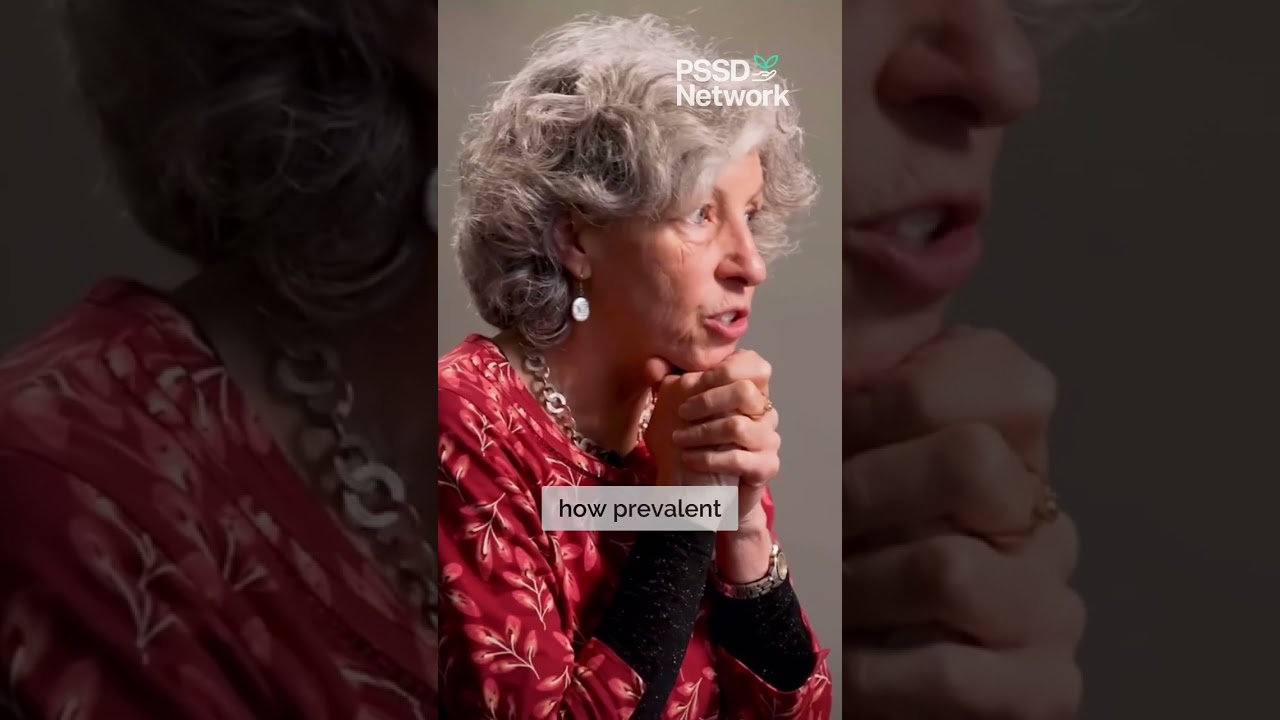
New to PSSD? Professor Joanna Moncrieff, a psychiatrist at UCL, talks about the condition and how aware doctors are of it. It’s general background and isn’t evidence about brain fog.
How do people cope with brain fog?
No treatment has been shown to work for brain fog in PFS or PSSD. These are things people in our community say help them get through the day.
- Routine. Doing things at the same time each day leaves less to remember.
- Write it down. Lists, phone reminders and a notebook take the load off memory.
- One thing at a time. Switching between tasks is often where the fog bites hardest.
- Gentle movement. A walk or some yoga. Start slowly and see how your body reacts.
- Rest and calm. Breathing exercises or meditation can ease the stress that makes fog worse.
- Be careful with supplements. They might not be right for everyone with PFS or PSSD. Check with a pharmacist.
- Talk to people who get it. Our WhatsApp forums are full of people living with this.
How do I talk to my GP about brain fog?
These medicines help many people. If you have side effects, that’s a decision for you and your prescriber. Don’t stop an antidepressant suddenly. For finasteride, follow what the leaflet says.
Fog makes appointments hard, so write it down first:
- The medicine: “Finasteride 1 mg from May 2022, last tablet June 2024.”
- The changes: “I lose words mid-sentence. I can’t follow a film.” Say when each began.
- The other symptoms: sexual changes, emotional numbness, sleep.
Three questions for your GP
- Could anything else explain this, and can we check it?
- Can you record that it started after the medicine?
- What can we try if it continues?
You could start with: “My thinking changed after I took this medicine, and it hasn't come back.”
Many people say it took time to be taken seriously. Bring the leaflet line. You can report it without a doctor agreeing.
Report it: it helps everyone
A doctor’s note helps you. A report to the medicines regulator helps everyone else: it is how patterns get noticed.
- No proof needed. A suspicion is enough, even years after stopping.
- Where: the Yellow Card scheme in the UK, MedWatch in the US.
- Use the right words. Describe the brain fog in plain words. If symptoms continued after stopping, write Post 5-alpha-reductase inhibitor syndrome (MedDRA 10082430) for finasteride, or Post-SSRI sexual dysfunction (MedDRA 10086208) for an SSRI or SNRI.
Our reporting guide walks you through it
What else do people ask?
Does brain fog in PFS or PSSD go away? For some people it has lasted years after stopping. Nobody knows yet who will be affected, or whether it will ease. Matt says nothing had changed after five years. Others describe good and bad days.
Can I still work or study? Many people do, with changes. Ask about reasonable adjustments, such as written instructions or flexible hours. A GP’s fit note can describe what you’re struggling with.
If the fog makes it hard to read long pages, start small. Our PSSD page and PFS page set out what is known, one step at a time.
Sources
- Healy D, Bahrick A, Bak M and colleagues. Diagnostic criteria for enduring sexual dysfunction after treatment with antidepressants, finasteride and isotretinoin. Int J Risk Saf Med 2022;33(1):65-76. Proposed criteria from expert agreement. Section 3 (PSSD): ancillary non-sexual symptoms may include “emotional numbing”, “depersonalization”, “other sensory problems” and “cognitive impairment”. Section 5 (PFS): cognitive impairment, depression and suicidality “can occur independently of any sexual difficulties”. Full text not re-opened on 22 October 2026 (captcha); wording as verified for other SIDEfxHUB articles.
- Basaria S, Jasuja R, Huang G and colleagues. Characteristics of men who report persistent sexual symptoms after finasteride use for hair loss. J Clin Endocrinol Metab 2016;101(12):4669-80. Brigham and Women’s Hospital, Boston. 25 men with persistent symptoms against two comparison groups. “A slightly greater number of subjective cognitive complaints”; memory complaint differences between groups “were not significant”; “no objective evidence of cognitive deficits”; “These findings need confirmation in larger prospective studies.” Cross-sectional, so it cannot show cause.
- Propecia (finasteride) 1 mg, patient information leaflet, emc, UK. Section 4, frequency unknown: “persistent difficulty having an erection after discontinuation of treatment”, and persistent decrease in sex drive and problems with ejaculation. No mention of memory or concentration.
- Lundbeck Limited. Cipralex (escitalopram) patient information leaflet, emc, UK. Sexual problems: “In some cases, these symptoms have continued after stopping treatment.” No mention of memory or concentration.
- GOV.UK. Report a problem with a medicine or medical device.
- Moral Medicine on YouTube. Matt, 6 April 2026: “unable to string one thought to the next” at 8:50; “I didn’t feel depressed, I didn’t feel sad” at 6:40; “nothing has changed” five years on at 9:14. Sam, 12 June 2024, embedded as an extract from 7:10 to 9:45: brain fog and work at 9:07; songs in his head and “there’s nothing” at 10:30.
- PSSD Network, Professor Joanna Moncrieff discusses Post-SSRI Sexual Dysfunction, June 2026. General context only.
Sources checked on 22 October 2026. AI-assisted writing and review, not clinical review.
640+ people have joined the registry.
Join them, then report your side effects.
Free. Sign up takes 2 minutes.