PSSD and your partner: handling the strain
PSSD can change touch, feelings and focus after stopping an antidepressant. Partners often blame themselves. How to talk, when to get help, and what helps.
SIDEfxHUB is a patient charity. We are not health professionals, and this does not replace medical advice. Don't start, stop or change any medicine because of what you read here. Talk to your doctor first.
If you are in crisis:116 123 Samaritans (UK)988 Lifeline (US)Find a helpline

Post-SSRI sexual dysfunction (PSSD) can last after stopping an SSRI or SNRI antidepressant, and it puts real strain on a relationship. Partners often think the change is about them, so the most useful thing you can say is that it isn’t.
PSSD is more than sexual problems. The 2022 criteria describe a lasting change in genital sensation, often numbness, and also emotional numbing, problems with thinking and changes in other senses. A partner can feel all of that as distance.
The UK leaflet for Cipralex (escitalopram) says sexual problems have, in some cases, “continued after stopping treatment”. Many partners have never heard that. Showing them the line can change the conversation.
Why does my partner think it’s their fault?
Because from the outside, PSSD looks like you’ve stopped wanting them. Less desire, little reaction to touch and a flatter mood are easy to take personally.
A 2026 UK study interviewed 10 people with PSSD. Thomas said his partner “became self-conscious because she thought it was her”. Jo described going round in circles: “It must be me, or it must be us, it must be him.”
The study was small, and most people in it were single when interviewed, so it can’t tell us how most couples cope. It does show the same thought appearing again and again: someone must be to blame.
Say it plainly: “This started with the tablets. It isn’t you, and I haven’t chosen it.”
How do I talk to my partner about PSSD?
Be honest, and keep it short. Start with what has changed for you, then give it a name. “Touch feels numb, and I don’t feel things the way I did. It has a name, PSSD.”
Your partner may hear “sex” and miss the rest. Say the other parts out loud too: feeling flat, struggling to concentrate, or not feeling love as strongly as you know you should.
Choose a calm moment, not straight after a difficult night. Give them something to read in their own time, like our PSSD page, and let them come back with questions.
Nick’s interview shows this from inside a relationship. Watch it together if words are hard to find. He talks about emotional blunting, and he says he can still show emotions on his face. “But I don’t feel it.” It’s one person’s story, so it says nothing about how common this is.

If your partner doubts PSSD is real, give them something they can check, rather than arguing. Doubt often comes from never having heard of PSSD.
The leaflet line is the strongest thing you have, because it isn’t your opinion. A video of someone else describing the same changes can land in a way your own words don’t.
If your partner is frustrated, or blames you for the changes, try talking about how PSSD affects you both. They’ve lost something too. Saying that out loud can lower the temperature.
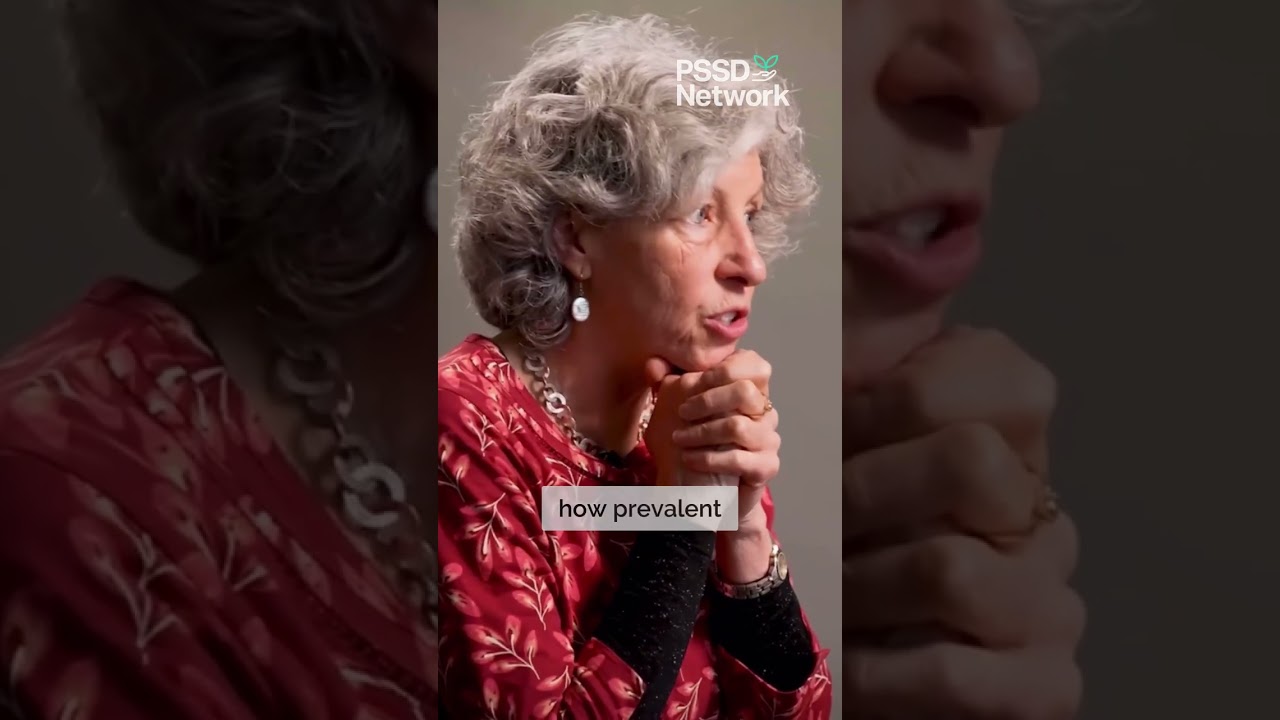
If you’d like a doctor’s view to share, this short video can help. Professor Joanna Moncrieff, a psychiatrist at UCL, talks about PSSD and how aware doctors are of it. It’s background, not evidence about relationships.
How can we stay close when sex is hard?
Put closeness first and pressure last. Many couples find other ways to feel near each other: time together, touch with no goal, a shared hobby, honest talk.
One man in the 2026 study expected future relationships to be “much more negotiated” and based on compromise. That can sound bleak. For some couples it simply means talking openly about what works now, instead of guessing.
Watch for the opposite too. In the same study, a woman described going along with things she wasn’t happy about “just to please that person”. Closeness shouldn’t cost you your own limits.
When should we get help as a couple?
When the same argument keeps coming back, or one of you feels alone in it. A counsellor who works with couples can help you both say difficult things.
In England and Wales, Relate offers relationship counselling and sex therapy. Tell the counsellor about PSSD at the start, and bring the leaflet line, as they may not know it.
Your GP is worth seeing too. Bring a short note, for example: “Sertraline 50 mg from January 2023, last tablet March 2024. Since then: genital numbness, feeling flat, poor focus.”
Three questions for your GP or counsellor
- Have you heard of PSSD? It's on the leaflet.
- Can my partner come to an appointment and say what they've noticed?
- What's our next step if nothing changes?
You could start with: “These changes began with the tablets, and they're affecting us both.”
These medicines help many people. If you have side effects, that’s a decision for you and your prescriber. Don’t stop suddenly.
Report it: it helps everyone
A doctor’s note helps you. A report to the medicines regulator helps everyone else: it is how patterns get noticed.
- No proof needed. A suspicion is enough, even years after stopping. Your partner can help you fill it in.
- Where: the Yellow Card scheme in the UK, MedWatch in the US. Our Yellow Card guide for PSSD shows each step.
- Use the right words. If symptoms continued after stopping, write Post-SSRI sexual dysfunction (MedDRA 10086208).
Our reporting guide walks you through it
What else do people ask?
Should I tell family and friends? You decide who to tell and how much. Parents don’t need to hear about sex to understand you’re struggling. Our guide on talking to family and friends about PSSD helps you plan it.
Is taking a break from the relationship a good idea? Some couples find space helps them think. It’s a choice for the two of you, and nobody has studied whether it helps with PSSD. If you take one, agree when you’ll talk again.
Where can I talk to people who understand? Others with PSSD. In the 2026 study, one man said of them: “they’re the only people that I really- can really understand me.” Our WhatsApp peer support groups are one place to start.
Thomas’s partner thought it was her. If yours might too, start with one sentence tonight: “It isn’t you.”
Sources
- Healy D, Bahrick A, Bak M and colleagues. Diagnostic criteria for enduring sexual dysfunction after treatment with antidepressants, finasteride and isotretinoin. Int J Risk Saf Med 2022;33(1):65-76. Proposed criteria. Section 3: “An enduring change in somatic (tactile) or erogenous (sexual) genital sensation after treatment stops”; ancillary symptoms “may include” “emotional numbing”, “other sensory problems” and “cognitive impairment”.
- Brugi S, Budd B, Mackie C, Fish S. “It’s taken away the most fundamental things about being human”: the lived experience and impact of post-SSRI sexual dysfunction. Int J Qual Stud Health Well-being 2026;21(1):2717470, published 13 August 2026. Interviews with 10 people in the UK, recruited through the UK PSSD Association. The authors note that “the majority of participants were single at the time of the interview”.
- Lundbeck Limited. Cipralex (escitalopram) patient information leaflet, electronic Medicines Compendium. Section 2: “In some cases, these symptoms have continued after stopping treatment.”
- Relate, home page: relationship counselling and sex therapy, England and Wales.
- GOV.UK. Report a problem with a medicine or medical device.
- Moral Medicine, PSSD: Man Lives With Complete Sexual And Emotional Blunting, May 2023.
- PSSD Network, Professor Joanna Moncrieff discusses Post-SSRI Sexual Dysfunction, June 2026. General context only.
Sources checked on 22 October 2026. AI-assisted writing and review, not clinical review.
This information does not replace medical advice. Talk to your doctor before you make any decision about your treatment.
620+ people have joined the registry.
Join them, then report your side effects.
Free. Sign up takes 2 minutes.